
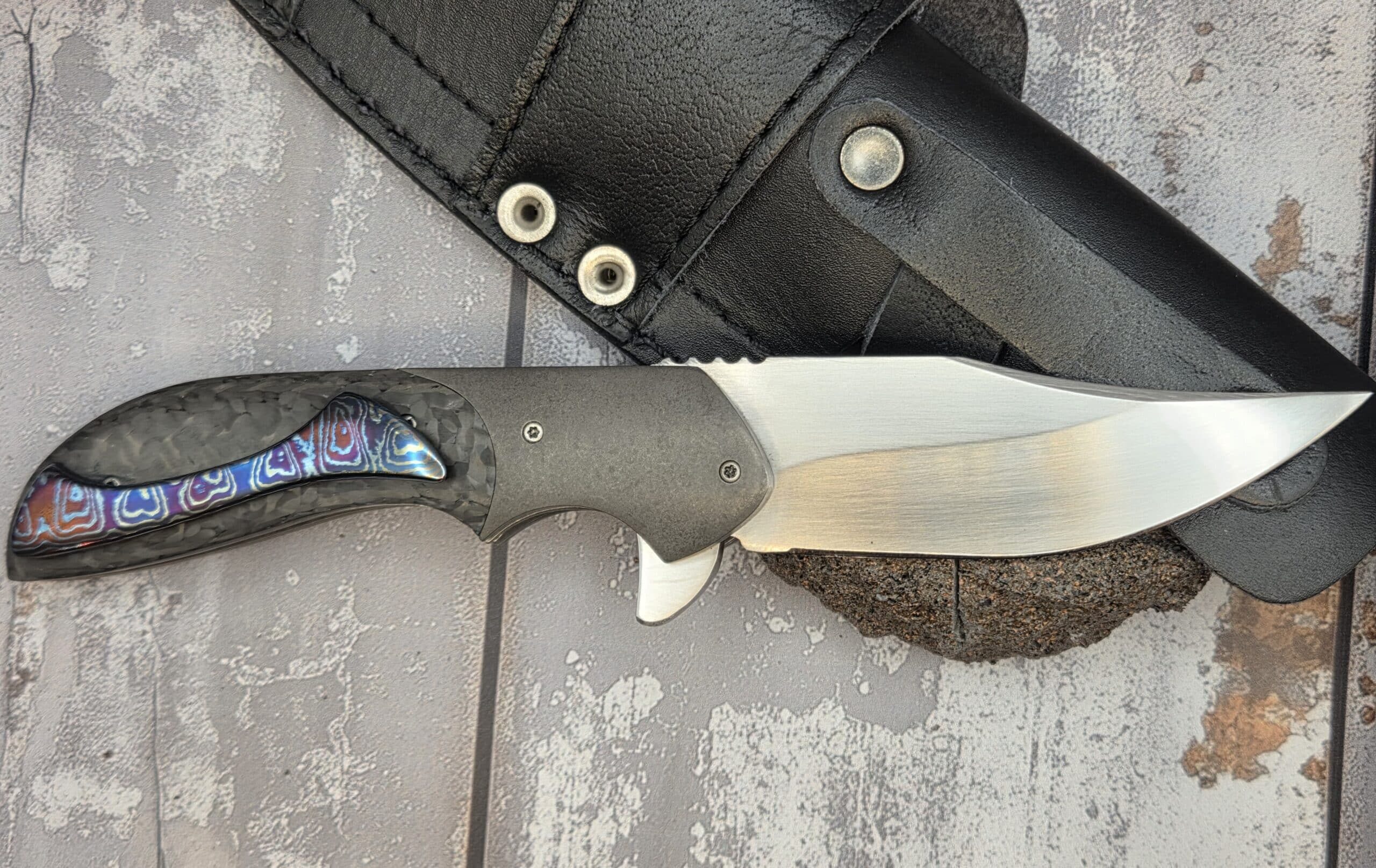
Selling Your Custom Knife Collection: Outright Sale vs. Consignment
Selling Your Custom Knife Collection:
Outright Sale vs. Consignment
Two paths. Very different outcomes. Here is what every collector needs to know before deciding how to sell.
You have decided it is time to sell. Maybe you are thinning the herd. Maybe life circumstances have changed. Or maybe you have simply found a collection that excites you more. Whatever the reason, the decision of how to sell matters just as much as the decision to sell at all.
Two options dominate the collector knife market: outright sale and consignment. On the surface, they can seem similar. In practice, they produce very different results — especially when your knives are valued at $1,000 or more.
This guide breaks down both options clearly. By the end, you will know exactly which path makes sense for your situation.
What Is Consignment — and How Does It Actually Work?
Consignment means you hand your knives over to a dealer. They list, photograph, and market them on your behalf. Then, when a knife sells, they take a percentage — and pay you the rest.
That percentage is not small. Most consignment dealers in the custom knife space charge between 25% and 50% of the final sale price. So on a $2,000 knife, you walk away with $1,000 to $1,500 — before accounting for any shipping costs you paid to send the knife in.
Furthermore, you do not get paid immediately when the knife sells. Many consignment dealers operate on scheduled payout cycles. That means additional waiting on top of however long it takes for the knife to find a buyer in the first place.
And that wait can be significant. Consignment knives sometimes sit for months. In some cases, they sit for years. Meanwhile, the dealer may adjust your asking price at their discretion — often without notifying you.
A $2,500 custom folder sent to a consignment dealer at 25% commission nets you $1,875 — before shipping. If it sits for three months before selling, you have also lost the use of that capital the entire time. An outright sale on day one puts cash in your hands immediately.
The Hidden Costs of Consignment
The commission is only part of the picture. There are other costs that collectors frequently overlook.
You Ship First — With No Guarantee
With consignment, you ship your knives to the dealer before anything has been agreed on in terms of final pricing. You bear the shipping cost. You bear the insurance cost. And until the dealer accepts delivery, you bear the risk. If the knife arrives damaged in transit, that is your problem — not theirs.
You Lose Control of the Process
Once your knife is in a consignment dealer’s hands, they control the description, the photography, and the pricing strategy. Most reputable dealers do quality work. However, no one knows your knife like you do. In addition, if a price reduction seems necessary to move a knife, that decision often rests with the dealer — not with you.
Time Is Money
A knife that takes six months to sell on consignment is a knife that has been unavailable to you for six months. You cannot reinvest those funds. You cannot use that money toward the next piece you want to acquire. For active collectors, that lost momentum adds up quickly.
- 25–50% commission off the top
- Outbound shipping and insurance fees
- Weeks or months waiting for a sale
- Delayed payout after the sale closes
- Possible price cuts without your approval
- Loss of control over your listing
- Capital tied up and unavailable to you
- Transit risk before dealer acceptance
What Is an Outright Sale?
An outright sale is exactly what it sounds like. A qualified buyer makes you a cash offer for your knife or collection. You accept. You get paid. The transaction is done.
There are no commissions deducted. There are no waiting periods. There are no shipping fees before you see a dollar. The buyer comes to you with an offer. And if that offer works for you, the deal closes — often within days, not months.
For collectors selling high-end custom knives valued at $1,000 and above, this approach has clear advantages. Moreover, when you work with a specialist buyer who truly understands the market, you are far more likely to receive a fair valuation than you would from a general auction platform or a dealer whose income depends on your commission.
With an outright sale, there are no middlemen, no commission deductions, and no waiting. You get a fair offer from someone who knows exactly what your knife is worth — and you get paid.
The Real Benefits of Selling Outright
You Get Paid Immediately
The most obvious advantage is speed. An outright sale delivers cash to you fast. There is no waiting for a buyer to discover your listing. There is no consignment payout cycle to navigate. As a result, you can reinvest, move on, or simply have peace of mind without delay.
No Commission — Ever
When you sell outright to a direct buyer, you keep every dollar of the agreed price. A 25% consignment commission on a $5,000 collection is $1,250 out of your pocket. Outright sale means that money stays with you — where it belongs.
Your Collection Stays Protected
With an outright sale, you are not shipping your knives speculatively to a dealer and hoping for the best. The transaction is clear, documented, and agreed upon before anything ships. That protects you and your collection at every step.
You Deal With Someone Who Knows the Market
A specialist buyer who focuses exclusively on collector-grade custom knives knows exactly what your pieces are worth. They understand maker reputations, material values, guild credentials, and secondary market trends. Consequently, you are far less likely to be lowballed than you would be with a general buyer or auction platform that treats a $2,000 custom folder the same way it treats a $40 production knife.
When Does Consignment Make Sense?
To be fair, consignment is not always the wrong choice. There are situations where it can work in a collector’s favor.
If you own a highly specialized or exceptionally rare knife — something with a very narrow pool of potential buyers — a consignment dealer with access to that specific audience may be able to reach collectors that a direct sale cannot. Similarly, if you have no urgency around timing and are comfortable waiting months for the right buyer at the right price, consignment allows you to hold out for a retail-level outcome.
However, for most collectors selling custom knives in the $1,000 to $10,000 range, the commission, the wait time, and the loss of control rarely justify the process. The math simply does not favor consignment when a qualified direct buyer is available.
Which Option Is Right for You?
The answer comes down to what you value most. If speed, certainty, and keeping your full proceeds matter — outright sale wins. If you have an exceptionally rare piece, plenty of patience, and no need for immediate funds — consignment may be worth exploring.
But for the vast majority of collectors looking to sell custom knives valued at $1,000 and above, the outright sale path is faster, cleaner, and more financially straightforward. You skip the middleman, avoid the commission, and walk away with cash in hand.
At We Buy Knife Collections, that is exactly what we offer. We specialize in collector-grade custom knives. We know what they are worth. And we make fair, fast offers — no commission, no waiting, no uncertainty.
Get a Fast, Fair Offer on Your Collection
We buy collector-grade custom knives valued at $1,000 and above. No consignment fees. No waiting. Just a straightforward offer from a team that knows the market.
Get Your Free Offer Today