
La Cantina Sally Custom #453: An Italian Masterpiece
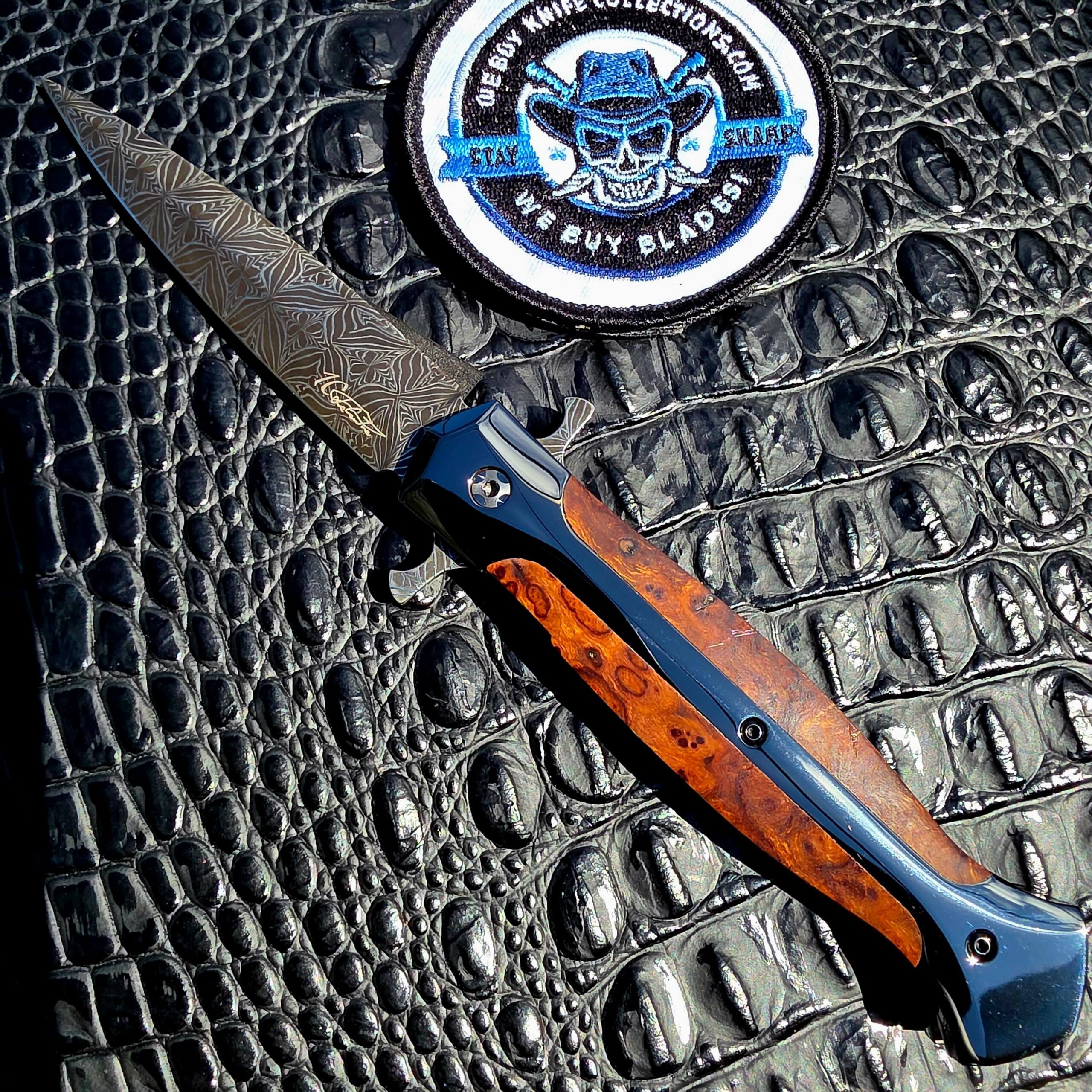
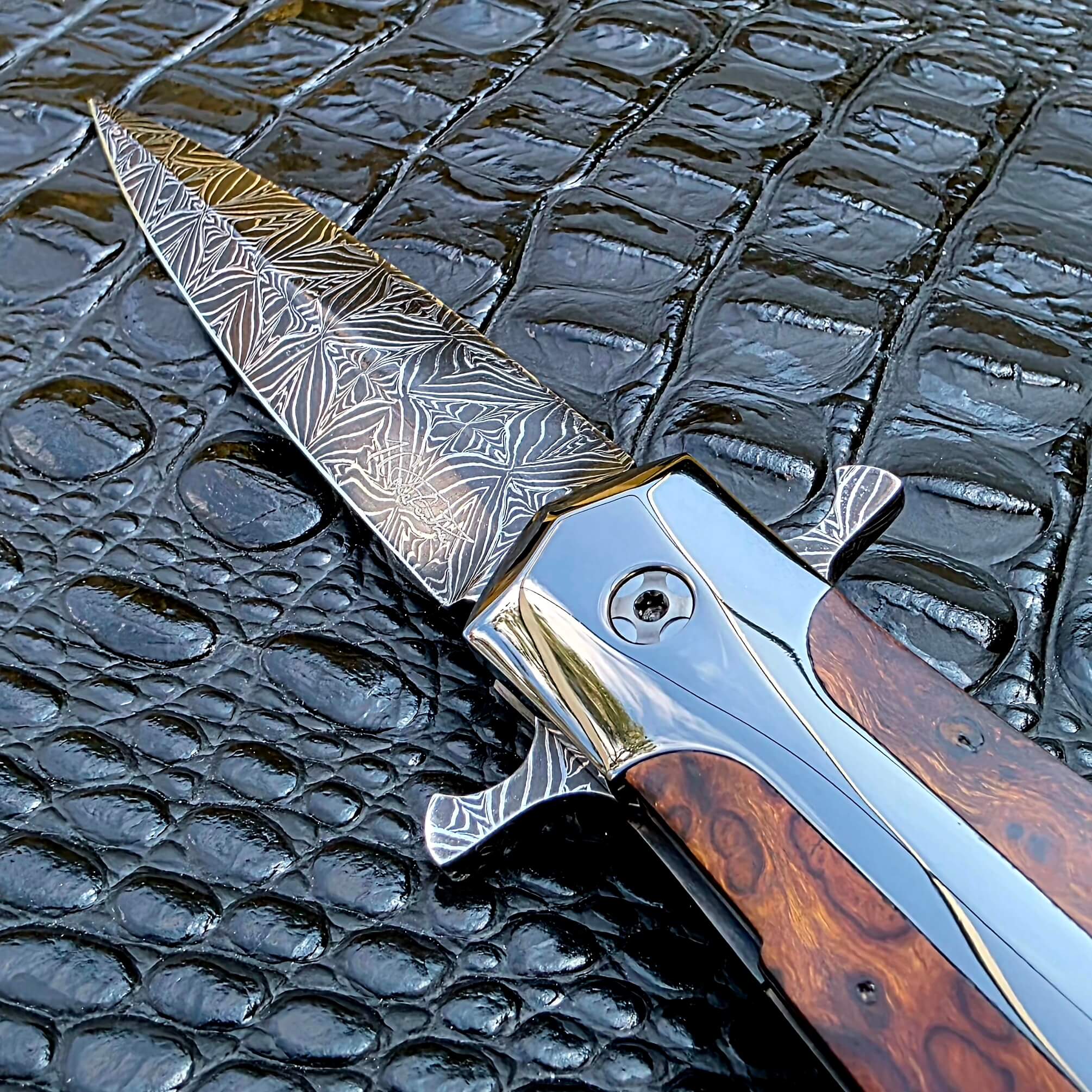
The La Cantina Knives Sally Custom is a one-off Italian custom knife, and this is number 453. On this knife three named craftsmen created this piece of functional art. Simone Milanesi and Gabriella Crippa built it in Bresso, near Milan. Gianluca Spina hand-forged the blade at his own forge in Piacenza.
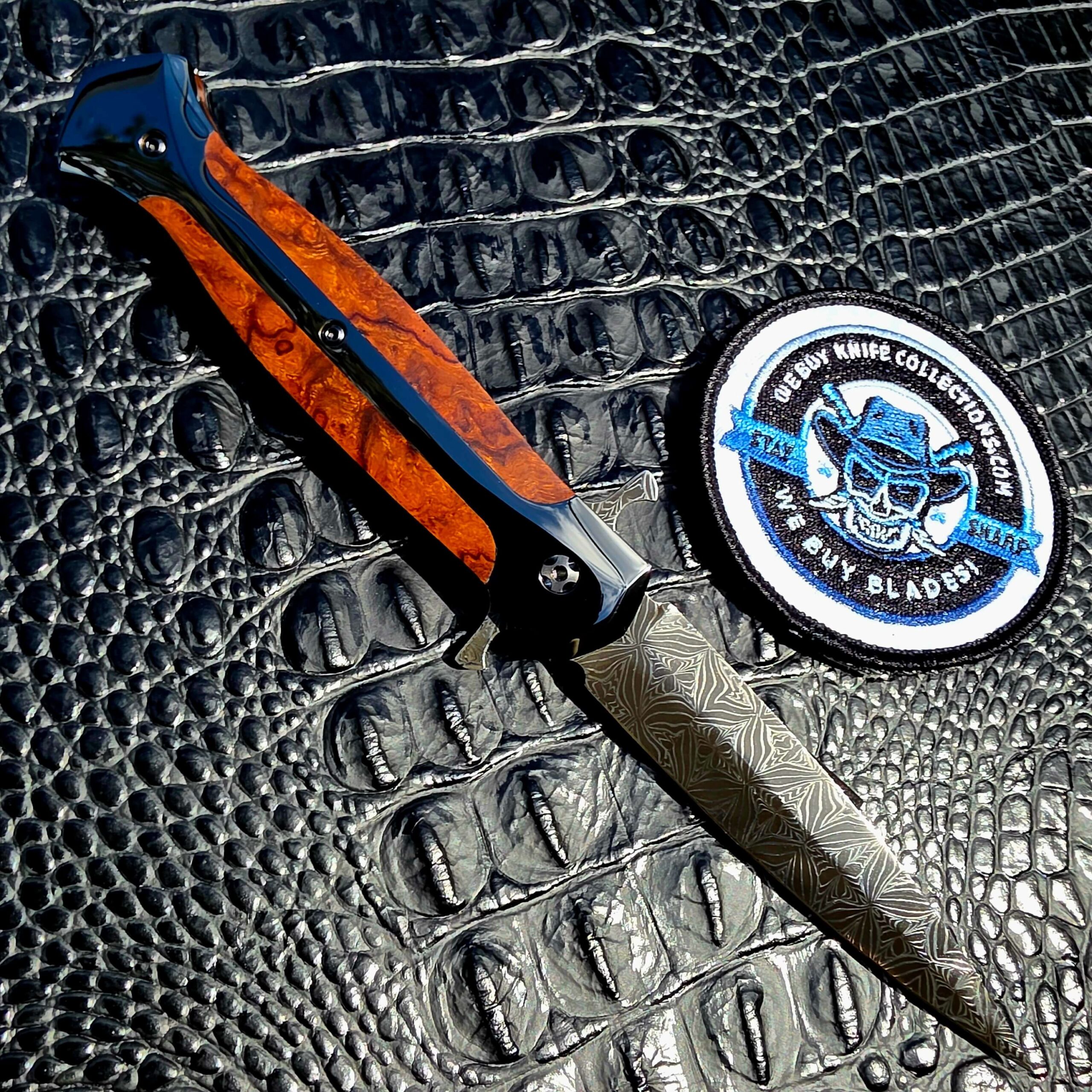
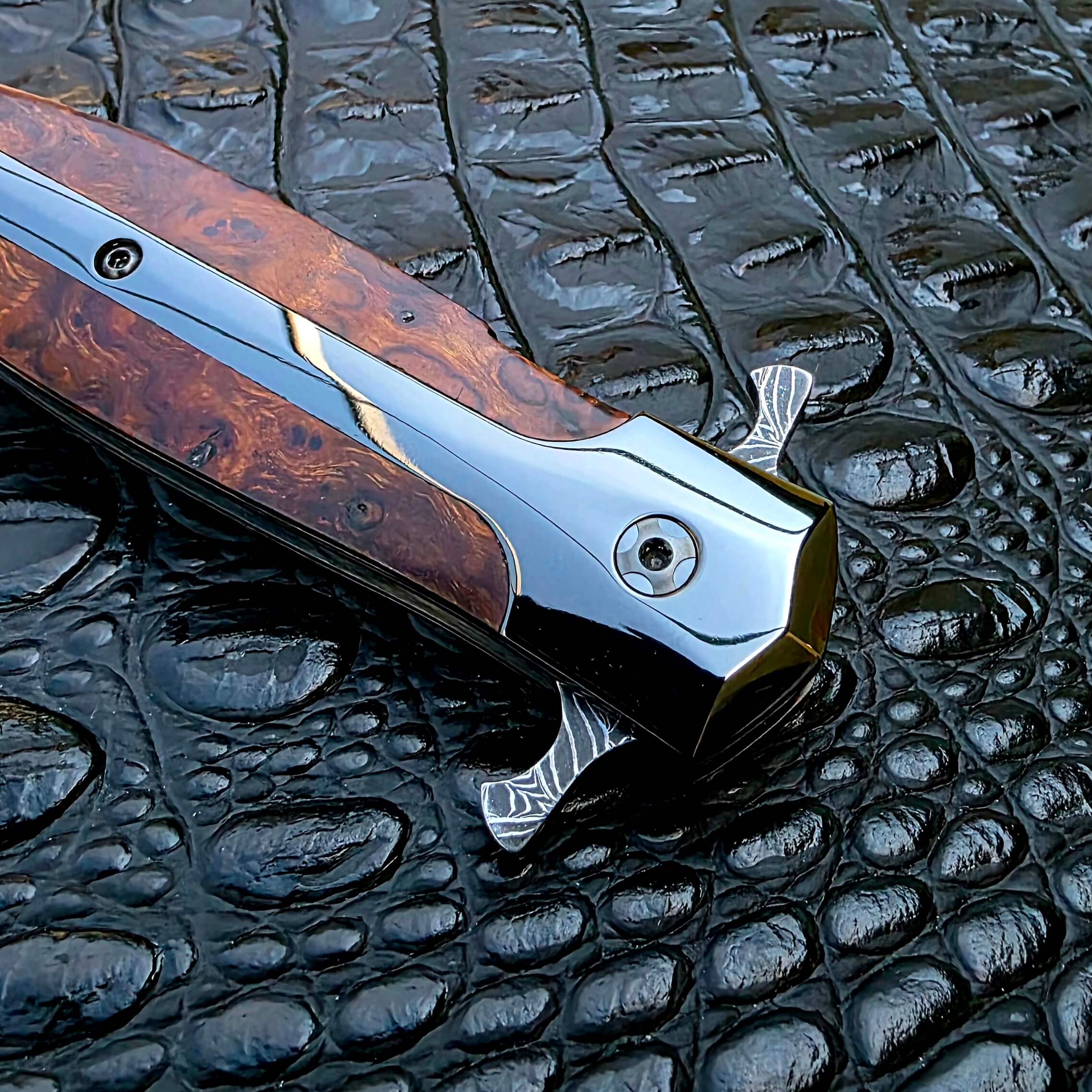
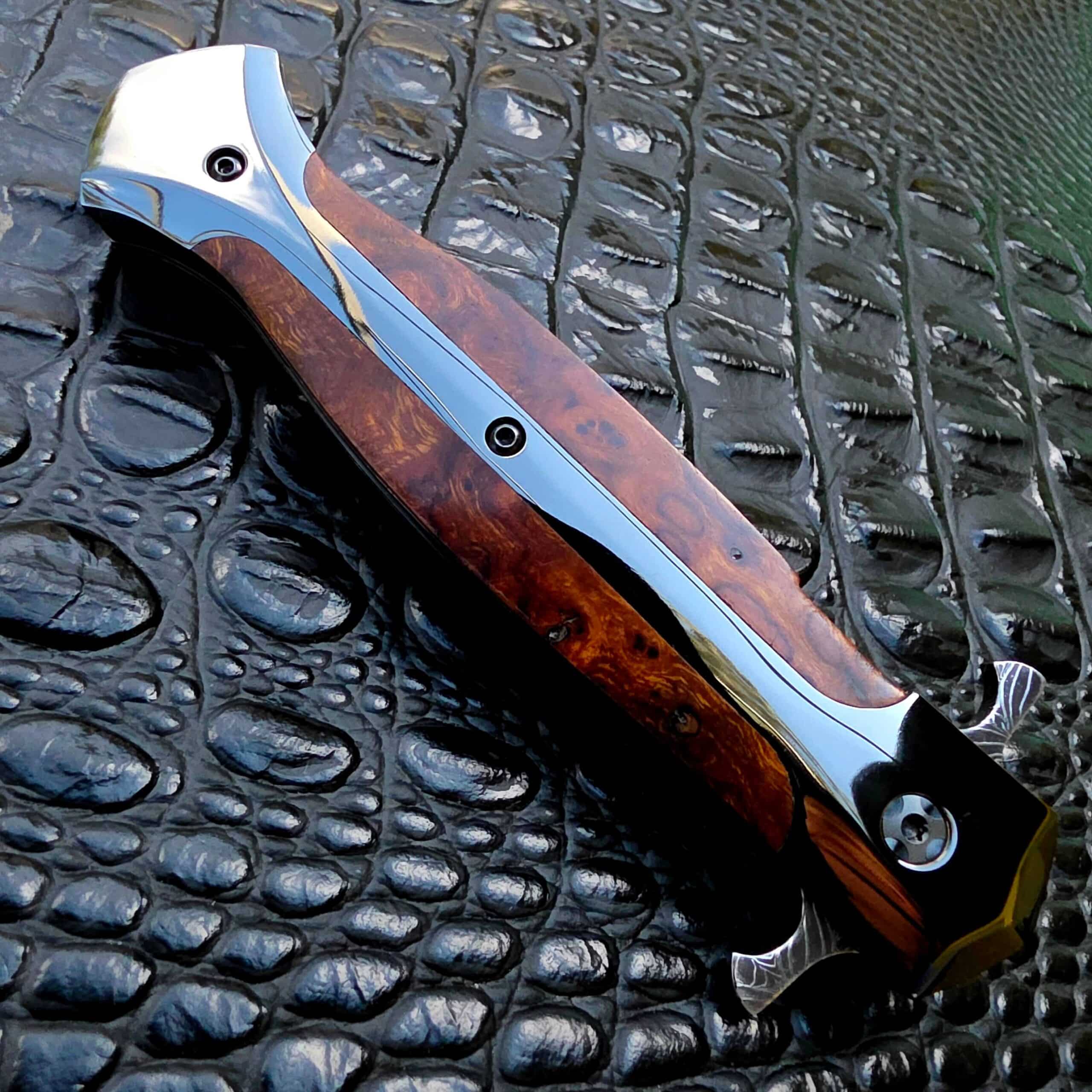
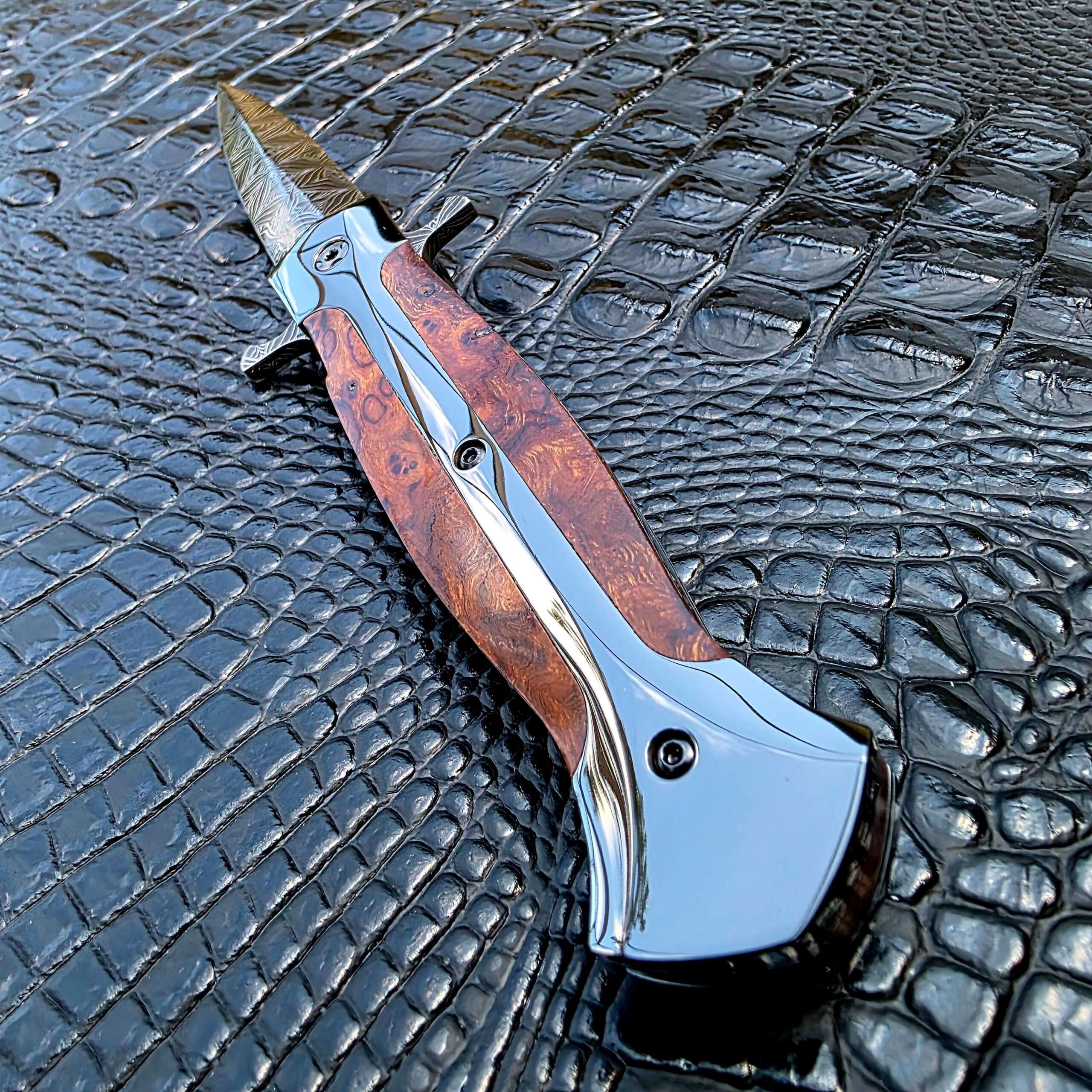
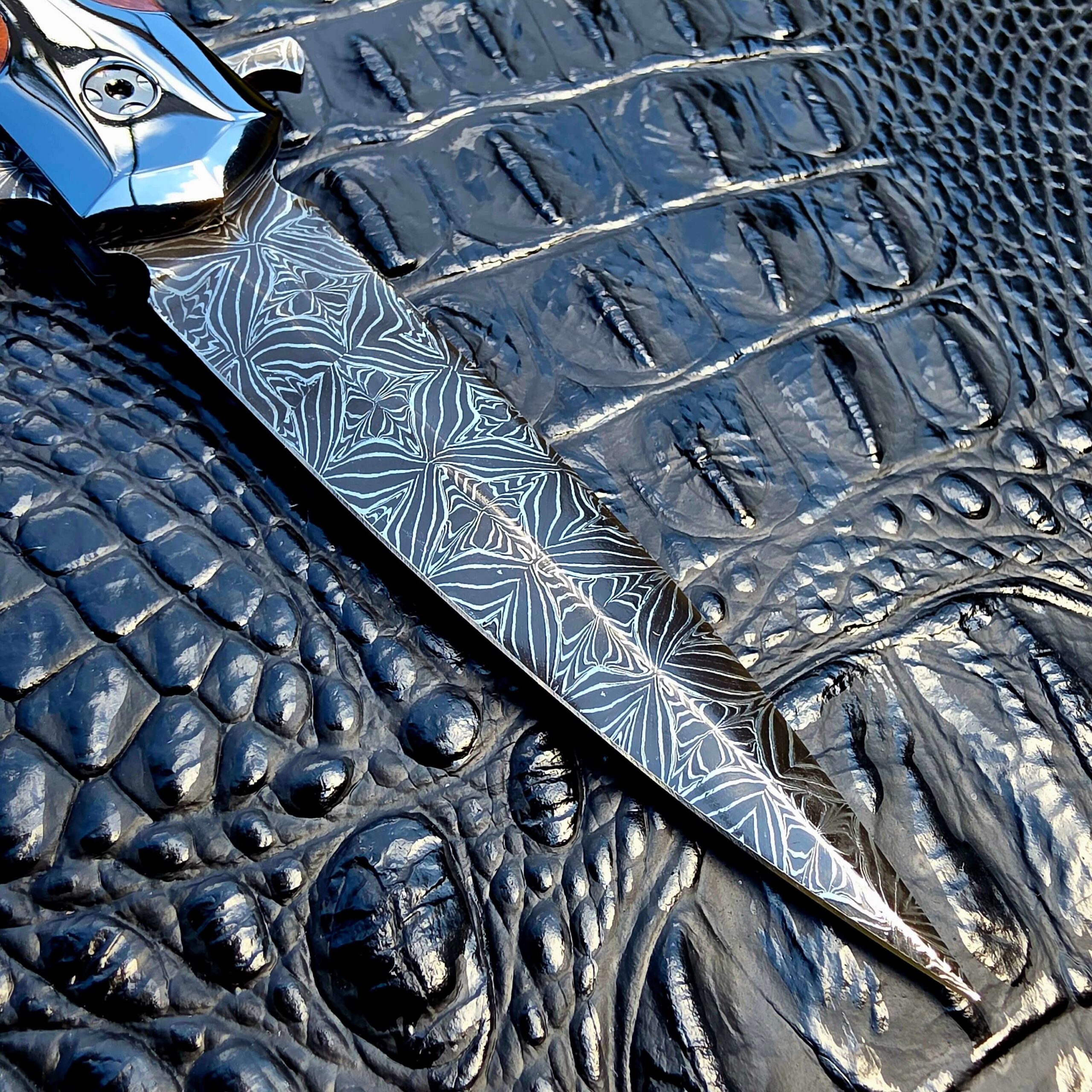
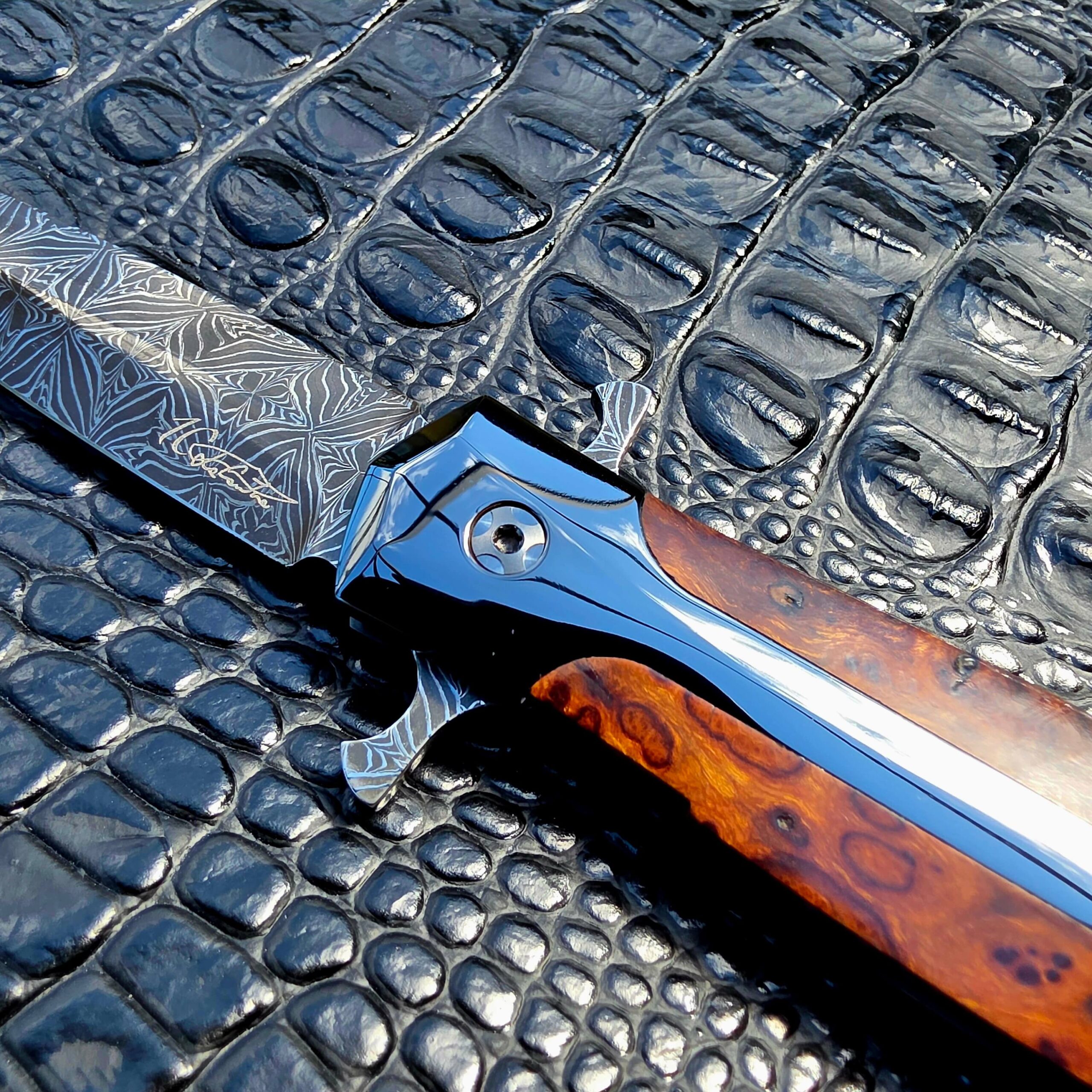
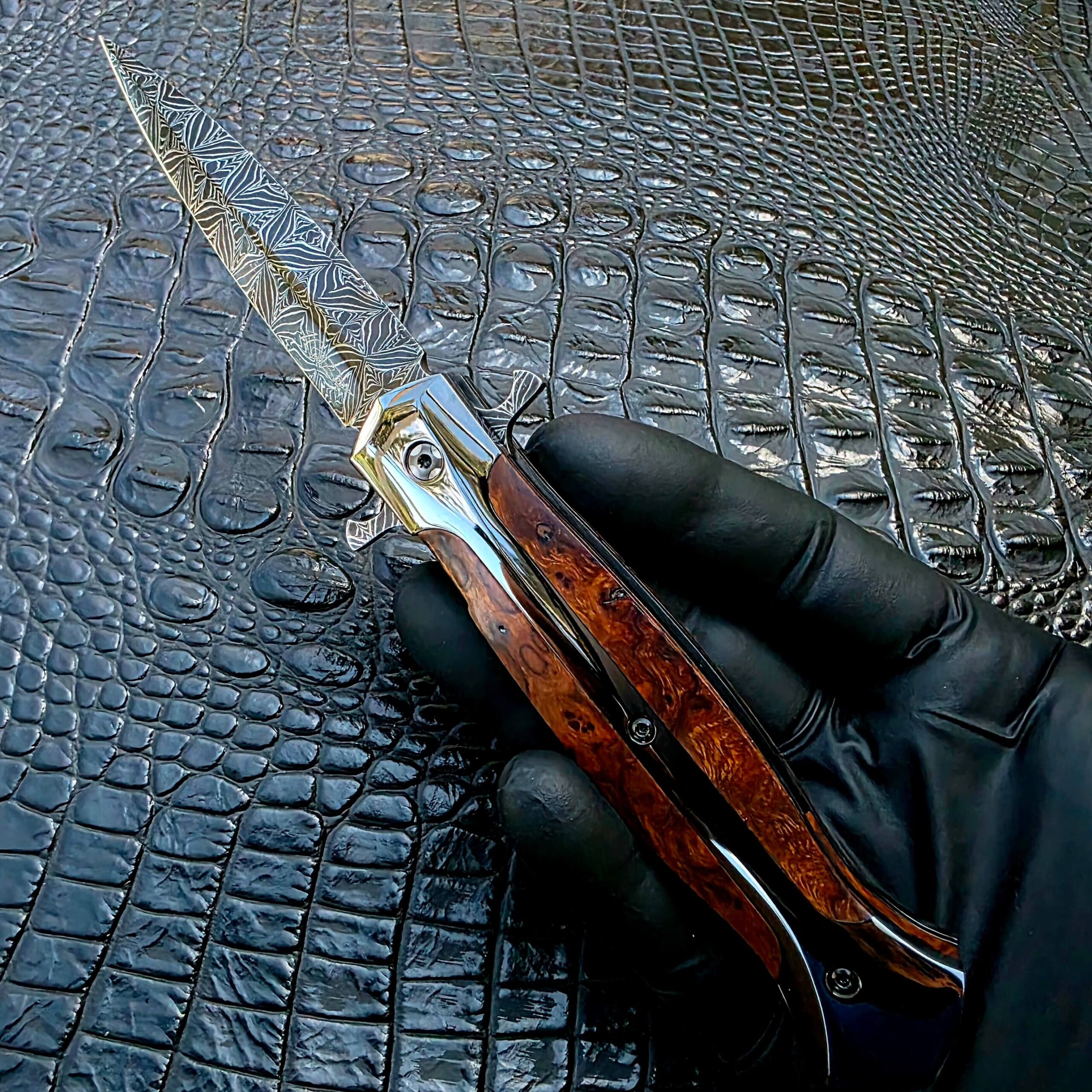
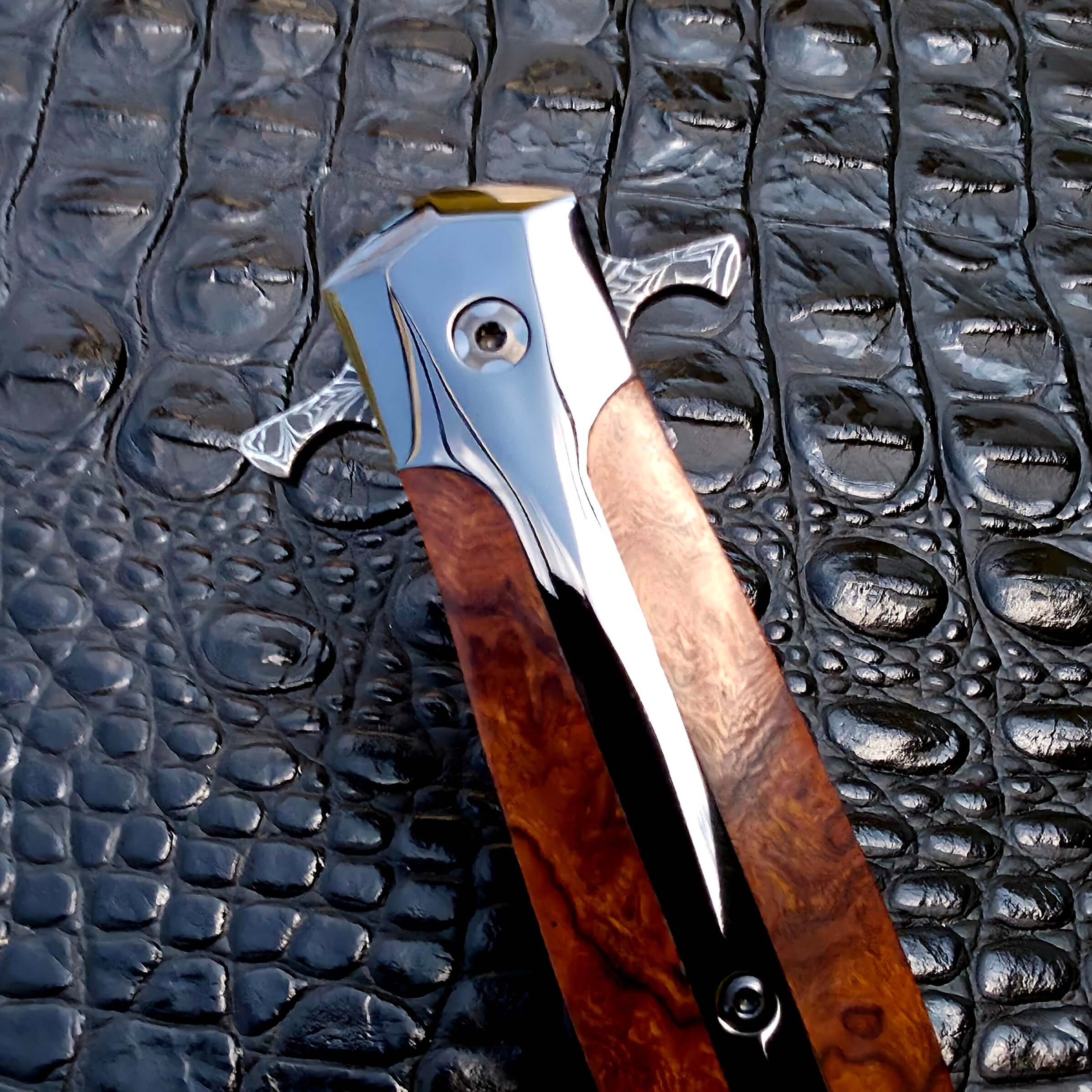
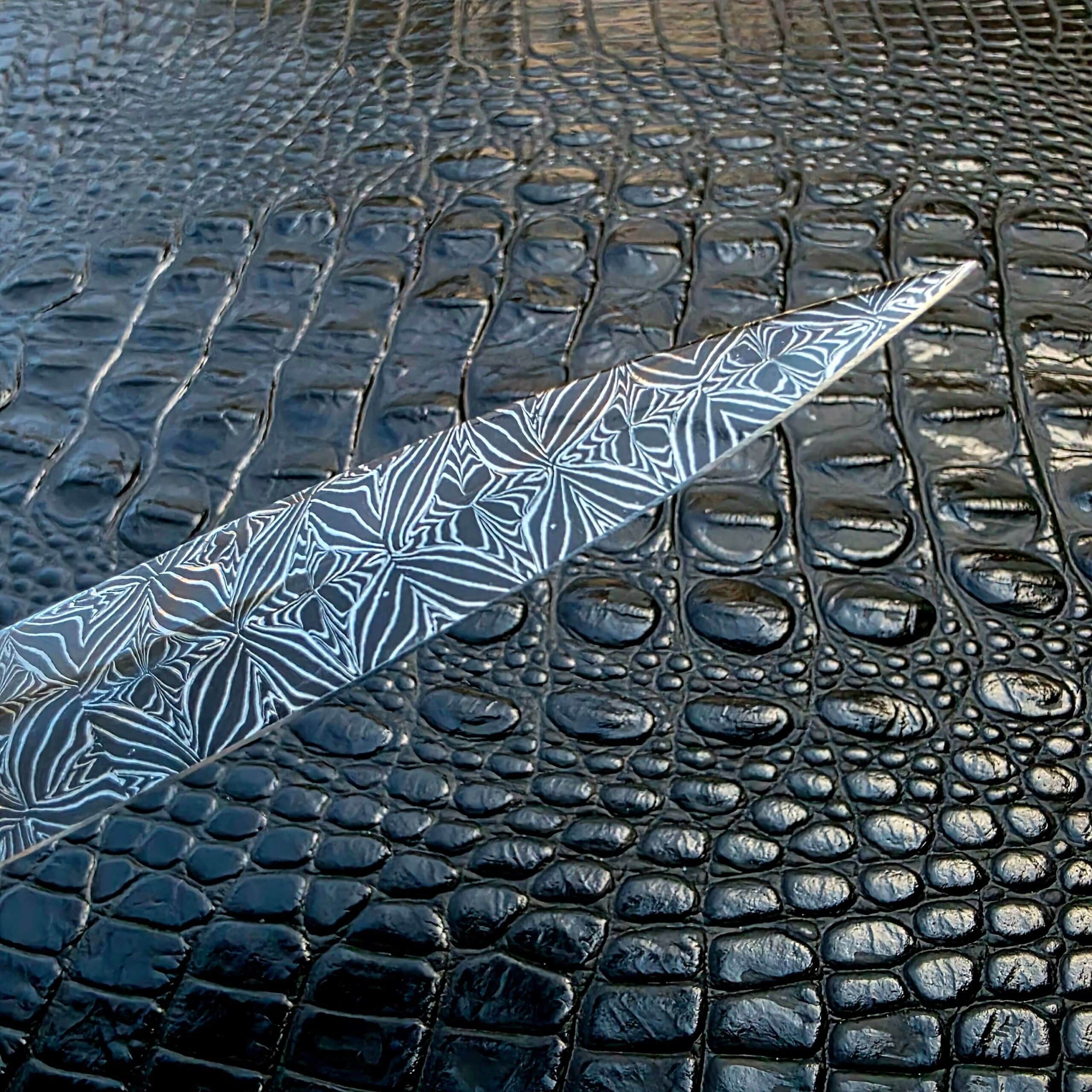
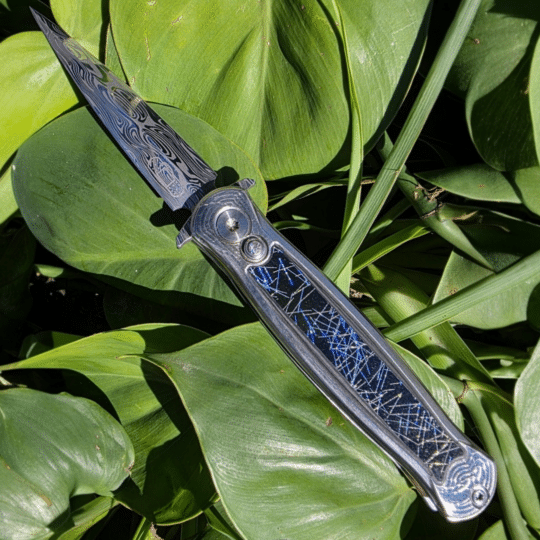
The blade is custom mosaic Damascus in 1084 and 15N20 at 58 to 59 HRC. The frame is polished stainless steel treated with DLC, inlaid with ironwood. It runs 8.66 inches open at 6.81 ounces. Condition is excellent, with no blemishes and no flaws.
A custom knife is a unique, handcrafted tool designed and built by an individual artisan or artisans, rather than stamped out in a factory. Every choice, from the steel to the blade shape to the handle material, is made by hand and with the help of specialized machinery. This is what gives a knife it’s soul versus factory and CNC made knives.
Nothing here came off a shelf. Our guide on how to choose a custom knife covers what that buys you over a production folder.
The Custom Makers: Simone Milanesi and Gabriella Crippa, Bresso
La Cantina is two very talented individuals. Simone Milanesi and Gabriella Crippa work as artisan knifemakers out of Bresso, just north of Milan, Italy in Lombardy.
They describe themselves as a couple of Milanese artisans who oversee the whole process personally, from choosing the material to the final finish. That is the working definition of custom work: the same hands at every stage, with nothing subcontracted to a production floor.
Their stated aim is to combine traditional technique with modern engineering, and to treat a knife as a designed object rather than only a tool. That is easy to say and hard to demonstrate. In their case the demonstration is on record. At BLADE Show 2023 in Atlanta, Milanesi’s La Cantina Indy won The Knifemakers’ Guild Best Bowie Award, which BLADE Magazine documented alongside the knife’s specifications.
La Cantina also records Best Knife for the Public at the Pisa custom show in 2019, Best New Maker at the Guild show in 2023, and Best Judges Choice in 2024, the year Milanesi became a Guild voting member. The Guild’s directory lists him in Bresso, Milano.
To view another piece of Italian knifemaking artistry browse the Stefano Compostella brand page. Stefano, based in Crema, Italy, creates knives with the same unmistakable quality of craftsmanship as La Cantina Knives.
The Custom Forger: Gianluca Spina at Santa Margherita
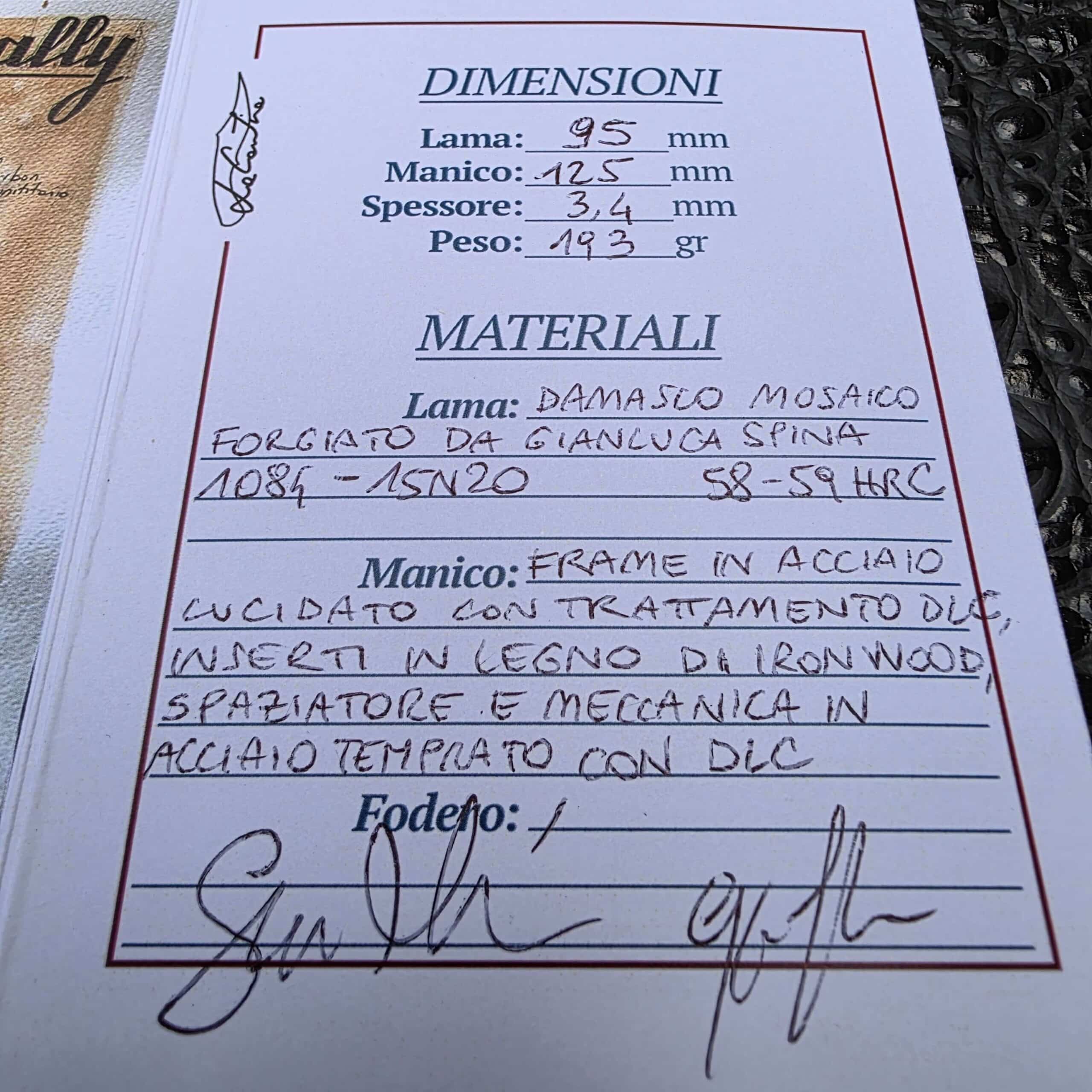
The Damascus was not bought from a vendor. Gianluca Spina forged it for this knife, and his name is written on the card in Milanesi’s own hand.
Spina runs Forgia Santa Margherita at Borgonovo Val Tidone, in the province of Piacenza in Emilia-Romagna. The forge itself sits in a converted medieval barn in the Santa Margherita area.
He came to it from archaeology rather than from a trade apprenticeship. He is a graduate in archaeology and cultural heritage and a self-taught forger, and his work runs into experimental archaeology and into teaching traditional forging. His Damascus courses cover billet preparation, forge welding and pattern development, which is pattern-welded steel in the old sense rather than a surface effect.
The connection to La Cantina is not new either. The Indy that won the Guild’s Best Bowie in 2023 carried mosaic Damascus forged by Spina, which BLADE recorded in the knife’s specification. The same relationship produced the custom blade on this Sally.
1084 and 15N20, and What Mosaic Means
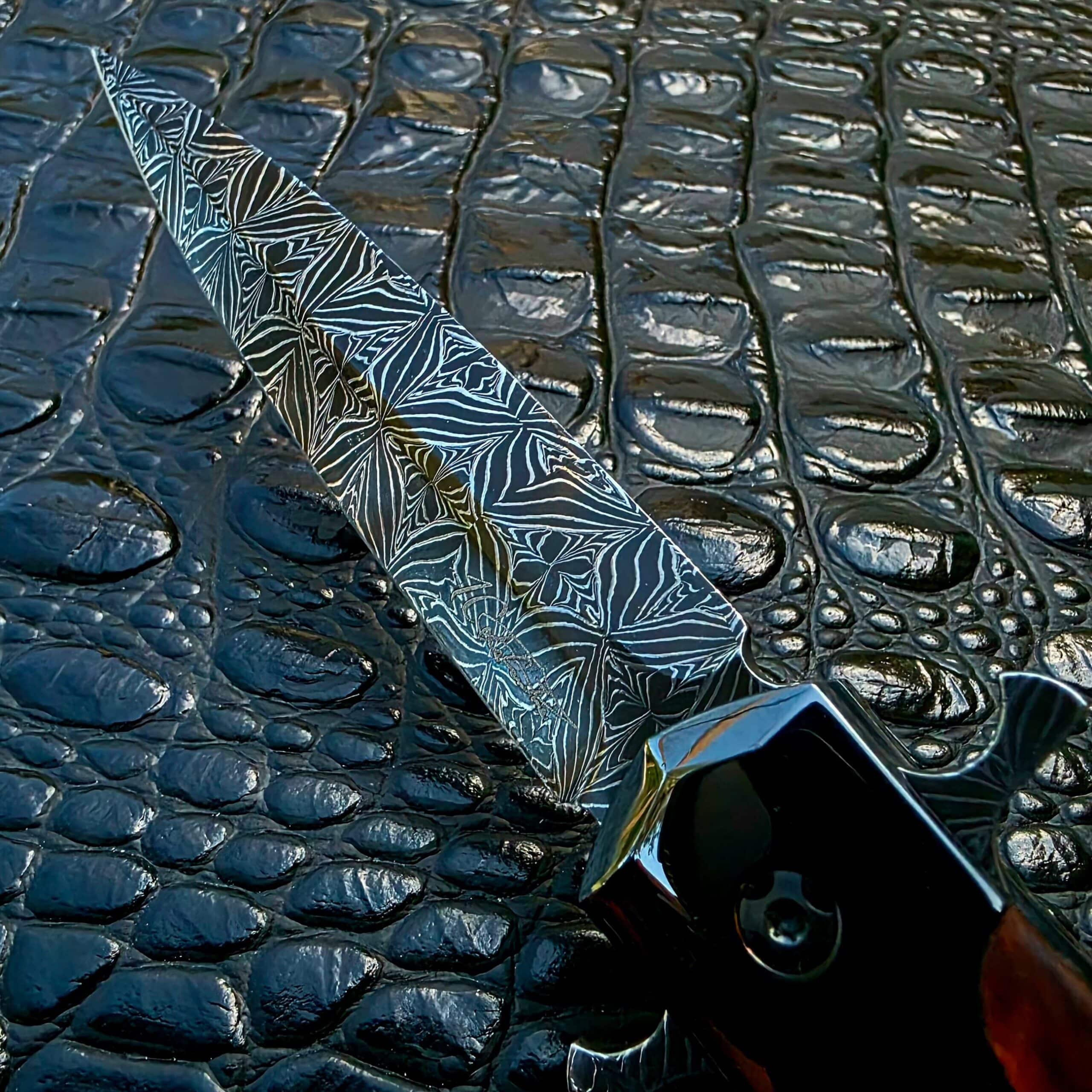
The billet is 1084 and 15N20. The 1084 is a plain high carbon steel and it etches dark. The 15N20 carries around two percent nickel, which resists the etch and stays bright. Without that nickel the layers would exist and you would not see them.
Mosaic damascus is not the same as folded damascus. In folded work the pattern emerges from the process and the smith steers it. In mosaic work the smith designs the figure first, builds it into the billet, then draws the billet out so the motif runs through the finished blade.
Hardness is 58 to 59 HRC, recorded on the card. That is the sensible range for a carbon damascus of this construction, hard enough to hold an edge and soft enough that a blade made of dozens of welded layers stays tough.
Neither steel is stainless. A carbon Damascus wants a light coat of oil in storage and a wipe after handling. See our other folding knives in Damascus for comparison.
The La Cantina Sally Custom: Dagger Blade, DLC Frame, Ironwood
The Sally Custom is a dagger-profile flipper. The blade is 95 millimeters, which is 3.74 inches, with 3.5 inches of cutting edge, flat ground at 0.134 inches thick.
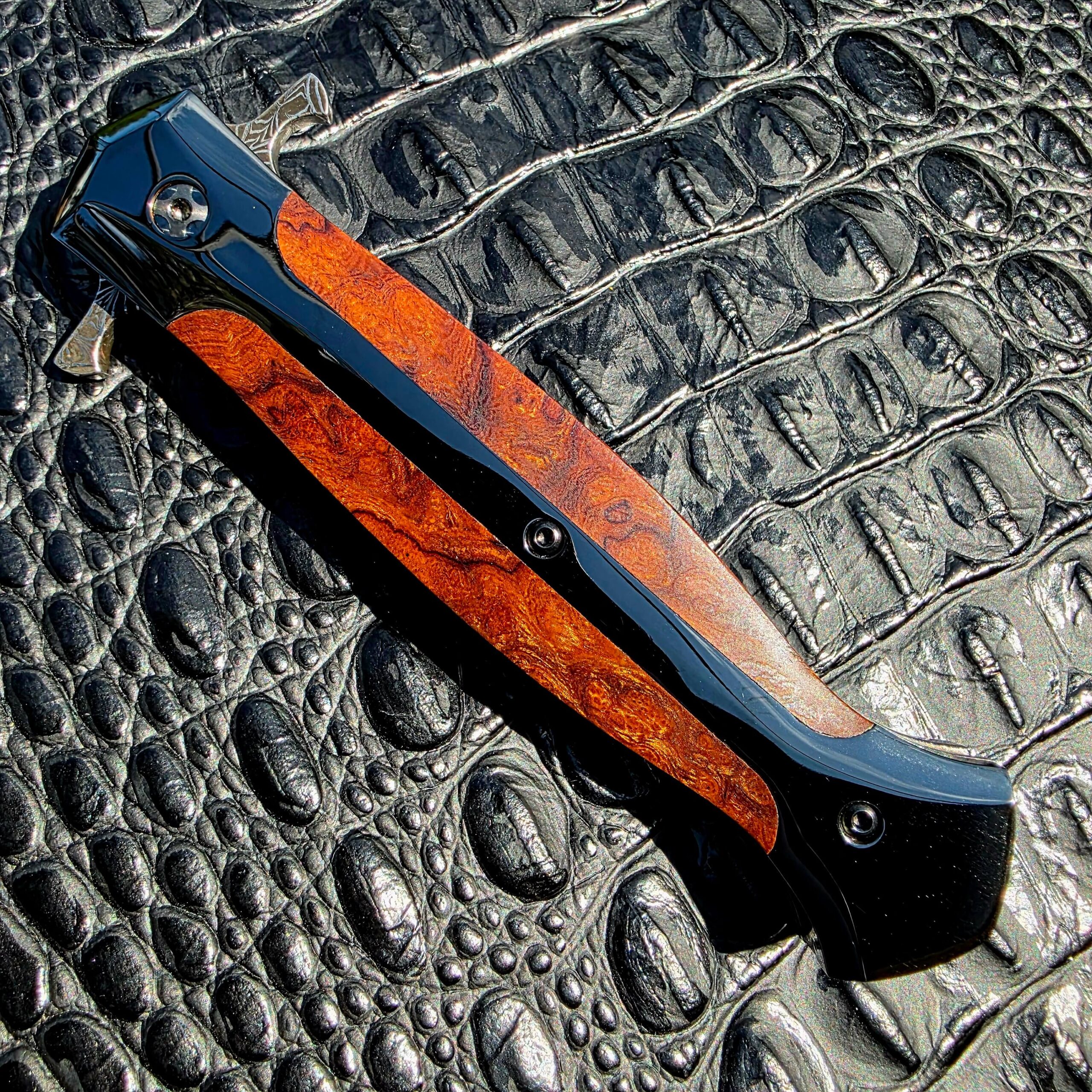
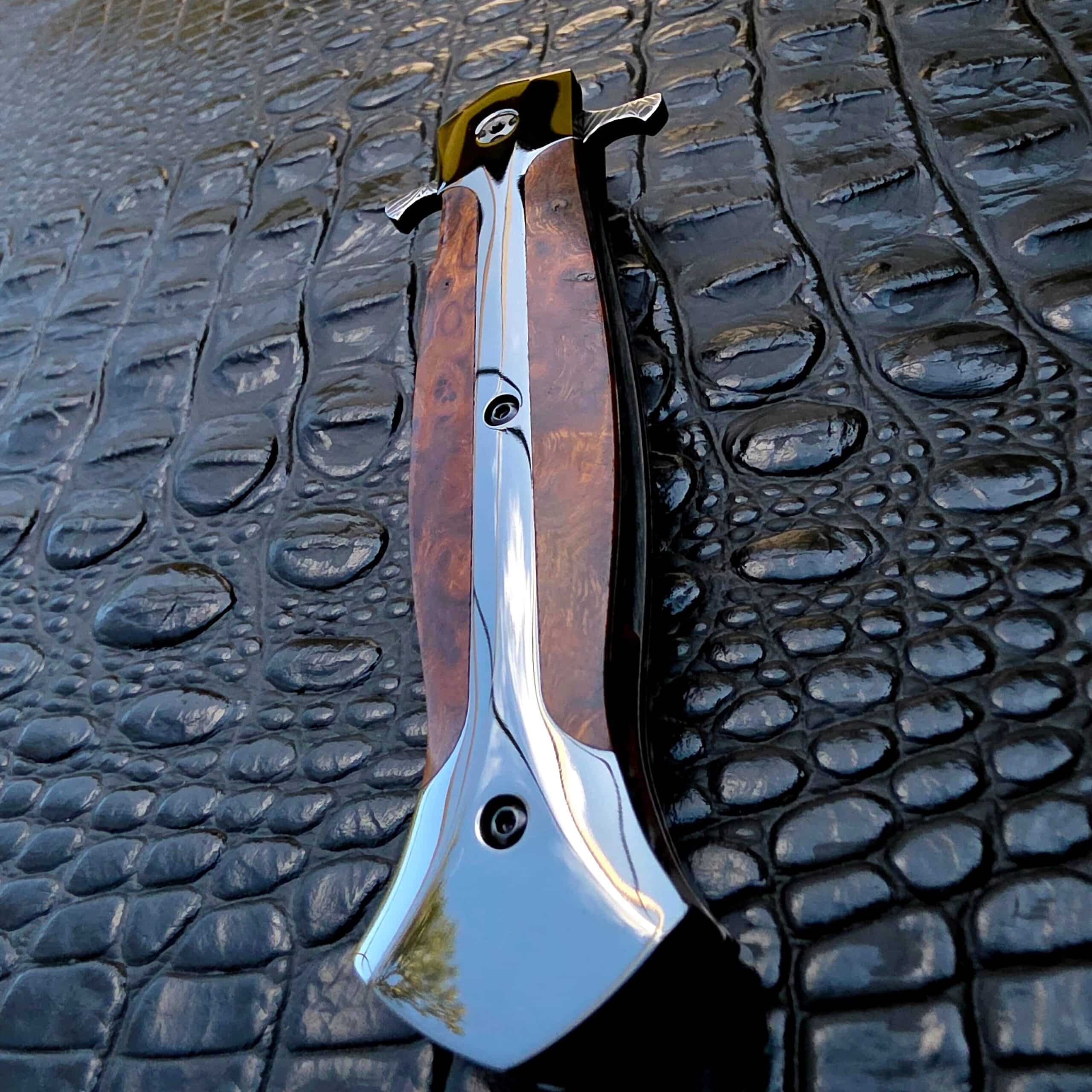
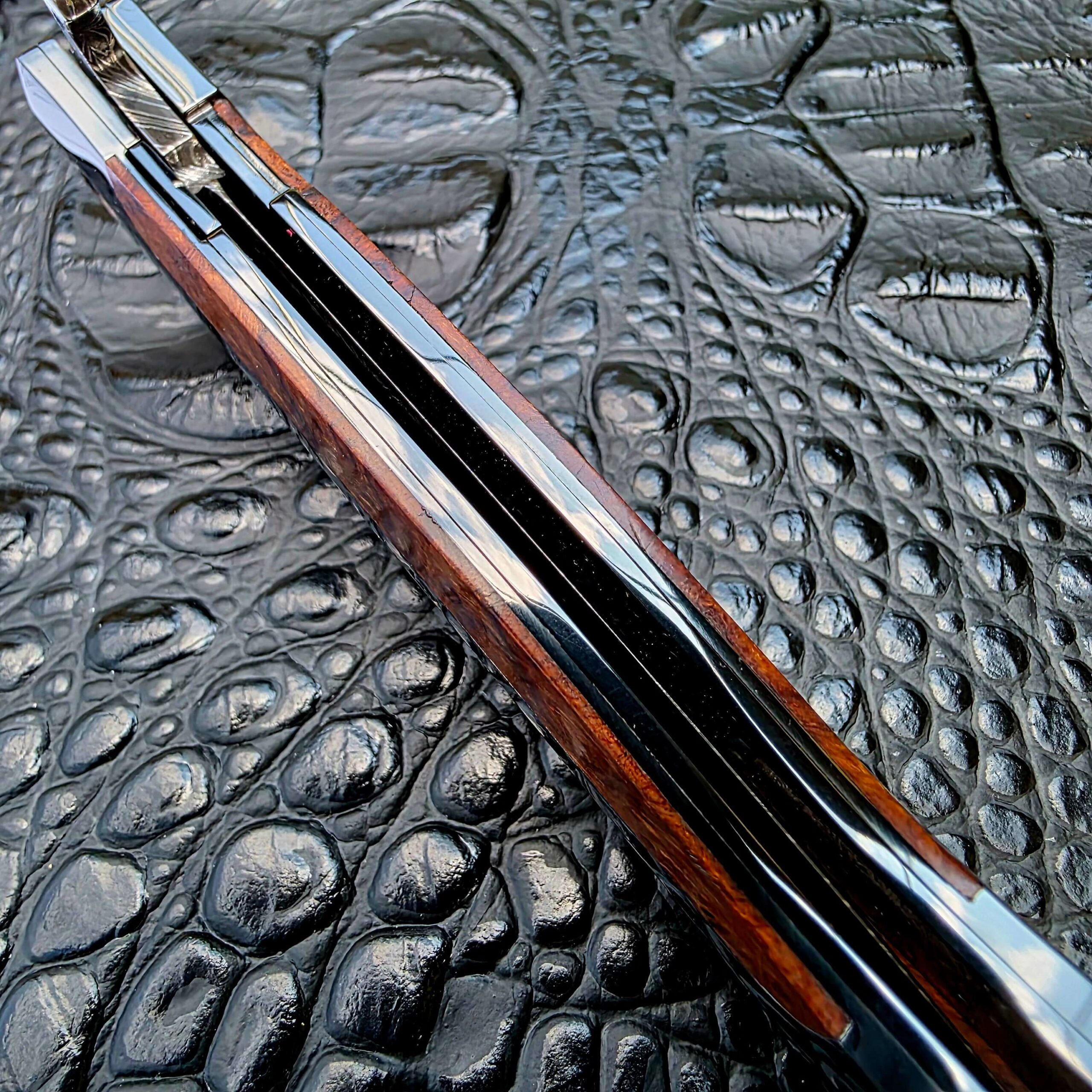
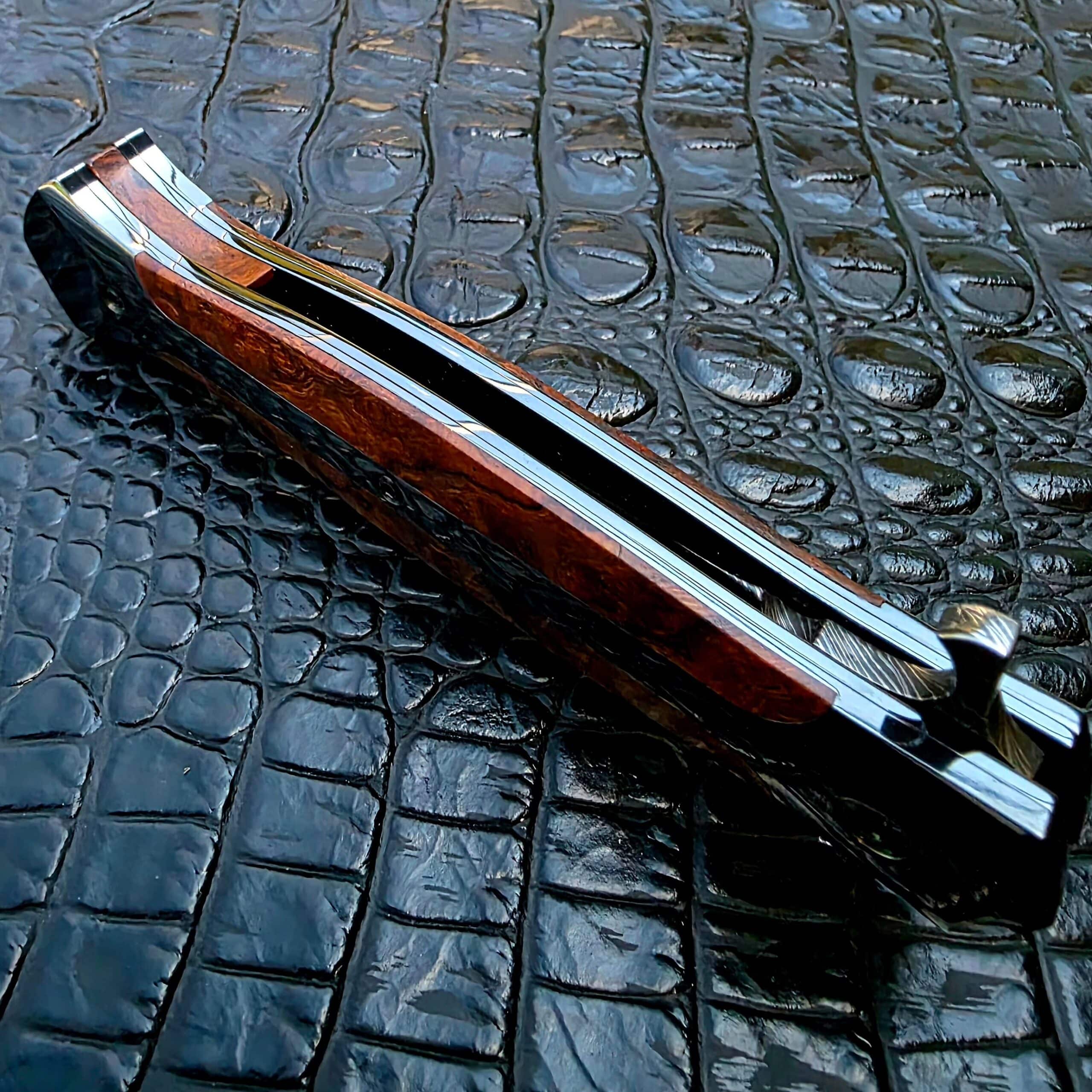
The frame is polished steel with a DLC treatment. DLC stands for diamond-like carbon, a vapor-deposited coating that is far harder than the steel underneath it and reads as a deep black. On a polished substrate it comes out mirror dark rather than matte.
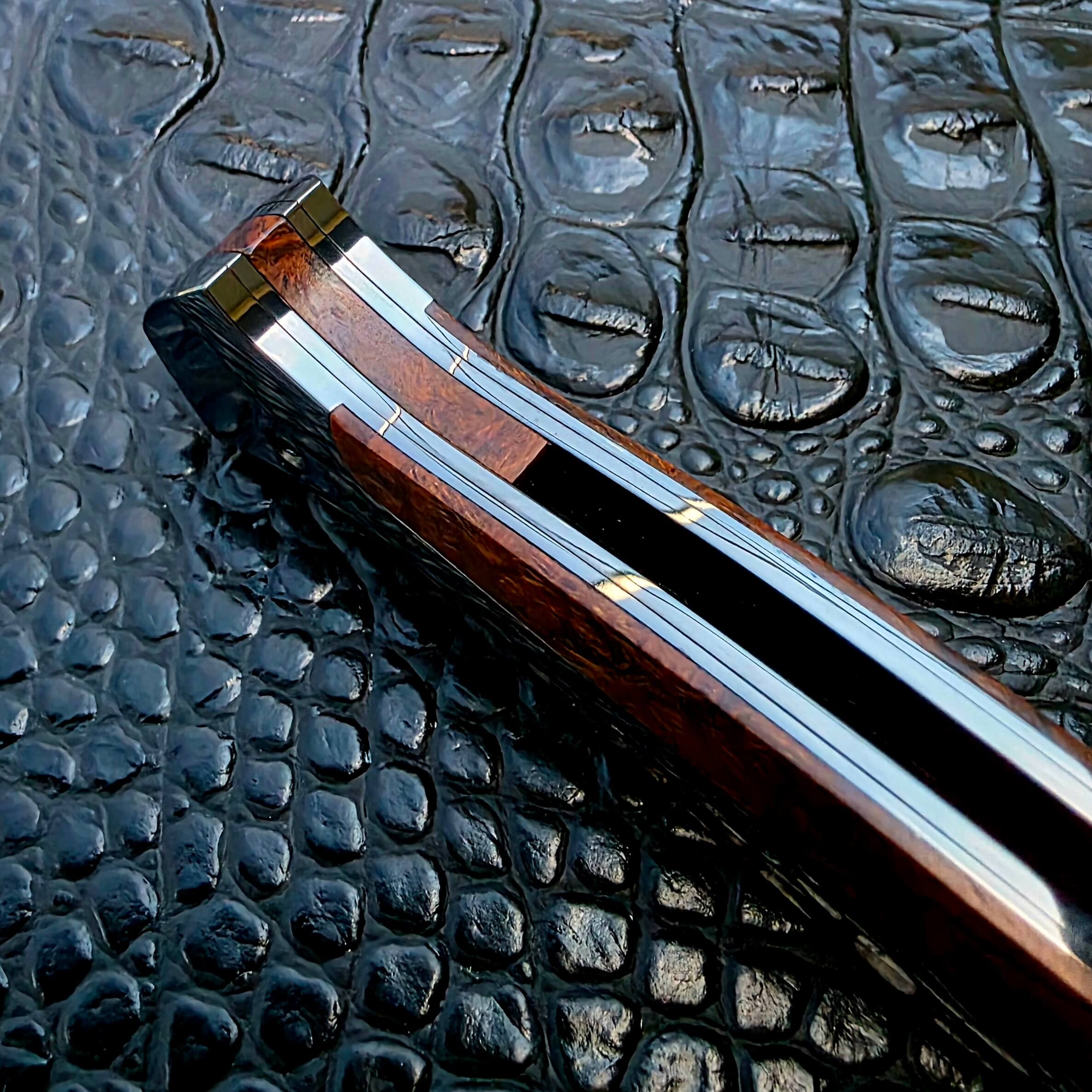
The spacer and the internal mechanism are hardened steel with DLC as well, not just the outside. That is on the card, and it is the kind of detail a custom workshop only bothers with when someone is going to open the knife and look.
Set into that frame are ironwood inlays. Desert ironwood is among the densest woods in the world, dense enough to sink, and it takes a polish like stone. The figure runs orange through to near black and no two pieces repeat.
It is a liner lock running on ball bearings, deployed by a flipper. There is no pocket clip, which is a deliberate choice on a knife built to be handled rather than pocketed.
Condition and What’s Included with This La Cantina Sally Custom
Condition is excellent. There are no blemishes and no flaws. We inspect every knife in hand before we photograph it. Our published grading standards let you check this description against what arrives.
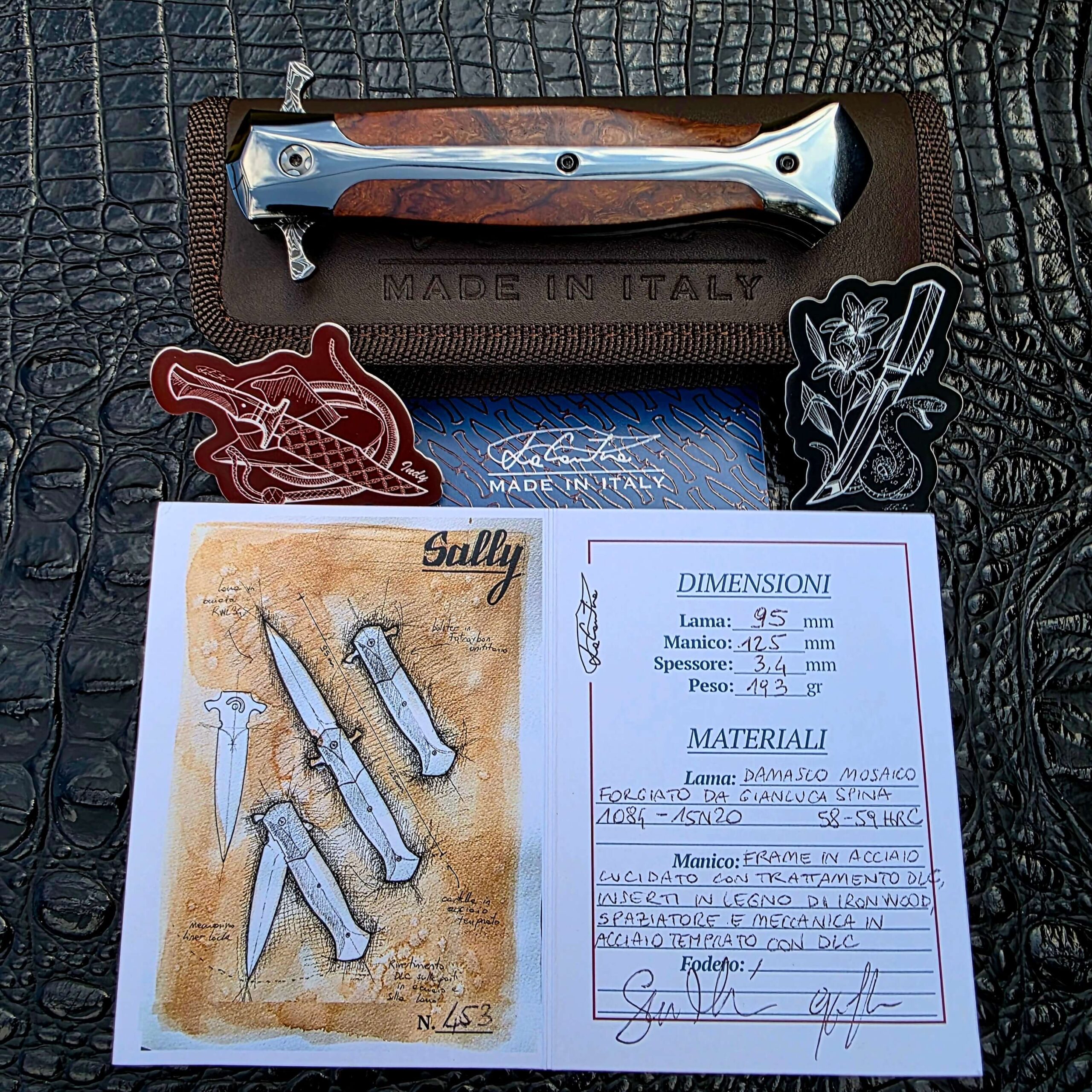
It came from a collector rather than direct from Bresso. The documentation is complete and it is unusually good for a custom of any origin. The numbered Sally Custom #453 design card records the dimensions in millimeters, names Spina as the forger of the blade, gives the steel and the hardness, describes the frame and the mechanism, and carries two signatures.
A Certificate of Authenticity, the original La Cantina presentation pouch and two decals come with it. Read how we handle provenance on pieces that arrive with their full paperwork.
- La Cantina Sally Custom #453 folding knife
- Numbered Sally Custom #453 design card, signed
- Certificate of Authenticity
- Original La Cantina presentation pouch
- Two La Cantina decals
La Cantina Sally Custom #453 Specifications
The dimensions, steel, hardness, forger and construction are taken from the signed design card, which records them in millimeters.
- Type: One-off custom knife, individually numbered
- Overall length, open: 8.66 in
- Blade length: 3.74 in
- Cutting edge: 3.5 in
- Closed length: 4.92 in
- Blade thickness: 0.134 in, 3.4 mm
- Blade material: Custom Mosaic Damascus, 1084 and 15N20, hand-forged by Gianluca Spina
- Hardness: 58 to 59 HRC
- Blade style: Dagger, flat ground
- Frame: Polished steel with DLC treatment
- Inlays: Ironwood
- Spacer and mechanism: Hardened steel with DLC
- Lock type: Liner lock
- Action: Manual
- Deployment: Flipper on ball bearings
- Pocket clip: None
- Weight: 6.81 oz
- Serial: 453
- Date made: August, 2026
- Country of origin: Bresso, Milan, Italy
- Condition: Excellent, no blemishes or flaws
- SKU: 00213-LCK-SALLYCUSTOM-453-SPINA-DAMASCUS-2026
This piece is preowned and came from a collector. Browse our other preowned knives.
Video Description: Italian Custom Sally Folding Dagger
The La Cantina Sally Custom #453 is a preowned Italian custom folding knife in excellent condition. Simone Milanesi and Gabriella Crippa built it in Bresso, near Milan, in August, 2026. The blade is custom mosaic Damascus hand-forged by Gianluca Spina in 1084 and 15N20 at 58 to 59 HRC. It is a dagger profile, flat ground, 3.74 inches long with 3.5 inches of cutting edge.
The frame is polished steel with a DLC treatment, inlaid with ironwood. The spacer and the internal mechanism are hardened steel with DLC as well. It is a liner lock running on ball bearings, deployed by a flipper, with no pocket clip. Overall length is 8.66 inches open and 4.92 inches closed, at 6.81 ounces. It ships with the numbered design card, certificate, pouch and decals.
Frequently Asked Questions
What makes the La Cantina Sally Custom a custom knife rather than a production one?
Three things, and all of them are checkable rather than rhetorical. It is individually numbered, #453, and that number appears on a card filled in by hand for this specific knife. The materials are one-off: mosaic Damascus forged for it by a named smith, and ironwood inlays whose figure exists on no other piece.
And the people are named. A production knife is made to a specification by a workforce. This was made by Simone Milanesi and Gabriella Crippa, who oversee every stage themselves, with a blade hand-forged by Gianluca Spina. All three are identified on the documentation, and two of them signed it.
Who actually made this La Cantina Sally Custom?
Three craftsmen, and the card names all of them. Simone Milanesi and Gabriella Crippa designed and built the knife in their workshop in Bresso, just north of Milan. Gianluca Spina forged the Damascus at Forgia Santa Margherita in Borgonovo Val Tidone, in the province of Piacenza.
That division is worth understanding. Spina is a specialist forger who also teaches traditional forging and works in experimental archaeology. Milanesi and Crippa are makers who describe a knife as a designed object. The blade comes from one discipline and the knife comes from another, and the piece only exists because both were involved.
Why does Gianluca Spina’s name on the card matter?
Because it ties this blade to La Cantina’s most significant knife. At BLADE Show 2023, Milanesi’s La Cantina Indy model won The Knifemakers’ Guild Best Bowie Award. BLADE Magazine recorded the Indy’s specification, and its blade was mosaic Damascus forged by Spina.
So this is not a maker buying billet from whoever had stock on the shelf. It is the same forging relationship that produced an award-winning knife, applied here to a folder and written onto the card by hand.
What is the difference between Mosaic Damascus and ordinary Damascus?
In ordinary pattern-welded Damascus the smith stacks, forges and folds, and the pattern that appears is a consequence of that process. He can steer it but he does not draw it.
In mosaic work the figure is designed first and built into the billet, then drawn out so the motif runs through the finished blade. It is considerably more difficult, because every additional operation is another chance for a weld to fail and destroy the billet. The bright lines you see are the 15N20, whose nickel content resists the etch that darkens the 1084 around it.
Does the DLC frame need different care from the Damascus blade?
They are opposites, which is unusual on one knife. DLC is diamond-like carbon, vapor deposited, and it is far harder than the steel beneath it. It resists corrosion and scratching well and asks almost nothing of the owner.
The blade is the part that needs attention. Neither 1084 nor 15N20 is stainless, so a carbon Damascus wants wiping after handling and a light coat of oil in storage. Skin oils will mark an etched Damascus long before they touch a DLC frame.
Why is there no pocket clip?
Because the Sally Custom was not designed as a pocket knife in the working sense. It is a gentlemen’s dagger, at nearly seven ounces with a hand-forged Damascus blade and ironwood inlays, built by two makers who describe their knives as designed objects.
A clip would break the line of the frame and put a steel spring against a mirror-polished DLC surface. Omitting it is a design decision rather than an oversight, and it is consistent across the Sally platform.
Does We Buy Knife Collections actively support the broader knife enthusiast community?
Yes. Based in Jacksonville, Florida, We Buy Knife Collections is a curator and purveyor of fine custom made folding and fixed-blade knives. We are dedicated to the high-end custom knife community and we support knife rights advocacy.
Following our commitment upgrade in April 2026, we are proud to hold an AKTI Premier Membership, supporting the American Knife & Tool Institute’s vital advocacy and lobbying for knife owners, makers, and the future of the industry.
Buy This La Cantina Sally Custom #453
We inspect every knife in hand and photograph it ourselves. This is the first La Cantina custom we have carried. Talk to us about selling your collection, or browse the rest of our latest arrivals.

Reviews
There are no reviews yet.