
Burn Knives Automatic Dagger: A Custom in Chad Nichols Damascus
Paul Panak builds Burn Knives in Ohio, and collectors know him for two things: Italian picklocks and out-the-front automatics. This is neither. It is a linerlock automatic dagger, and it is one of the least produced styles he makes. Even better, this is available now for much less than a new Burn custom, and at a much lower price.
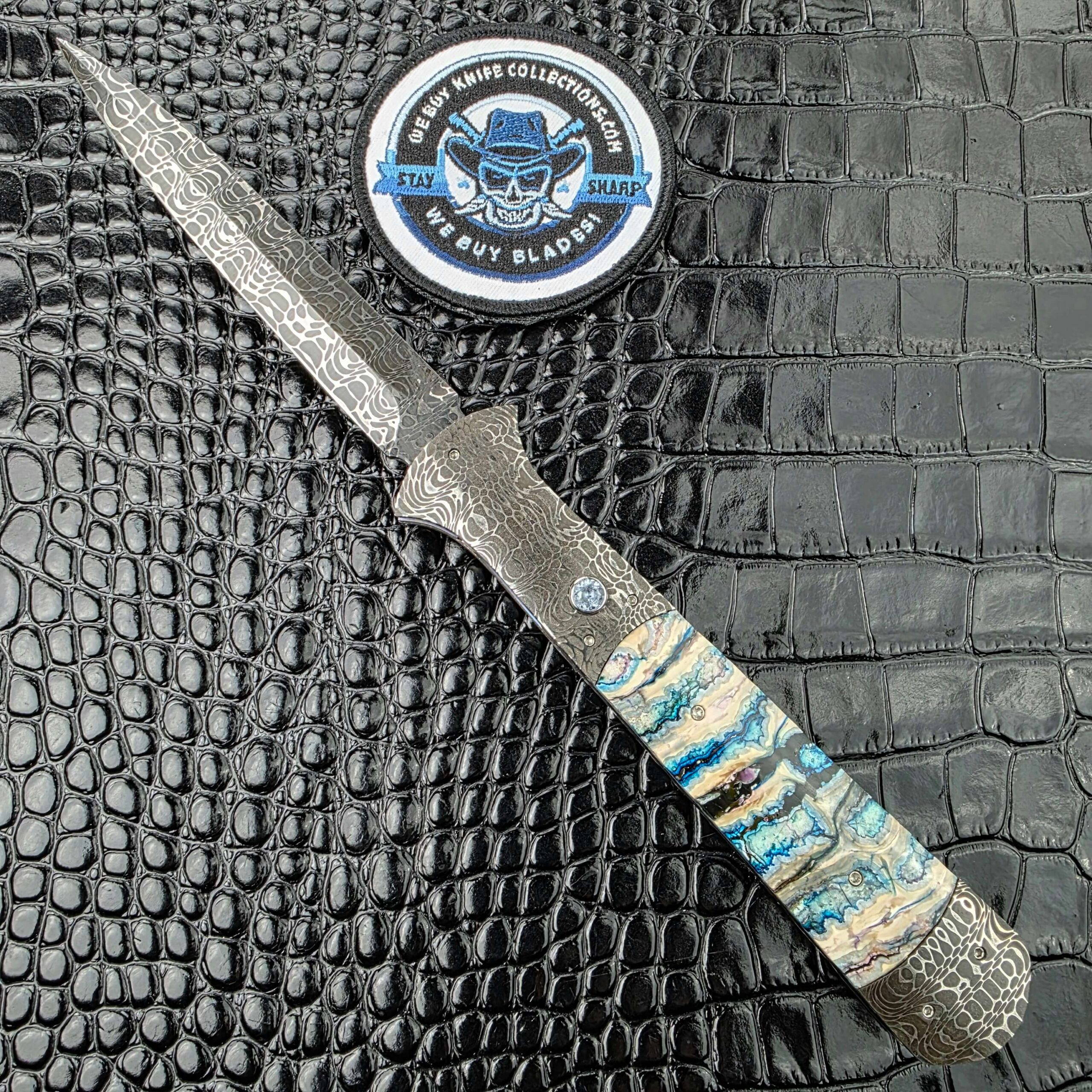
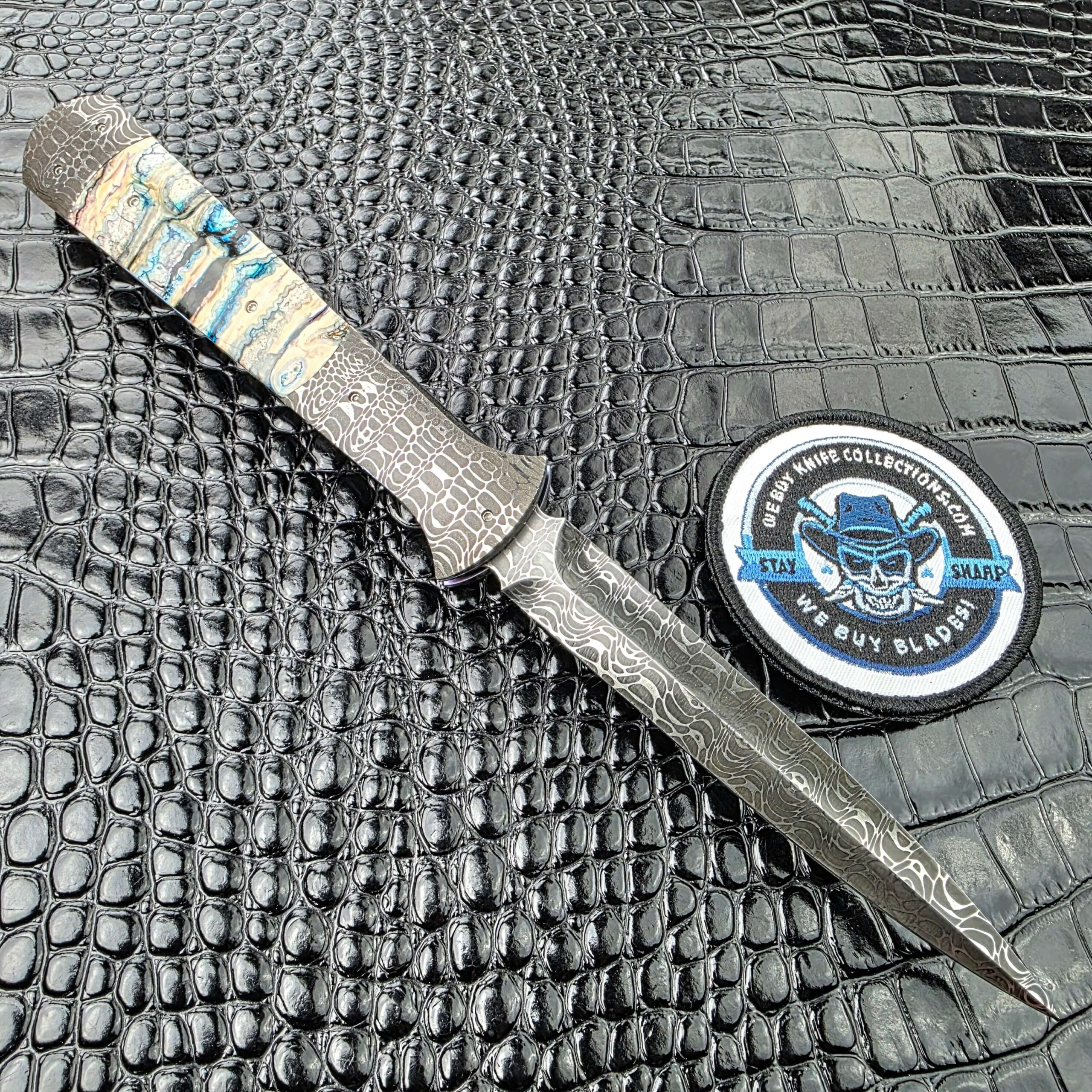
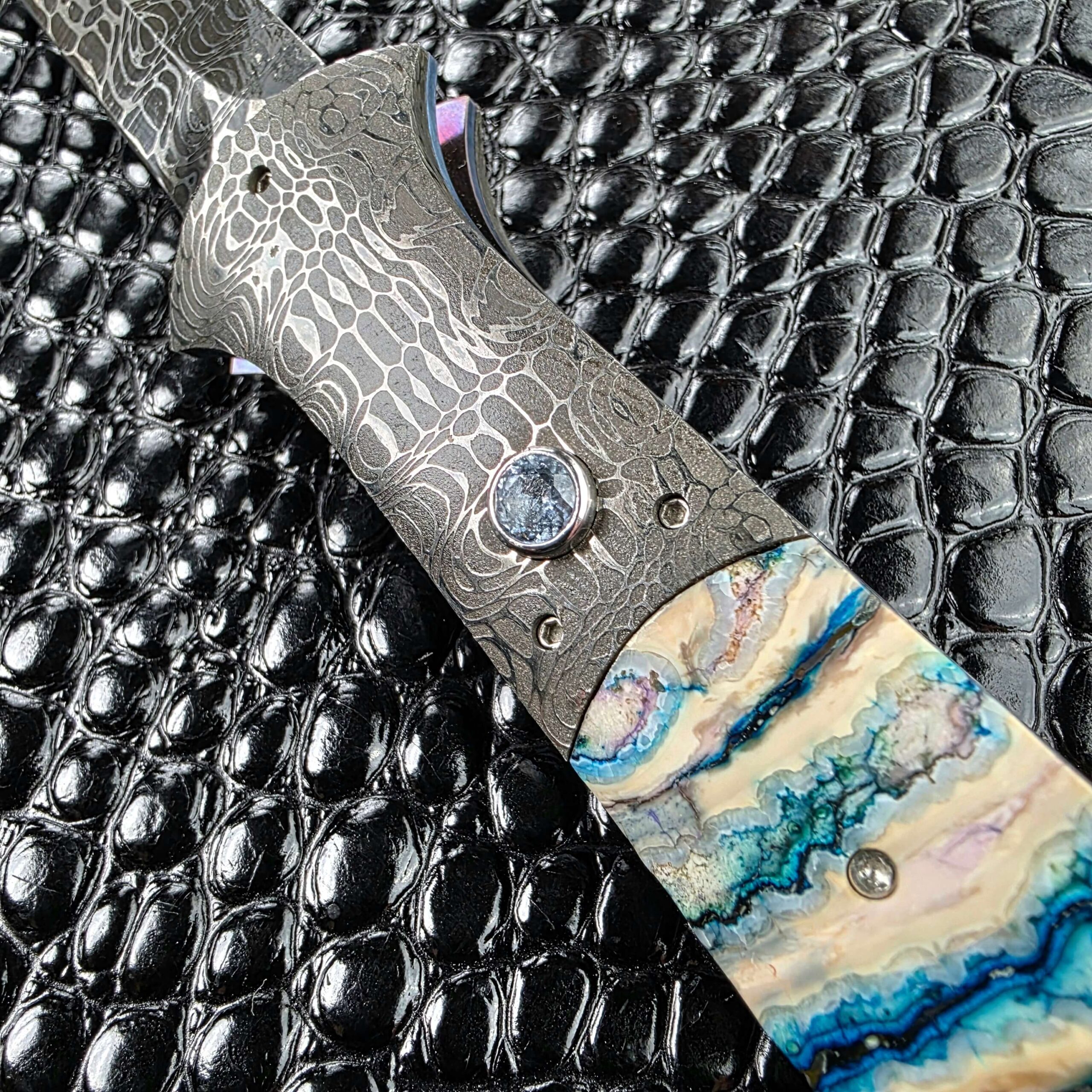
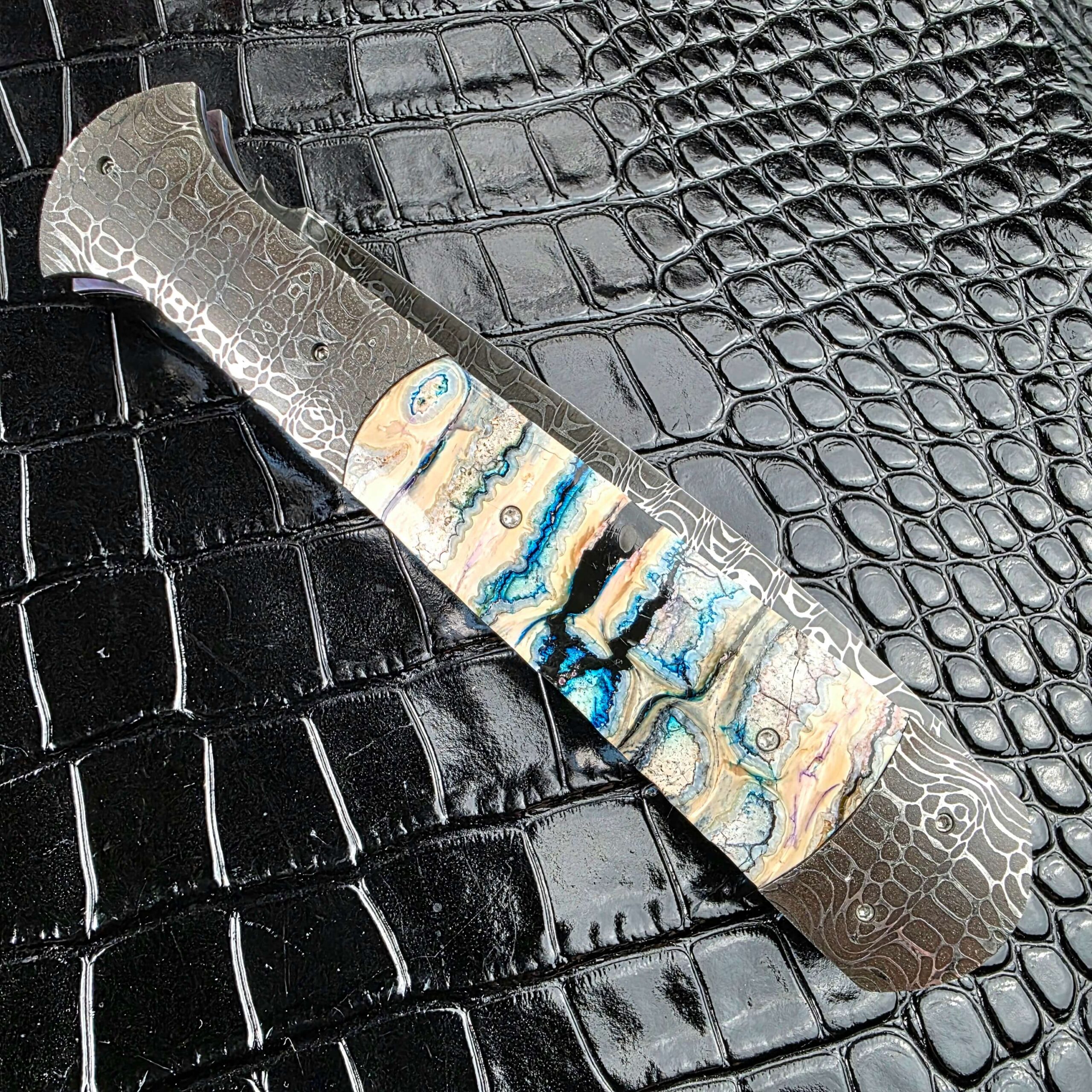
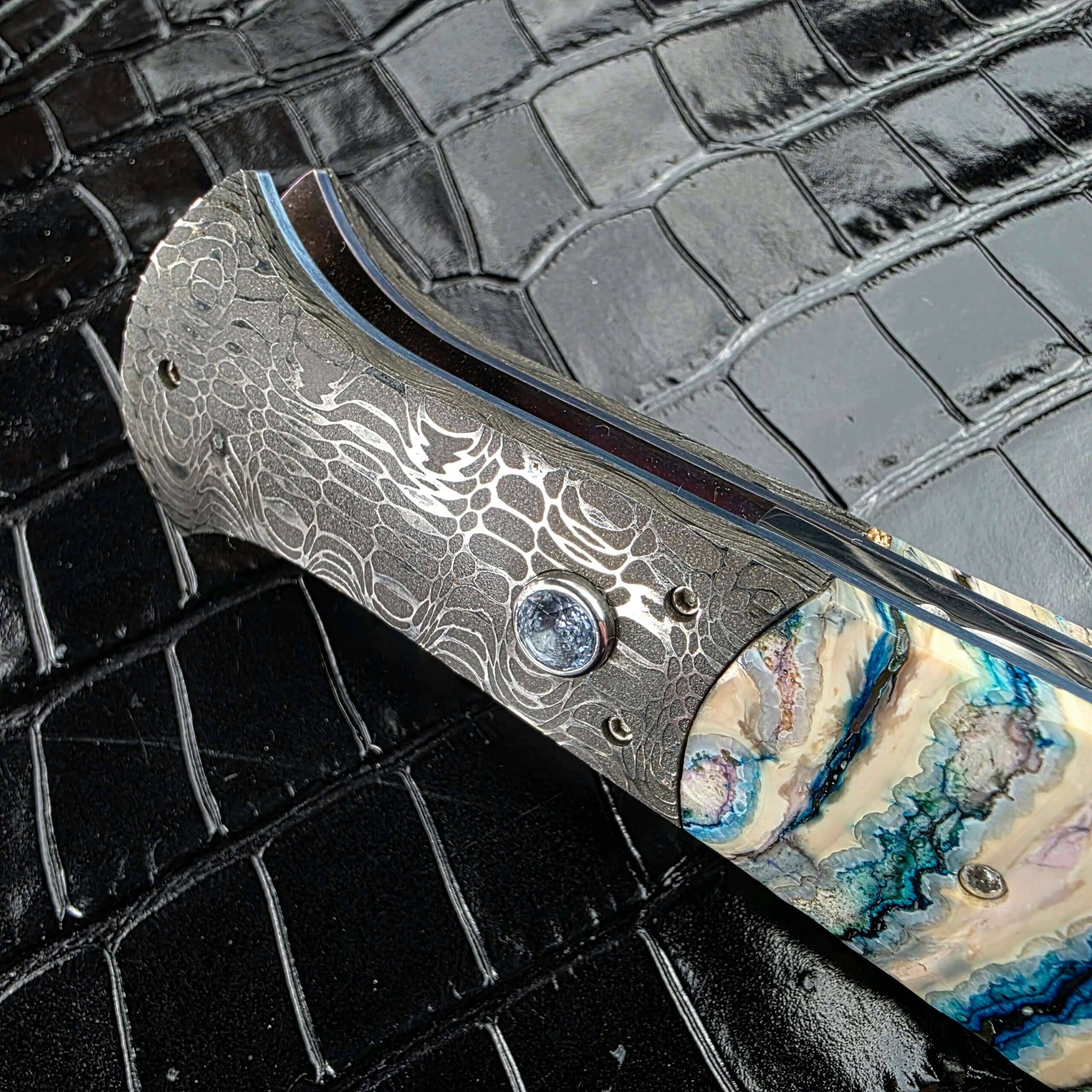
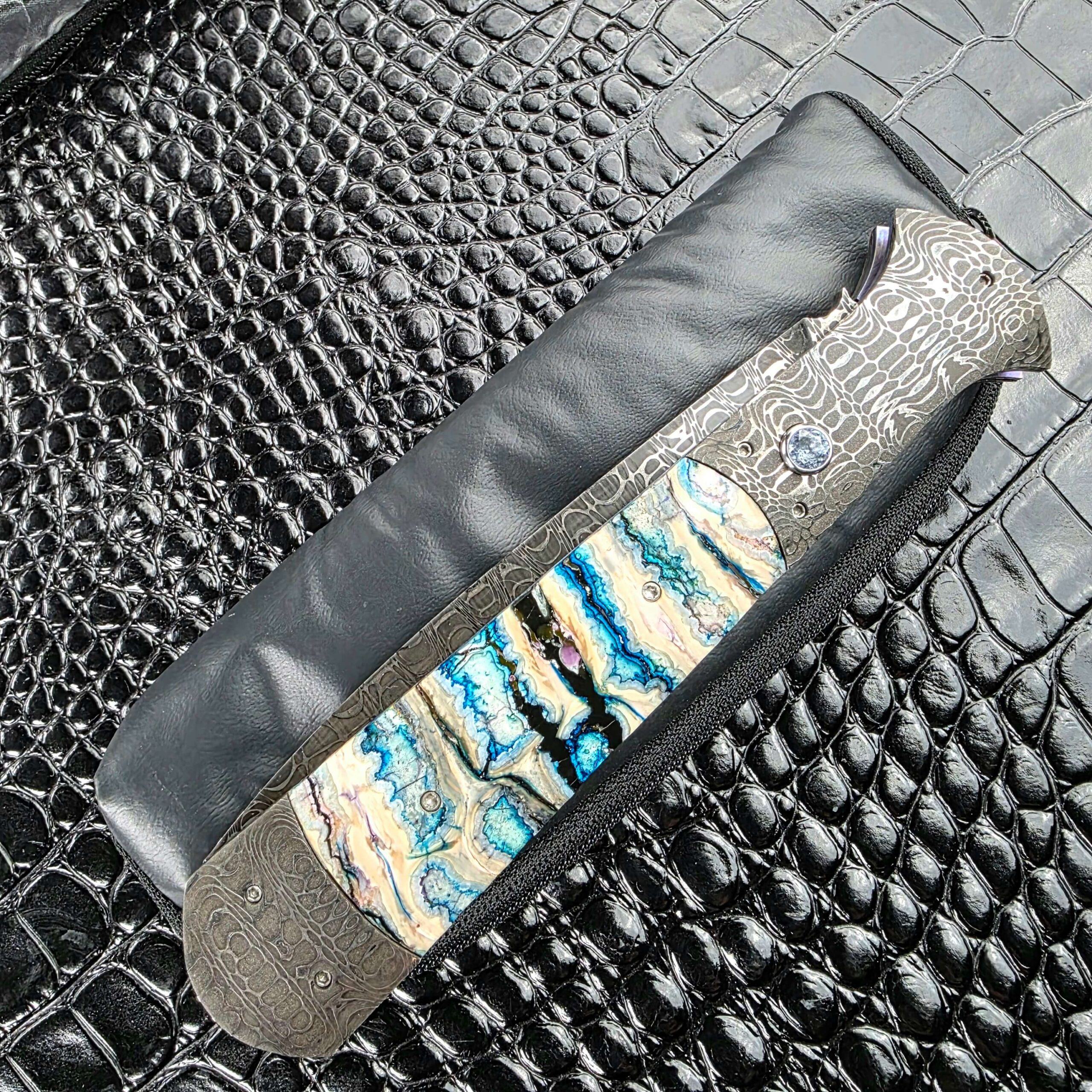
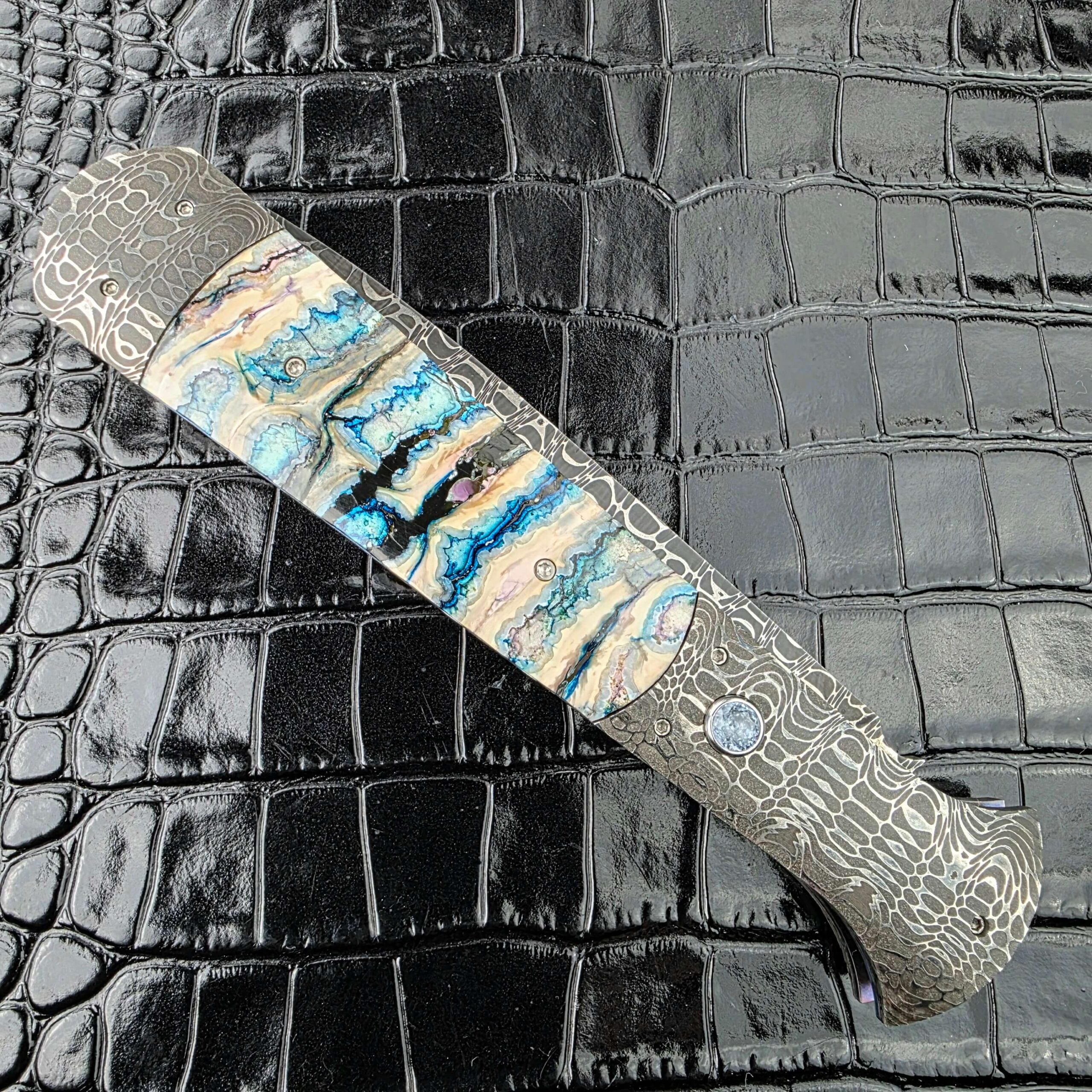
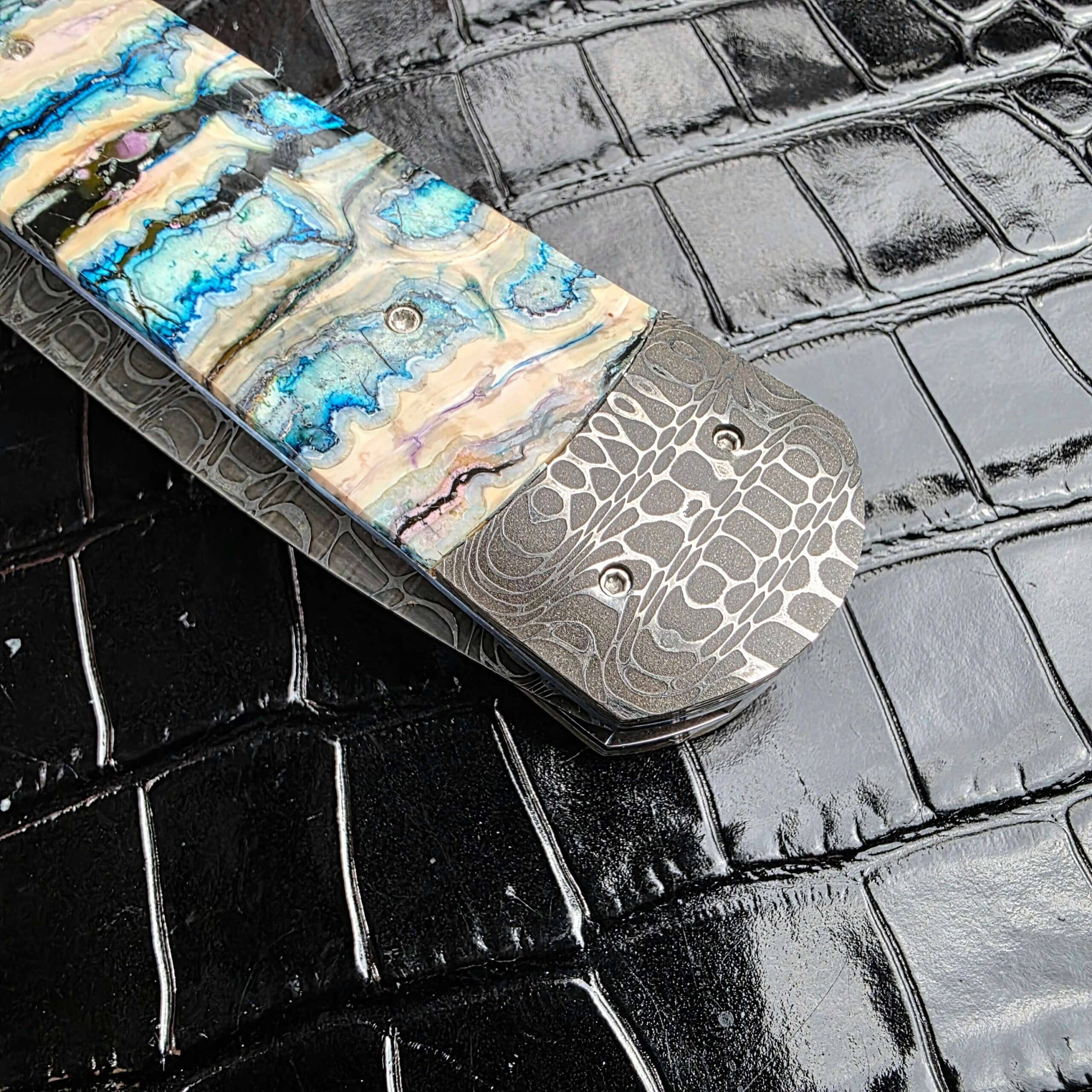
The blade and both bolsters are Chad Nichols Damascus. Mammoth molar fills the handle between them. It runs 11 3/8 inches open and weighs 10.8 ounces, so this is a statement piece by any measure.
Condition is excellent, with no wear and no blemishes. It fires crisply, and the lock engages with no play.
Why a Linerlock Automatic Is Unusual
Most side-opening automatics lock with a plunge lock, where the same button that fires the blade also holds it open. Panak instead used a liner lock here.
So the button only fires. Then a spring liner snaps in behind the tang and carries the load. To close it you push the liner aside, exactly as on a manual folder.
That split costs the maker extra work, because he must fit and tune both systems separately. Yet it gives the owner a lock face he can inspect and adjust over a lifetime.
Panak has built this configuration rarely. Our other Burn pieces show the styles he is known for instead: a Samurai Tanto picklock and a Vengeance OTF.
Chad Nichols Damascus, and Why Stainless Is Harder
Chad Nichols works out of Blue Springs in northern Mississippi, between Tupelo and the Tennessee border. He runs a shop of five. He also invented MokuTi, and he supplies Damascus to custom makers worldwide.
Carbon Damascus is comparatively straightforward. A smith stacks, heats and folds it in an open forge, because air does not stop the layers bonding.
Stainless Damascus refuses to behave that way. Ambient air prevents stainless layers from forge welding at all. So a smith must prepare and weld the billet under vacuum. That is why stainless Damascus costs several times what carbon does.
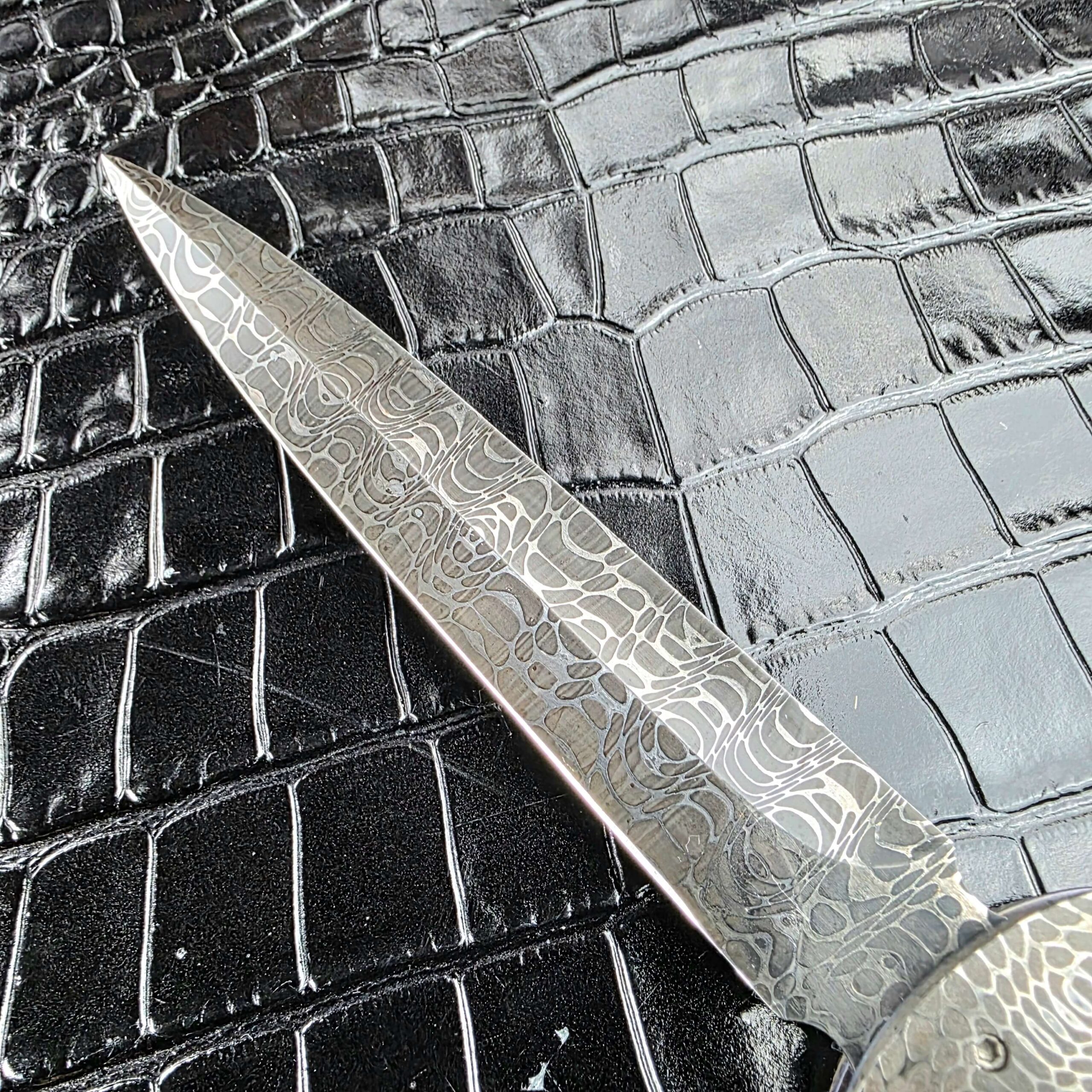
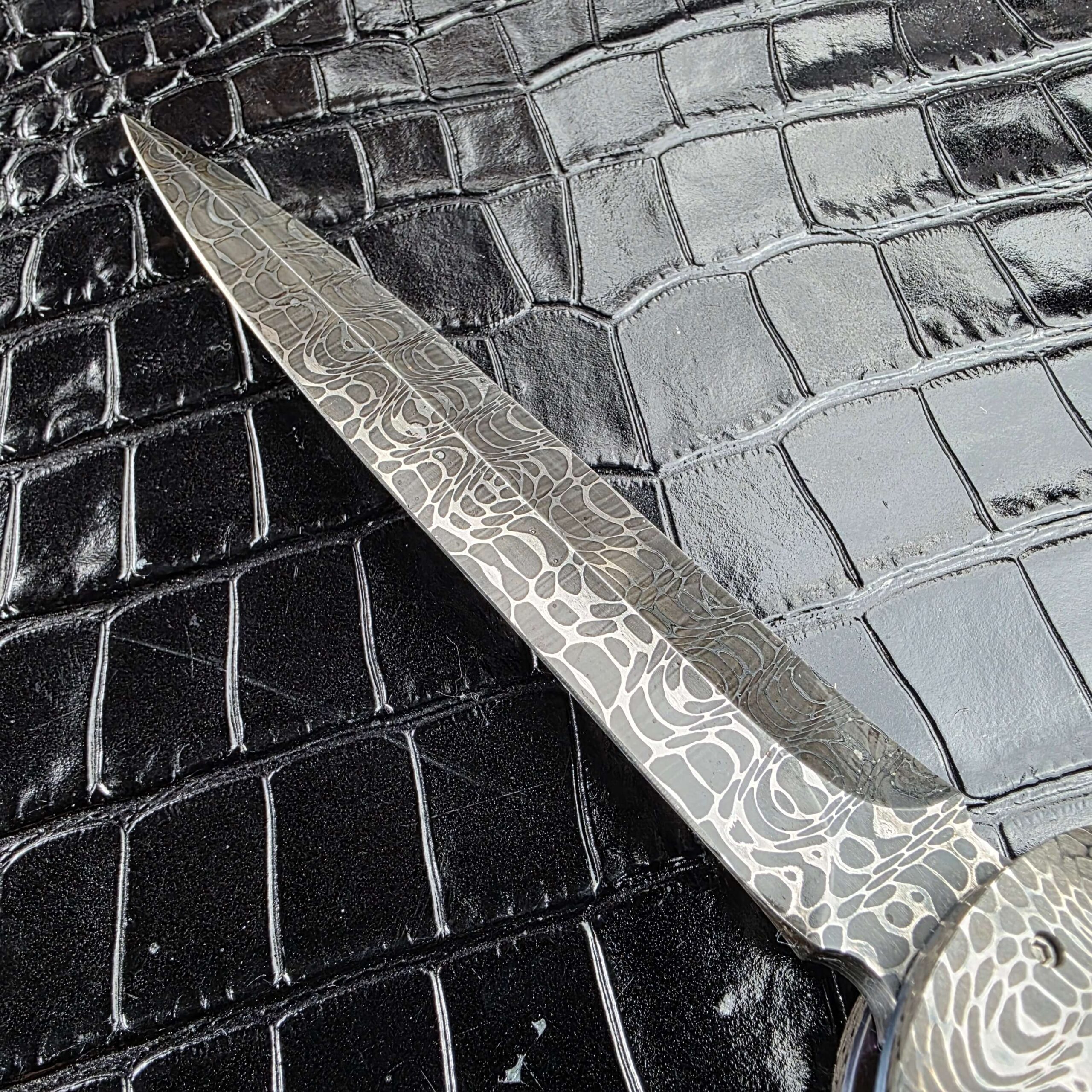
Nichols began with ten flat-billet patterns and now offers twenty-six. Two different ones appear on this knife. The blade carries a cellular, web-like figure, while the bolsters run a tighter honeycomb.
Panak used that material on the blade and on both bolsters. Nothing here is plain steel dressed up.
The Dagger Blade
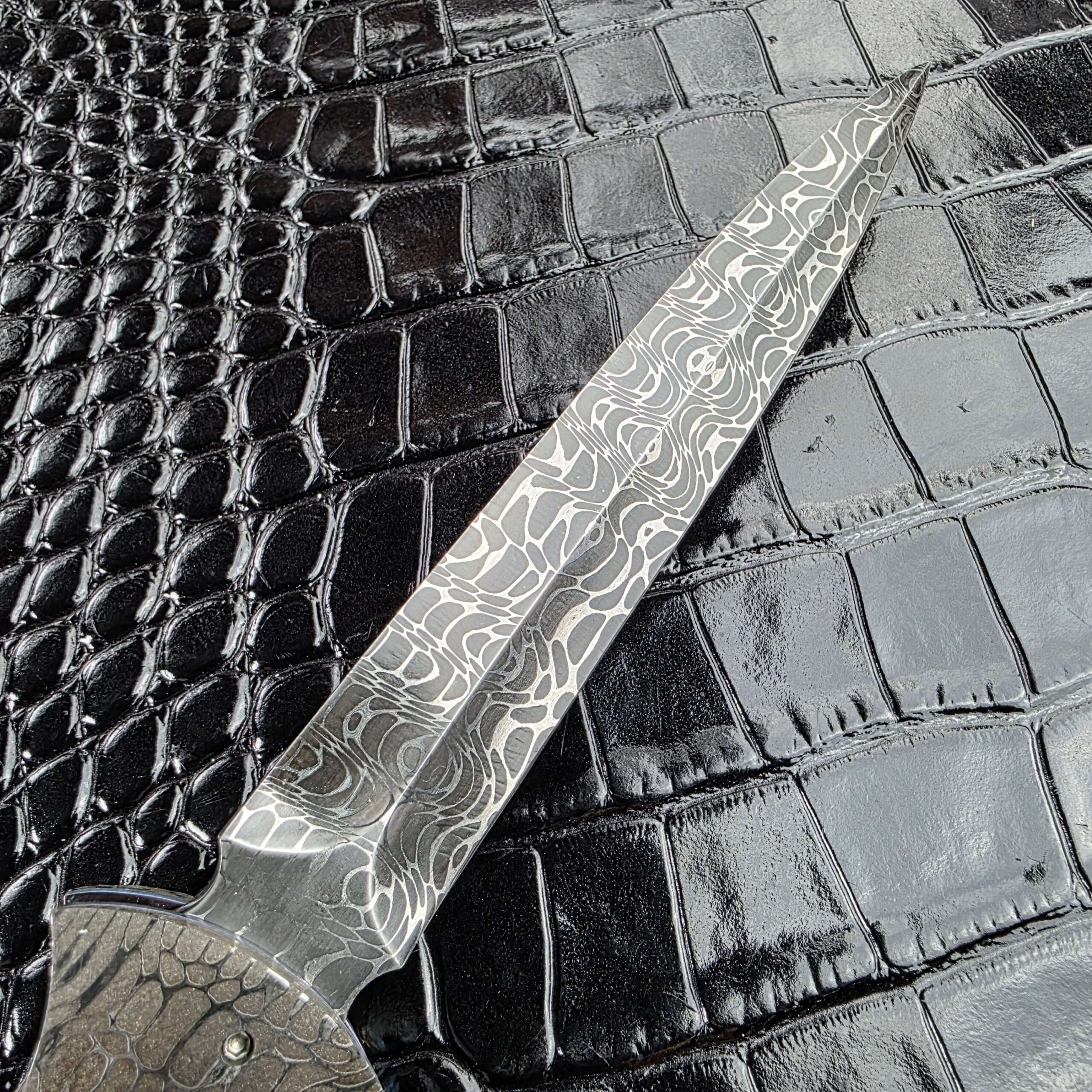
The blade measures 5 1/8 inches with 5 inches of cutting edge. It grinds symmetrically from a central ridge to a needle point.
Daggers reward a maker who can grind. Because both sides must mirror each other exactly, any wobble shows immediately along the centerline. Add a Damascus pattern and the difficulty doubles, since the pattern reveals every variation in the grind.
Look down the blade and the ridge runs true. That is the hardest thing on this knife to do well, and it is the easiest to check.
Mammoth Molar and Blue Anodized Liners
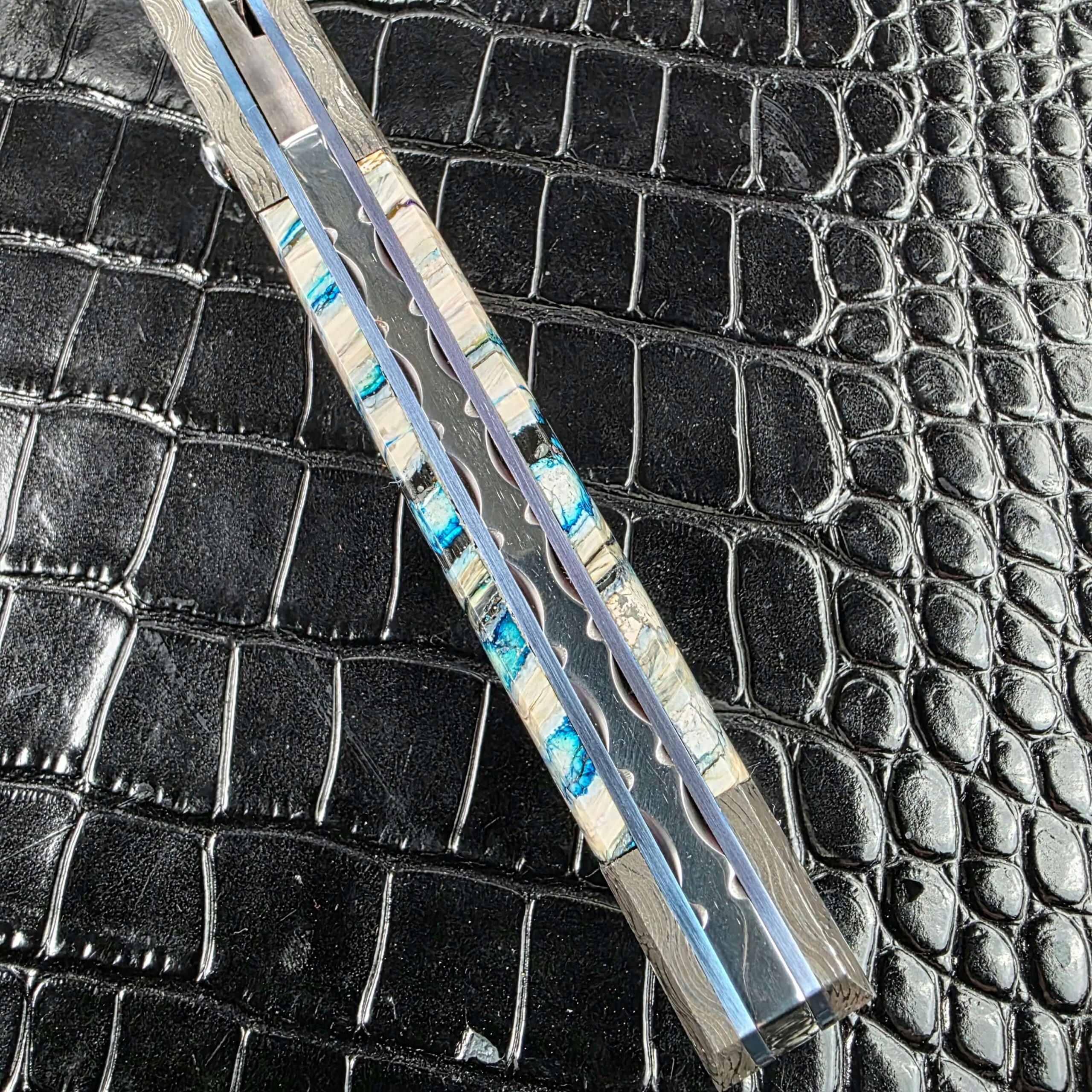
The scales are mammoth molar, and this is exceptional material. Blue, teal, cream and black run in parallel bands across both sides.
Molar is not tusk. A tusk is dentine throughout, so it swirls. A molar alternates enamel and dentine in layers, so it stripes. Each band on these scales records part of the animal’s life.
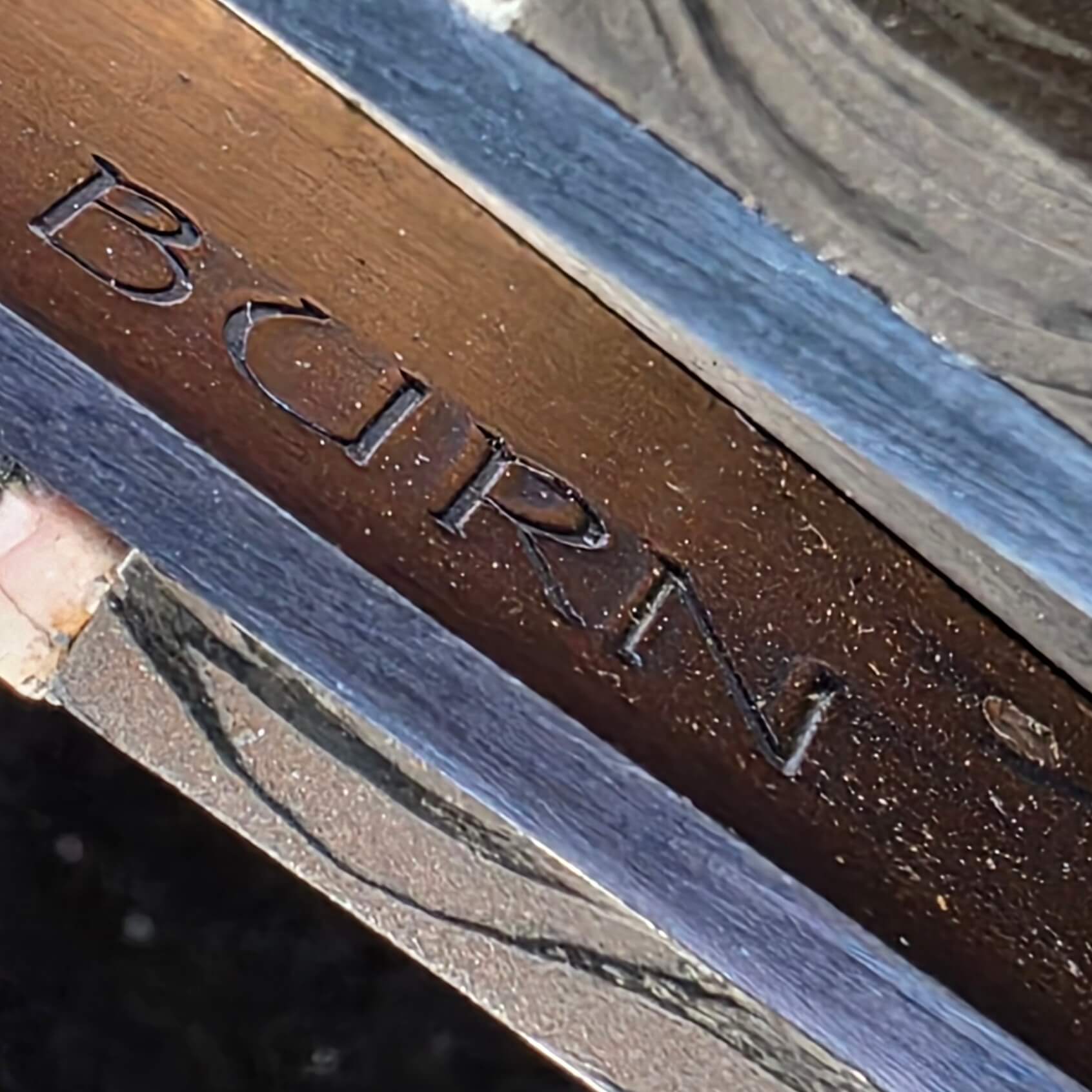
Then there is what you only see from the spine. The liners are titanium, anodized blue, with a scalloped wave milled along their length. Most makers leave that surface plain, because nobody sees it once the knife goes together.
A bronze backspacer runs between them, and Panak stamped BURN into it. So the maker’s mark sits where only an owner handling the knife will find it.
There is no pocket clip. At nearly eleven ounces, that is the right decision.
Condition and What’s Included with This Burn Knives Automatic Dagger
Condition is excellent, with no wear and no blemishes. We inspect every knife in hand, and we fire every automatic ourselves before photographing it. You can check our description against our published standards.
It came out of a collection. A soft case comes with it, and there is no certificate. We state that plainly rather than let a buyer discover it later.
Panak did not date this one, so we cannot give a build year. The BURN stamp on the backspacer is the maker’s mark.
- Burn Knives linerlock automatic dagger by Paul Panak
- Soft case
Burn Knives Automatic Dagger Specifications
- Overall length, open: 11 3/8 in
- Blade length: 5 1/8 in
- Cutting edge: 5 in
- Closed length: 6 5/16 in
- Blade: Chad Nichols Damascus, dagger ground
- Bolsters: Chad Nichols Damascus
- Scales: Mammoth molar
- Liners: Titanium, anodized blue, wave milled
- Backspacer: Bronze, stamped BURN
- Lock type: Liner lock
- Action: Automatic
- Deployment: Button
- Pocket clip: None
- Weight: 10.8 oz
- Country of origin: Ohio, USA
- Condition: Excellent, no wear or blemishes
- SKU: 00217-BURN-AUTODAGGER-NICHOLSDAM-MAMMOTH
This piece came from a private collection, so browse our other preowned knives as well.
Video Description: Automatic Dagger Linerlock
The Burn Knives Automatic Dagger is a preowned custom automatic in excellent condition. Paul Panak built it in Ohio. The blade and both bolsters are Chad Nichols Damascus, and the scales are mammoth molar. The blade measures 5 1/8 inches with 5 inches of cutting edge, ground symmetrically to a needle point.
A button fires the blade, and a liner lock holds it open. That combination is unusual, because most side-opening automatics use a plunge lock instead. The liners are titanium anodized blue and wave milled, and a bronze backspacer carries the BURN stamp. Overall length is 11 3/8 inches open and 6 5/16 inches closed, at 10.8 ounces. It ships with a soft case.
Frequently Asked Questions
What makes the Burn Knives Automatic Dagger a custom knife?
A custom is a unique, handcrafted tool that an individual artisan designs and builds, rather than a factory stamping it out. That artisan tailors every detail by hand and with the help of specialized machinery.
Panak works that way, and this knife shows it. He chose a lock configuration he rarely builds. He fitted mammoth molar that exists on no other piece. Then he milled a wave into liners nobody sees and stamped his mark on a backspacer hidden inside the handle.
Why is a linerlock automatic unusual?
Because most side-opening automatics combine the two functions. A plunge lock uses one button to fire the blade and to hold it open, which is simpler to build and simpler to tune.
Here Panak separated them. The button fires, and a liner lock carries the load afterward. So he had to fit and tune two systems rather than one. The owner gets a lock face he can see, inspect and adjust for the life of the knife.
Why does stainless Damascus cost more than carbon Damascus?
Because air gets in the way. A smith forges carbon Damascus in an open forge, stacking and folding it, and the layers bond readily.
Stainless will not do that. Ambient air prevents stainless layers from welding together at all, so a smith must prepare and forge the billet under vacuum. That equipment and that process are why stainless Damascus commands several times the price of carbon, and why relatively few smiths make it well.
Is mammoth molar the same as mammoth ivory?
No. Tusk is ivory, which is dentine all the way through, so it tends to swirl. A molar is a tooth, and it alternates enamel and dentine in layers.
That is why molar stripes in parallel bands instead. Both are fossil material from an extinct animal, though, so the compliance notice at the foot of this page applies to either one.
How hard is it to grind a Damascus dagger?
Harder than almost anything else on a folder. Both sides must mirror each other, and the central ridge has to run dead straight from ricasso to point.
Damascus makes it worse, because the pattern maps the grind. Any variation in geometry shows as a wander in the figure, so a smith cannot hide a correction. On this blade the ridge runs true, and that is checkable from the photographs.
Does We Buy Knife Collections actively support the broader knife enthusiast community?
Yes. Based in Jacksonville, Florida, We Buy Knife Collections is a curator and purveyor of fine custom made folding and fixed-blade knives. We are dedicated to the high-end custom knife community and we support knife rights advocacy.
Following our commitment upgrade in April 2026, we are proud to hold an AKTI Premier Membership, supporting the American Knife & Tool Institute’s vital advocacy and lobbying for knife owners, makers, and the future of the industry.
Buy This Burn Knives Automatic Dagger
We inspect every knife in hand, and we fire every automatic ourselves. See what else is available on the Burn Knives brand page. You can also talk to us about selling your collection.
Automatic Knife Legal Notice
This is an automatic knife. Laws governing purchase, possession, and carry vary by state, county, and municipality.
The buyer must know and follow the laws that apply where they live before ordering. We do not give legal advice. For current state-by-state information, consult the American Knife and Tool Institute.
Woolly Mammoth Tooth Compliance Notice
The mammoth material on this knife is fossil woolly mammoth tooth. Tooth is enamel and dentine rather than tusk, and it is not ivory. No living or endangered animal is involved.
Several states restrict the sale and possession of ivory materials. Some of those statutes are written broadly enough that a buyer should confirm how their own State treats fossil mammoth material of any kind. Please understand the current laws in your State and act accordingly.


Reviews
There are no reviews yet.