Ferrum Forge Knife Works
Filter by Stock
Filter by price
Filter Blade Type
 Custom Flashlights and Torches
Filter by Maker
- 3LegDog Knives (1)
- 417CNC Knives (1)
- A2 Knives (1)
- Allen Elishewitz Custom Knives (3)
- André Thorburn Custom Knives (2)
- Andriy Mozil Custom Knives (2)
- Anton van der Westhuizen Custom Knives (1)
- Arno Bernard Knives (2)
- Bill Coffey Custom Knives (1)
- Bill Poor Custom Knives (1)
- Billy Mace Imel Custom Knives (2)
- Blackside Customs (5)
- Borka Blades & Sebastijan Berenji (2)
- Brandon Vallotton Custom Knives (2)
- Brian Milinski Custom Knives (1)
- Brian Tighe Custom Knives (1)
- Brown Knives by Craig Brown (3)
- Buddy Gaines Custom Knives (1)
- Burn Knives by Paul Panak (5)
- Chris Reeve Knives (12)
- Chuck Gedraitis Custom Knives (3)
- Clark Blades by David Clark (1)
- Corrie Schoeman Custom Knives (1)
- Curt Zimmermann Custom Knives (3)
- Curtiss Knives (1)
- Custom Knife Factory (CKF) (7)
- Darac Steel & Dario Zadravec (1)
- Daryl Hibben Custom Knives (1)
- David Broadwell Custom Knives (2)
- DDR Knives - Darrel Ralph (2)
- Dervish Knives - John Gonzalez (2)
- Desert Sage Blades (1)
- Dew Hara Custom Knives (23)
- Dianna Casteel Custom Knives (1)
- Direware Knives (1)
- DSK Tactical (3)
- Eliot "E.F." Maldonado Custom Knives (2)
- Emerson Knives (1)
- FengLi (1)
- Fischer Brothers Custom Knives (1)
- Francois du Toit Custom Knives (1)
- Glenn Are Hovin Custom Knives (2)
- Glenn Waters Custom Knives (2)
- Greg Lightfoot Custom Knives (1)
- Grimsmo Knives (1)
- Half Face Blades (2)
- Hawk Knife Designs (5)
- Haymaker Customs (1)
- Heretic Knives (7)
- Herman Knives (4)
- Herucus Blomerus Custom Knives (1)
- Hog House Knives (4)
- Holley Knife Company (2)
- Holt Bladeworks (1)
- Hoss Knives (1)
- Hypercut Manufacturing - Dylan Davis (3)
- J.B. Stout & Stout Knife & Tool (1)
- Jaco De Kock Custom Knives (4)
- Jason Clark & Clark Custom Knives (2)
- JD Van Deventer Custom Knives (1)
- Jeff Chaffee Custom Knives (1)
- Jeff VanderMeulen Custom Knives (1)
- Jerry Hossom Custom Knives (1)
- Jim Sornberger Custom Knives (1)
- JKK Custom Knives by Jen Lint (1)
- John Gray Custom Knives (4)
- KC Gray Custom Knives (1)
- Keanison Knives (1)
- Keith Kruger Custom Knives (1)
- Kit Carson (1)
- Koenig Knives (3)
- Koji Hara Custom Knives (3)
- Kyle Vallotton Custom Knives (1)
- La Cantina Knives (1)
- Larry Pridgen Custom Knives (1)
- Les George Knives (1)
- Maniac Machining (3)
- Marfione Custom Knives (7)
- Medford Knife & Tool (1)
- Mel Pardue Custom Knives (1)
- Melvin Lozada Custom Knives (4)
- Microtech Knives (5)
- Miroc Blade Works (1)
- Munroe Metalworks Custom Knives (1)
- NADEN Knives by Fellhoelter & Willumsen (1)
- NCC Knives (1)
- Neels van den Berg (Black Dragon Forge) (1)
- Nicholas Nichols Knives (1)
- NOC Knives (1)
- Olamic Cutlery (2)
- Pat Crawford Custom Knives (1)
- Patrick Famin Custom Knives (3)
- Poikilo Blade (1)
- Prince Customs (1)
- ProTech Knives (2)
- Rainy Vallotton Custom Knives (2)
- Ray Laconico Custom Knives (1)
- Reese Weiland Custom Knives (11)
- Rick Barrett Custom Knives (2)
- RMOR Knives (2)
- Robjohnsons Custom Knives (1)
- Rockstead Knives (2)
- Scorpion 6 Knives (5)
- Scott Gallagher Custom Knives (2)
- Sergey Rogovets Custom Knives (1)
- Shane Atwood & Atwood Custom Knives (3)
- Sharknivco Knives (1)
- Shirogorov Knives (2)
- Simeon Custom Knives (1)
- Skiff Made Blades (2)
- Stefano Compostella Custom Knives (2)
- Strider Knives (3)
- Tim Britton Custom Knives (1)
- Tuch Knives (1)
- ViKnives Customs by Victor Barajas (1)
- W. Guinn Custom Knives (1)
- William Henry Knives (1)
- Yan Knives (1)
Filter by Stock
Filter by price
Filter Blade Type
Filter by Maker
- 3LegDog Knives (1)
- 417CNC Knives (1)
- A2 Knives (1)
- Allen Elishewitz Custom Knives (3)
- André Thorburn Custom Knives (2)
- Andriy Mozil Custom Knives (2)
- Anton van der Westhuizen Custom Knives (1)
- Arno Bernard Knives (2)
- Bill Coffey Custom Knives (1)
- Bill Poor Custom Knives (1)
- Billy Mace Imel Custom Knives (2)
- Blackside Customs (5)
- Borka Blades & Sebastijan Berenji (2)
- Brandon Vallotton Custom Knives (2)
- Brian Milinski Custom Knives (1)
- Brian Tighe Custom Knives (1)
- Brown Knives by Craig Brown (3)
- Buddy Gaines Custom Knives (1)
- Burn Knives by Paul Panak (5)
- Chris Reeve Knives (12)
- Chuck Gedraitis Custom Knives (3)
- Clark Blades by David Clark (1)
- Corrie Schoeman Custom Knives (1)
- Curt Zimmermann Custom Knives (3)
- Curtiss Knives (1)
- Custom Knife Factory (CKF) (7)
- Darac Steel & Dario Zadravec (1)
- Daryl Hibben Custom Knives (1)
- David Broadwell Custom Knives (2)
- DDR Knives - Darrel Ralph (2)
- Dervish Knives - John Gonzalez (2)
- Desert Sage Blades (1)
- Dew Hara Custom Knives (23)
- Dianna Casteel Custom Knives (1)
- Direware Knives (1)
- DSK Tactical (3)
- Eliot "E.F." Maldonado Custom Knives (2)
- Emerson Knives (1)
- FengLi (1)
- Fischer Brothers Custom Knives (1)
- Francois du Toit Custom Knives (1)
- Glenn Are Hovin Custom Knives (2)
- Glenn Waters Custom Knives (2)
- Greg Lightfoot Custom Knives (1)
- Grimsmo Knives (1)
- Half Face Blades (2)
- Hawk Knife Designs (5)
- Haymaker Customs (1)
- Heretic Knives (7)
- Herman Knives (4)
- Herucus Blomerus Custom Knives (1)
- Hog House Knives (4)
- Holley Knife Company (2)
- Holt Bladeworks (1)
- Hoss Knives (1)
- Hypercut Manufacturing - Dylan Davis (3)
- J.B. Stout & Stout Knife & Tool (1)
- Jaco De Kock Custom Knives (4)
- Jason Clark & Clark Custom Knives (2)
- JD Van Deventer Custom Knives (1)
- Jeff Chaffee Custom Knives (1)
- Jeff VanderMeulen Custom Knives (1)
- Jerry Hossom Custom Knives (1)
- Jim Sornberger Custom Knives (1)
- JKK Custom Knives by Jen Lint (1)
- John Gray Custom Knives (4)
- KC Gray Custom Knives (1)
- Keanison Knives (1)
- Keith Kruger Custom Knives (1)
- Kit Carson (1)
- Koenig Knives (3)
- Koji Hara Custom Knives (3)
- Kyle Vallotton Custom Knives (1)
- La Cantina Knives (1)
- Larry Pridgen Custom Knives (1)
- Les George Knives (1)
- Maniac Machining (3)
- Marfione Custom Knives (7)
- Medford Knife & Tool (1)
- Mel Pardue Custom Knives (1)
- Melvin Lozada Custom Knives (4)
- Microtech Knives (5)
- Miroc Blade Works (1)
- Munroe Metalworks Custom Knives (1)
- NADEN Knives by Fellhoelter & Willumsen (1)
- NCC Knives (1)
- Neels van den Berg (Black Dragon Forge) (1)
- Nicholas Nichols Knives (1)
- NOC Knives (1)
- Olamic Cutlery (2)
- Pat Crawford Custom Knives (1)
- Patrick Famin Custom Knives (3)
- Poikilo Blade (1)
- Prince Customs (1)
- ProTech Knives (2)
- Rainy Vallotton Custom Knives (2)
- Ray Laconico Custom Knives (1)
- Reese Weiland Custom Knives (11)
- Rick Barrett Custom Knives (2)
- RMOR Knives (2)
- Robjohnsons Custom Knives (1)
- Rockstead Knives (2)
- Scorpion 6 Knives (5)
- Scott Gallagher Custom Knives (2)
- Sergey Rogovets Custom Knives (1)
- Shane Atwood & Atwood Custom Knives (3)
- Sharknivco Knives (1)
- Shirogorov Knives (2)
- Simeon Custom Knives (1)
- Skiff Made Blades (2)
- Stefano Compostella Custom Knives (2)
- Strider Knives (3)
- Tim Britton Custom Knives (1)
- Tuch Knives (1)
- ViKnives Customs by Victor Barajas (1)
- W. Guinn Custom Knives (1)
- William Henry Knives (1)
- Yan Knives (1)
Showing the single result
Ferrum Forge Knife Works: San Diego Design, Limited Runs and Modern Folding Knives
Ferrum Forge Knife Works began in 2009 in Elliot Williamson’s garage in San Diego. What started as an effort to understand metallurgy and build a tougher knife developed into an American knife company spanning one-off customs, small-batch titanium frame locks, collaborations, production folders, and kitchen knives.
Elliot forged early blades from files, saw blades, leaf springs, rebar, and other available steels while learning metallurgy, grinding, heat treatment, and construction. He documented much of that process online, giving collectors a visible record of the company’s development.
Chris Williamson first helped part time and joined Ferrum Forge Knife Works full time in 2014. Together, the brothers moved toward more repeatable precision manufacturing while retaining the experimental approach that defined the garage years.
Collectors interested in steels, locks, pivots, and construction methods can also explore WBKC’s Knife Knowledge resources.
The Garage Years: 2009–2013
Ferrum Forge traces its beginning to Elliot’s senior-year research into archaeometallurgy at the University of California, San Diego. That research led him to begin forging his own blades.
The early knives were rough by the company’s own account. Elliot used whatever workable steel he could obtain, changed processes, broke things, and kept learning. That iterative approach remained central to Ferrum Forge design.
The Limited Run Years: 2013–2017
Moving into a dedicated shop changed the scale of Ferrum Forge. Elliot added CNC equipment, upgraded the shop, and began working with CAD. After Chris joined full time in 2014, the brothers focused on turning individual builds into repeatable small-batch knives.
Ferrum Forge identifies 2013 through 2017 as its Limited Run Years. During that period, CAD and CNC machining allowed production runs ranging from roughly 25 to 200 pieces while retaining premium materials, titanium construction, detailed finishing, and mechanical tuning.
Collectors comparing Ferrum Forge with other premium folders can browse WBKC’s Folding Knives category.
Why the Limited-Run Era Matters
Production era matters because Ferrum Forge’s manufacturing model changed substantially over time. Early knives were one-off or highly hands-on custom work. The Limited Run Years brought in-house small-batch manufacturing. Later, the Pro Series expanded production through outside manufacturing partners.
Model, year, milling pattern, anodizing, collaboration history, hardware, and original documentation can therefore help establish where a knife fits in the company’s history.
The Archbishop: A Defining Ferrum Forge Design
The Archbishop became one of Ferrum Forge’s defining designs. Elliot developed the concept in 2015, and a 200-piece limited run followed in 2016 using CPM 20CV.
Ferrum Forge later revisited the platform as the Archbishop 2.0, Mini Archbishop, and Archbishop 3.0. That progression shows how one design evolved across different steels, proportions, construction methods, and manufacturing strategies.
Collaborations and Gavko
Collaborations allowed Ferrum Forge to apply its machining, lock geometry, bearing systems, detent tuning, and finishing to outside design languages. One of the strongest examples is its work with Michal “Mike” Gavac of Gavko Knives. We Buy Knife Collections has a Gavko and Ferrum Forge Spinner in it’s inventory.
Gavko’s design language is associated with flowing, aggressive geometry and marine-predator influence. Ferrum Forge translated those lines into small-batch titanium construction, premium blade steels, frame locks, and precision-machined hardware.
The 2017 Ferrum Forge x Gavko Spinner
The Spinner arrived in 2017, at the end of Ferrum Forge’s Limited Run Years. Documented configurations used CPM 20CV, titanium frame-lock construction, ceramic bearings, a hardened steel lockbar insert, and an adjustable Hoback Rolling Detent.
The blade could be deployed through the flipper or elongated opening slot, while a forward finger choil allowed the hand to move closer to the cutting edge. Handle configurations varied, including sculpted and anodized titanium treatments.
A 2017 Spinner at WBKC
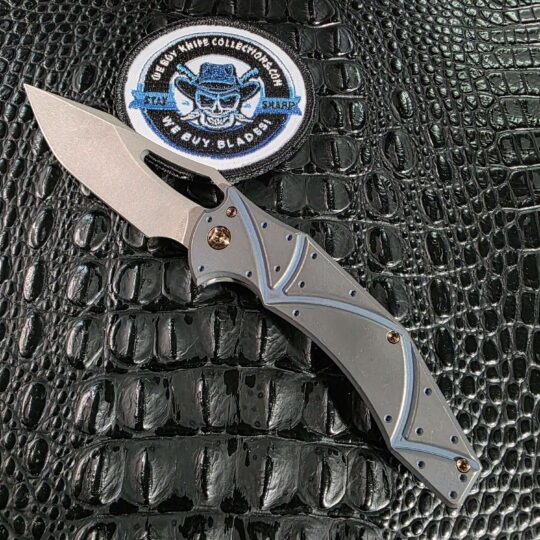
A Ferrum Forge x Gavko Spinner handled by WBKC provides a useful collector example from this period.
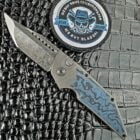
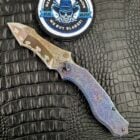
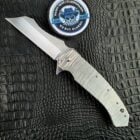
This knife uses a 3.5-inch stonewashed CPM 20CV blade and sculpted Facets titanium handle treatment with blue-toned detailing and contrasting bronze hardware.
It also retains the original Ferrum Forge zippered pouch, a maker card signed by Ferrum Forge and Gavko, and an engraved dog tag identifying it as a 2017 Spinner made in California.
Original tags, signed documentation, and factory packaging can help establish production period, configuration, and provenance after a limited run has ended.
Collectors looking for discontinued collaborations and earlier American-made examples can browse WBKC’s Preowned Knives.
Engineering Beyond Appearance
Ferrum Forge earned attention for aggressive milling and anodized titanium, but mechanical experimentation was equally important. The brothers worked with detent systems, bearing arrangements, lock geometry, hardened inserts, pivots, and manufacturing tolerances.
The Spinner’s adjustable rolling detent is a good example. Instead of fixing the detent at one permanent setting, the system allowed breakaway resistance to be tuned.
The Pro Series Shift
Ferrum Forge began developing its Pro Series in 2016 as small limited runs could no longer satisfy demand. The company has explained that increasingly elaborate limited runs had also become expensive and visually complex.
The Pro Series shifted the priority toward useful knives that more people could buy and carry. Ferrum Forge began working with outside manufacturing partners while retaining design control in San Diego.
A San Diego-built 2016 or 2017 limited-run knife and a later production model can therefore both be authentic Ferrum Forge designs while representing different manufacturing eras.
The Gent and the Move Toward Liner Locks
The Gent originated through Ferrum Forge’s collaboration with Drop and moved away from the larger tactical frame locks that had dominated much of the earlier work.
Ferrum Forge identifies the Gent as its first liner-lock design and credits it with helping lead toward the Stinger, Mini Archbishop, and Prolix. After the original Drop collaboration ended, the company returned to the design as the Gent 2.0.
Design Philosophy
Ferrum Forge Knife Works describes knives first as cutting tools while emphasizing ergonomics, materials, textures, visual design, control, and cutting efficiency as parts of one cohesive object.
The company also revisits older designs instead of treating them as permanently finished. The multiple Archbishop generations and return of the Gent reflect that iterative approach.
Designed in San Diego vs. Made in San Diego
The company’s early customs and Limited Run Years included knives manufactured in its San Diego shop. The later Pro Series uses outside manufacturing partners while Ferrum Forge continues to design its knives in San Diego.
Collectors should therefore avoid describing every Ferrum Forge knife as USA-made. The exact model, year, and production period determine the correct origin description.
Ferrum Forge Kitchen
Ferrum Forge has expanded beyond pocket knives through Ferrum Forge Kitchen. The company says the line combines more than a decade of premium folding-knife experience with the Williamson family’s connection to food and cooking.
The kitchen designs emphasize handle ergonomics, practical cutting geometry, and frequent use.
WBKC Collector Perspective
For WBKC, Ferrum Forge Knife Works is best evaluated by production era, model, collaboration, configuration, condition, and completeness.
An early custom, a 2016 Archbishop, a 2017 Gavko collaboration, a Drop-era Gent, and a later production knife should not be treated as interchangeable simply because they share the Ferrum Forge name.
On older pieces, original pouches, engraved tags, signed cards, hardware, factory finishes, milling patterns, and anodizing can all add useful provenance and configuration detail.
Shop Ferrum Forge Knife Works at We Buy Knife Collections
We Buy Knife Collections periodically offers Ferrum Forge limited runs, discontinued configurations, collaborations, and later production models from established collections.
Browse current inventory through Shop All Knives.
If you own one premium Ferrum Forge knife or an entire collection, begin with Sell Your Collection for review.
We Buy Knife Collections also supports the American Knife & Tool Institute through our AKTI Premier Membership.
What is Ferrum Forge Knife Works?
Ferrum Forge Knife Works is a San Diego knife company founded by Elliot Williamson in 2009 and later developed with his brother Chris Williamson. The brand is known for custom knives, limited runs, titanium frame locks, collaborations, and later production knives designed in San Diego.
Who founded Ferrum Forge?
Elliot Williamson began making knives in his garage in 2009. His brother Chris later helped part time and joined the company full time in 2014.
Where is Ferrum Forge based?
Ferrum Forge is based in San Diego, California. The company continues to design its knives there.
Were all Ferrum Forge knives made in the USA?
No. Early customs and knives from the 2013–2017 Limited Run Years included pieces built in Ferrum Forge’s San Diego shop. Later production knives may be designed in San Diego and manufactured by outside production partners.
What were the Ferrum Forge Limited Run Years?
Ferrum Forge identifies 2013 through 2017 as its Limited Run Years. The shop used CNC machining, CAD, and other industrial processes to produce small batches ranging from roughly 25 to 200 pieces.
What is the Ferrum Forge Archbishop?
The Archbishop is one of Ferrum Forge’s signature designs. The original 2016 limited run consisted of 200 knives using CPM 20CV. Later versions included the Archbishop 2.0, Mini Archbishop, and Archbishop 3.0.
What is the Ferrum Forge x Gavko Spinner?
The Spinner is a 2017 collaboration between Ferrum Forge and Michal Gavac of Gavko Knives. Documented examples use CPM 20CV, titanium frame-lock construction, ceramic bearings, a hardened lock interface, and an adjustable detent system.
What is Ferrum Forge Facets milling?
Facets is a sculpted geometric titanium handle treatment found on selected Ferrum Forge limited-run knives. The machining creates raised and recessed planes that can be further emphasized with anodizing and contrasting hardware.
What is the Ferrum Forge Pro Series?
The Pro Series developed as Ferrum Forge moved beyond small San Diego limited runs and began working with outside manufacturing partners to make its designs available in greater numbers and at lower prices.
What is the Ferrum Forge Gent?
The Gent originated through a collaboration with Drop. Its slimmer design helped move Ferrum Forge toward lighter liner-lock folders. The company later revived the design as the Gent 2.0.
Does the Ferrum Forge Knife Works warranty transfer to a second owner?
No. Ferrum Forge’s published limited lifetime warranty applies to the original consumer purchaser and ends when the product is sold or transferred. The company states that it can still perform repairs or modifications on out-of-warranty knives for a fee.
Why do collectors look for older Ferrum Forge knives?
Older customs and limited-run knives represent a period when Ferrum Forge produced small batches of premium titanium folders in San Diego. Model, collaboration, milling, finish, hardware, and original accessories can all influence collector interest.
Where can I buy preowned Ferrum Forge knives?
We Buy Knife Collections periodically offers older limited runs, collaborations, and other Ferrum Forge knives sourced from private collections.
How can I sell a Ferrum Forge knife?
Photograph the knife open and closed, both handle sides, blade, markings, original pouch, tag, card, box, and all accessories. Those details help establish production era, configuration, condition, and completeness.