
3LegDog M10 in Teal Stabilized Burl
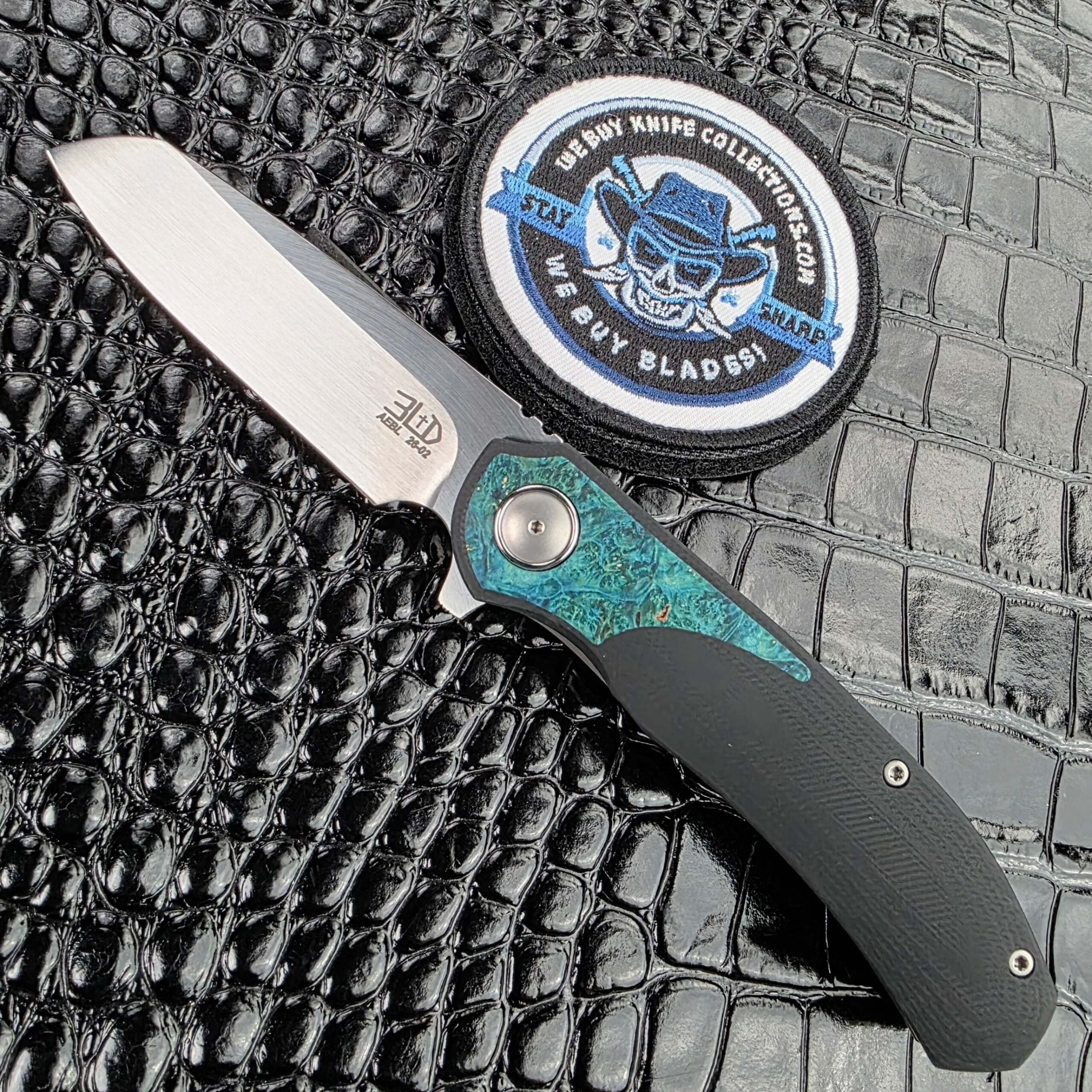
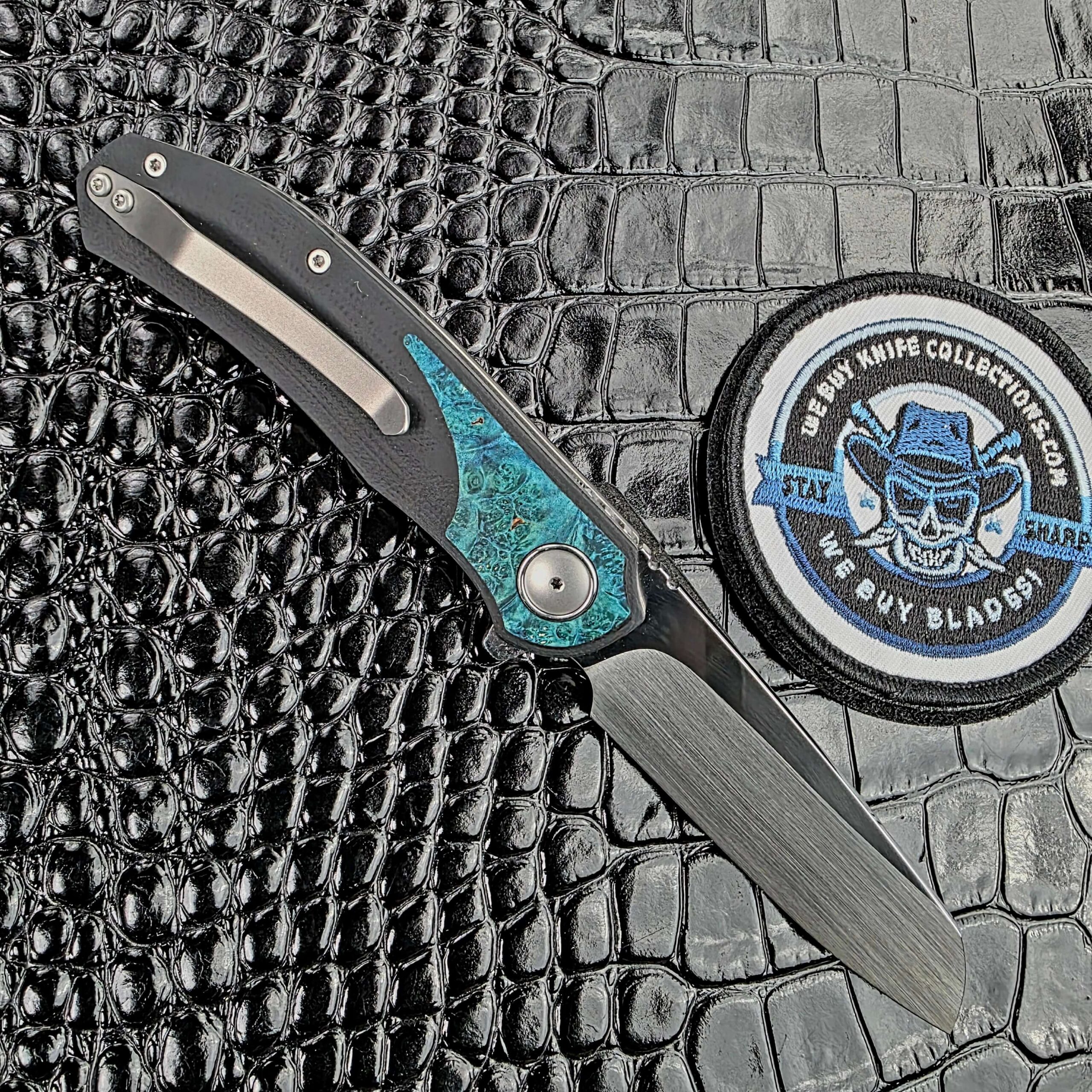
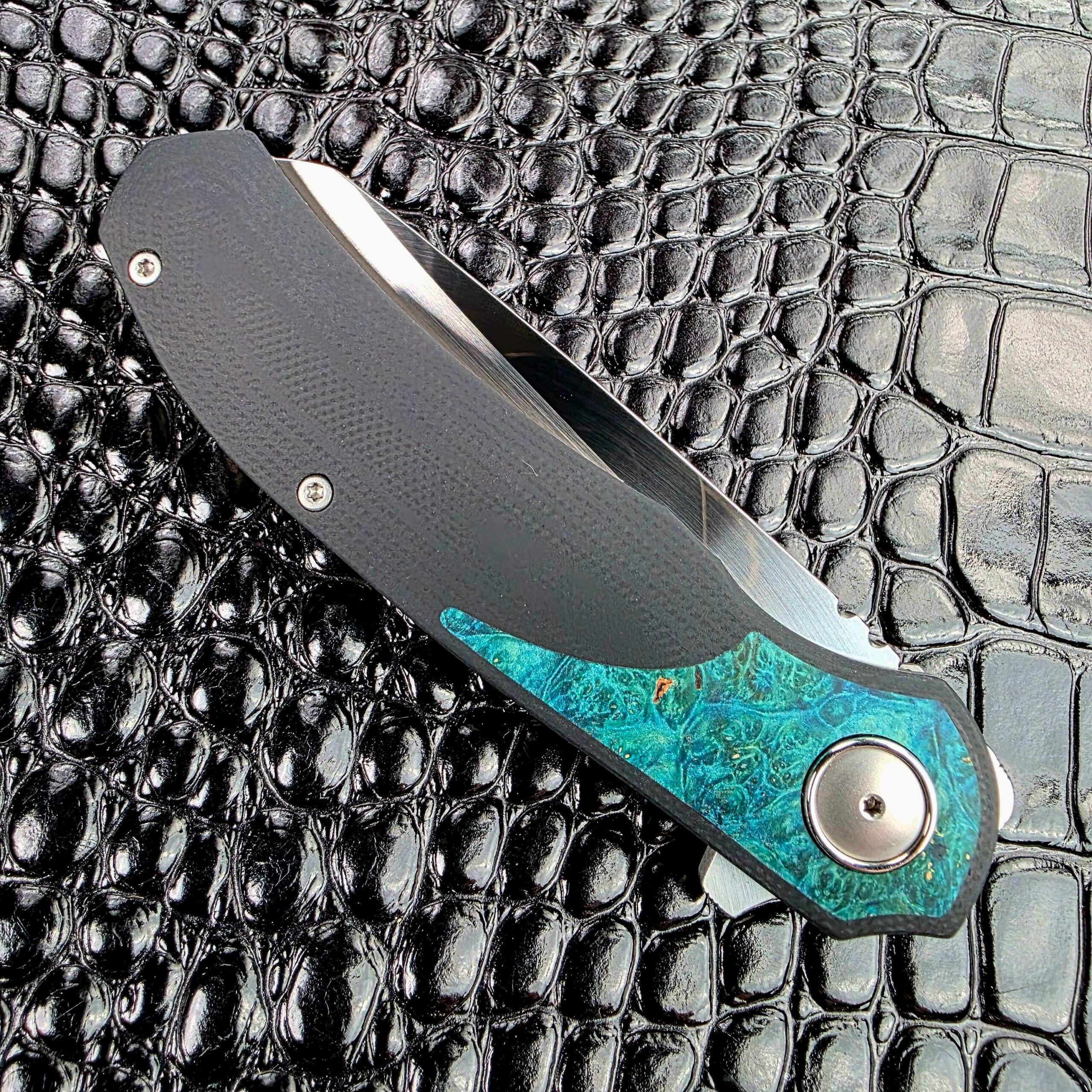
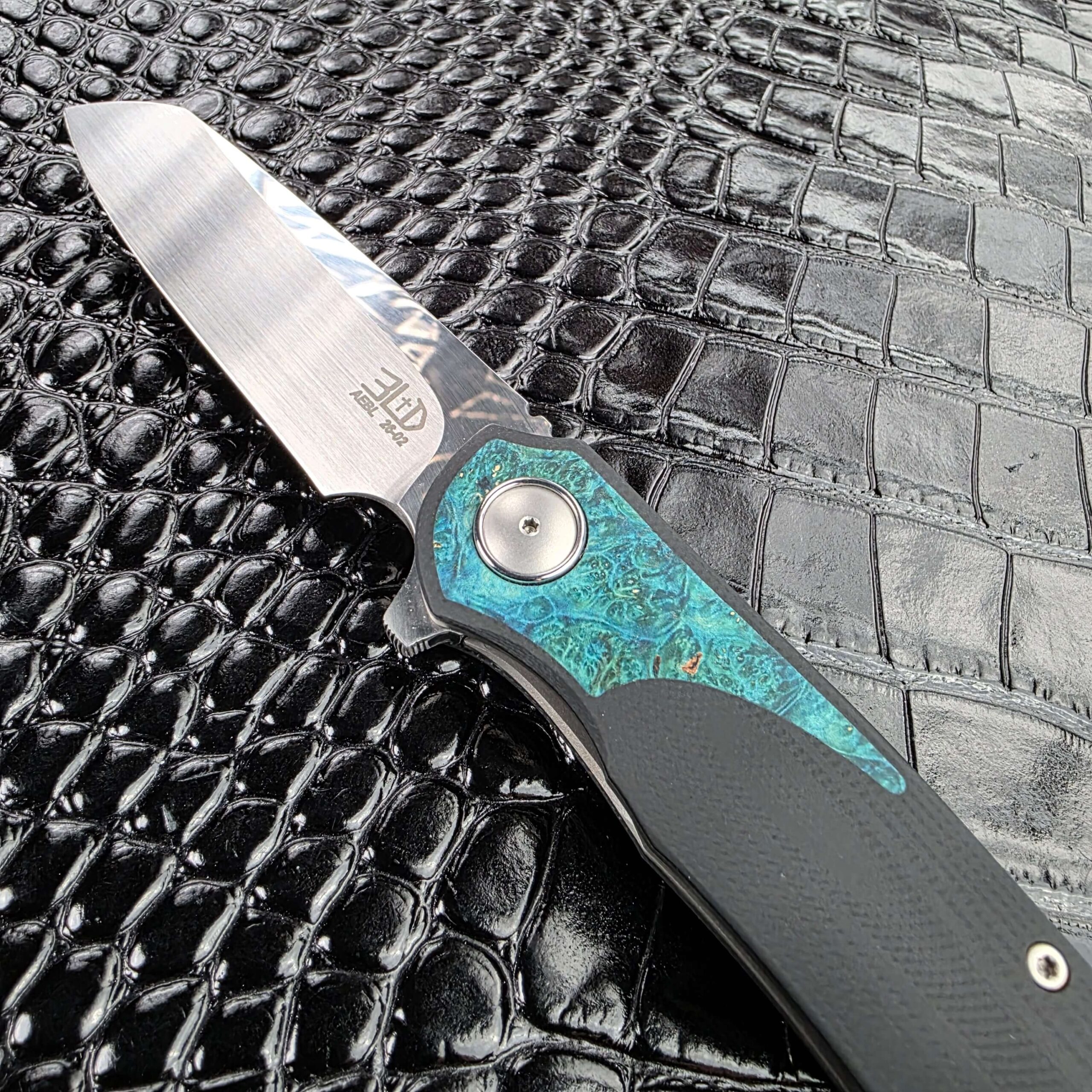
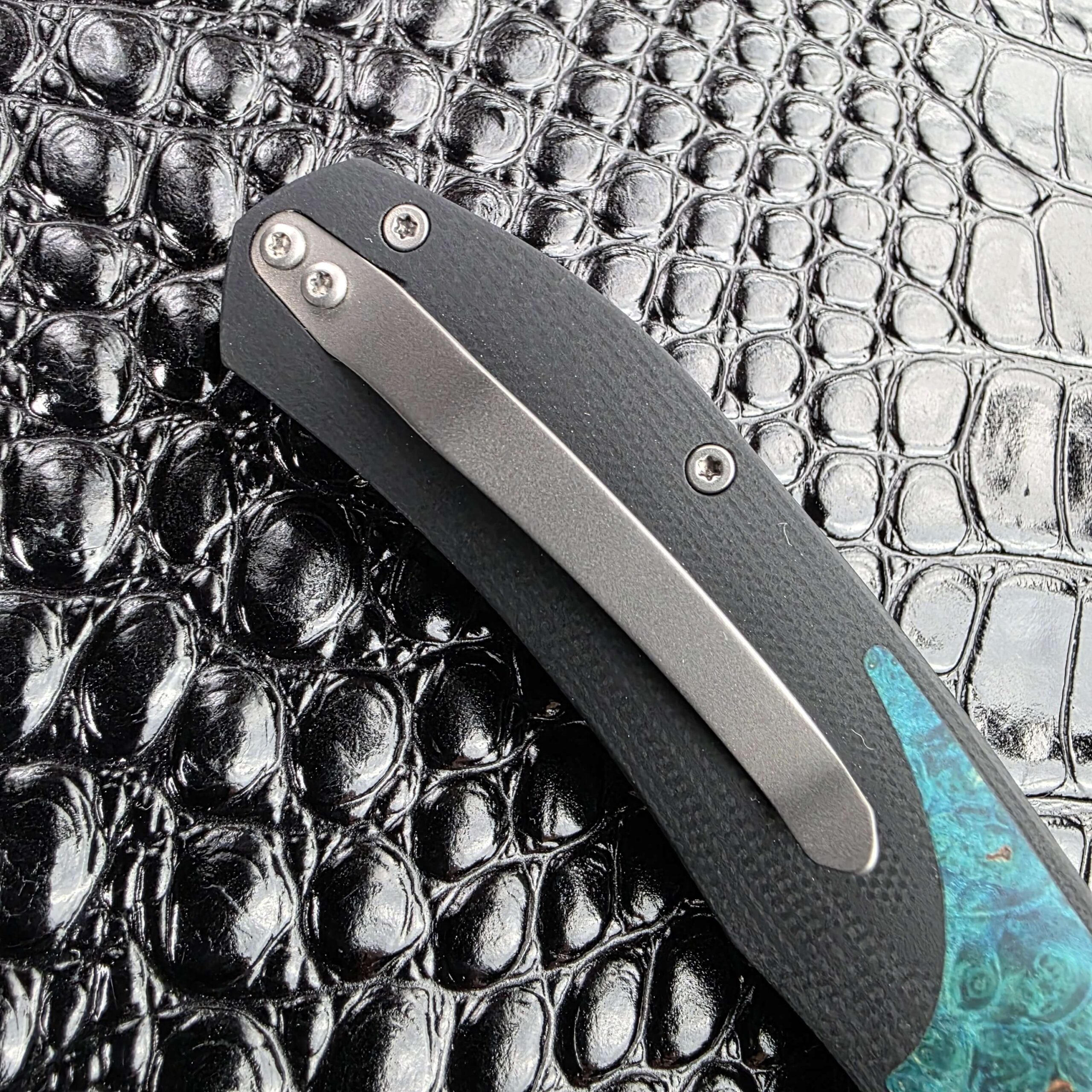
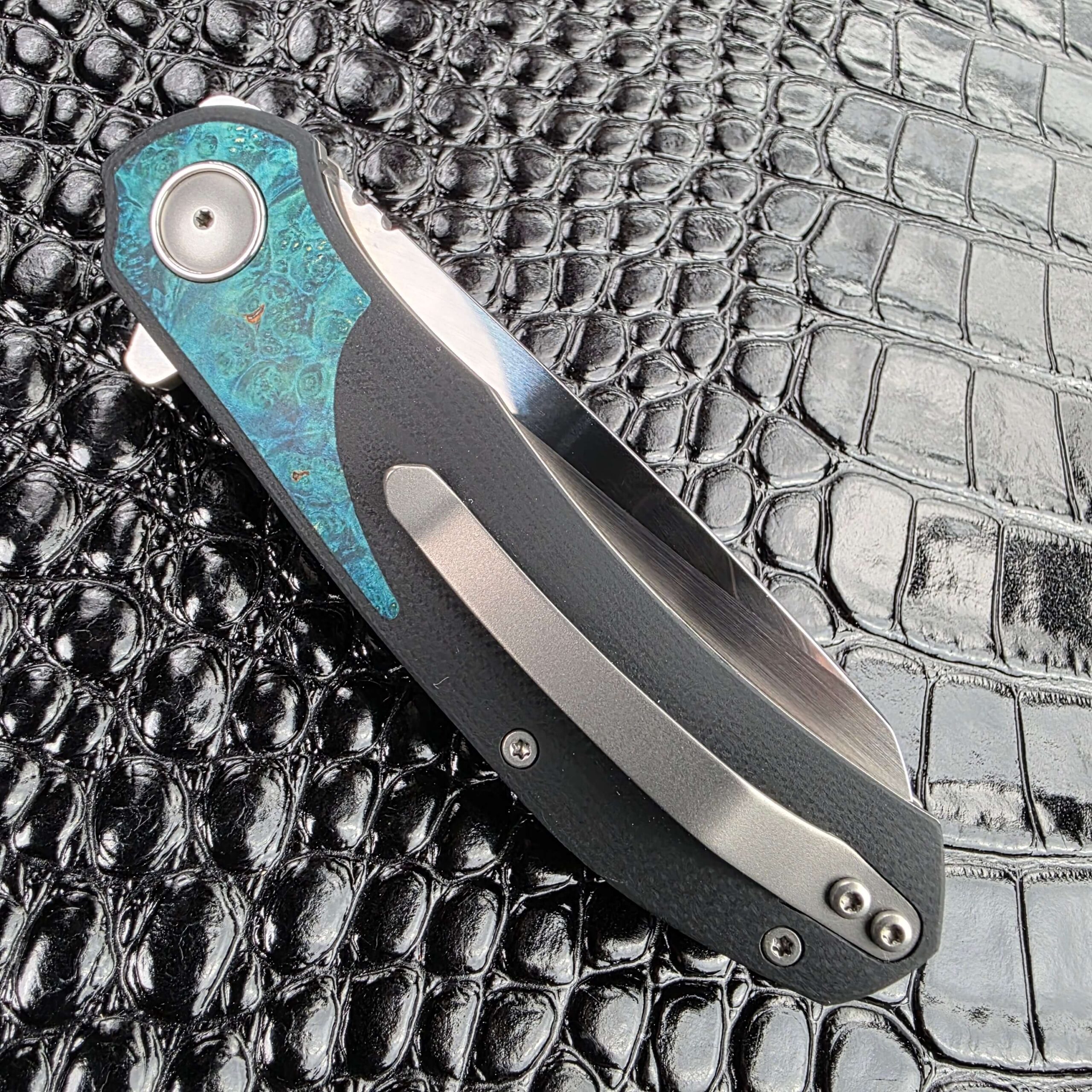
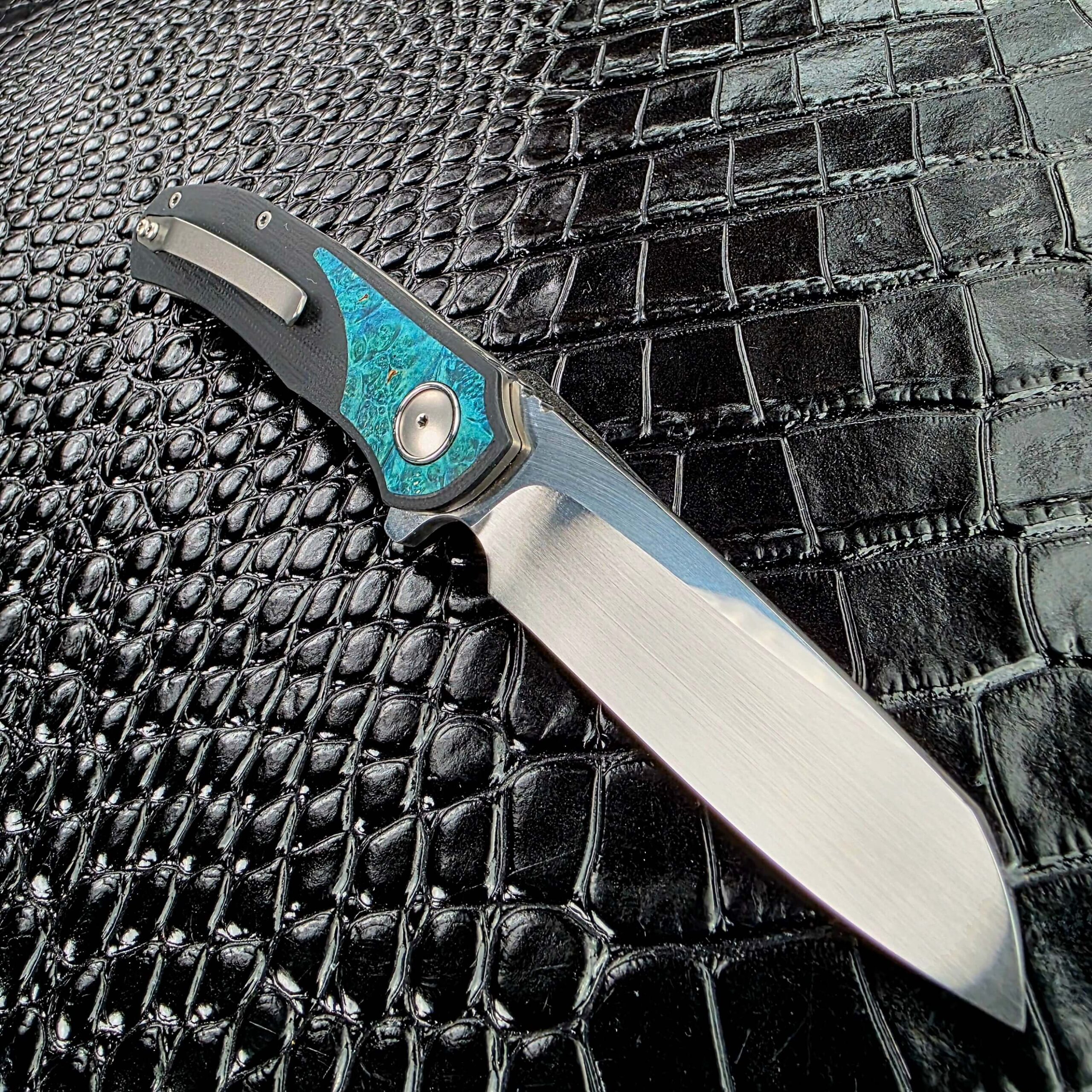
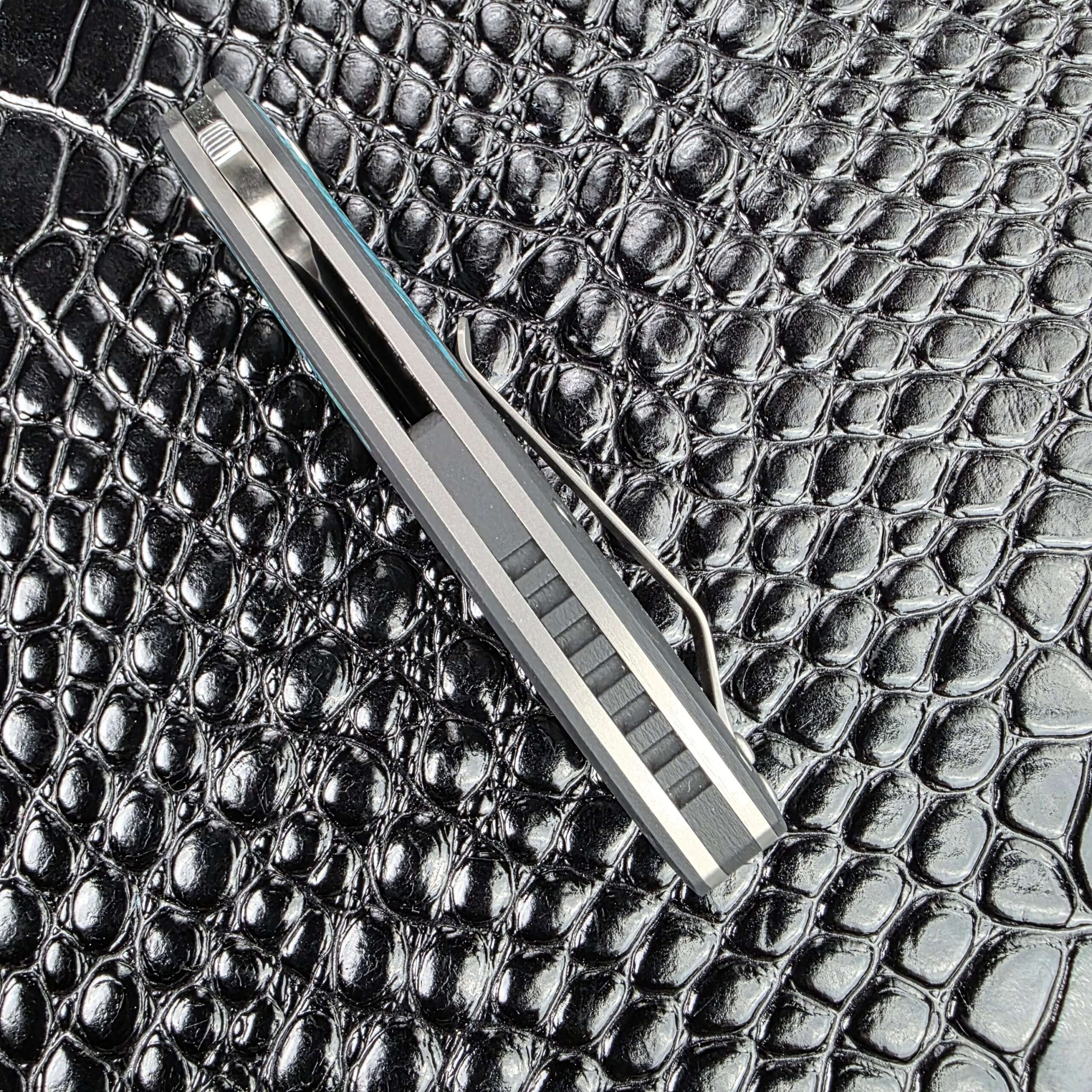
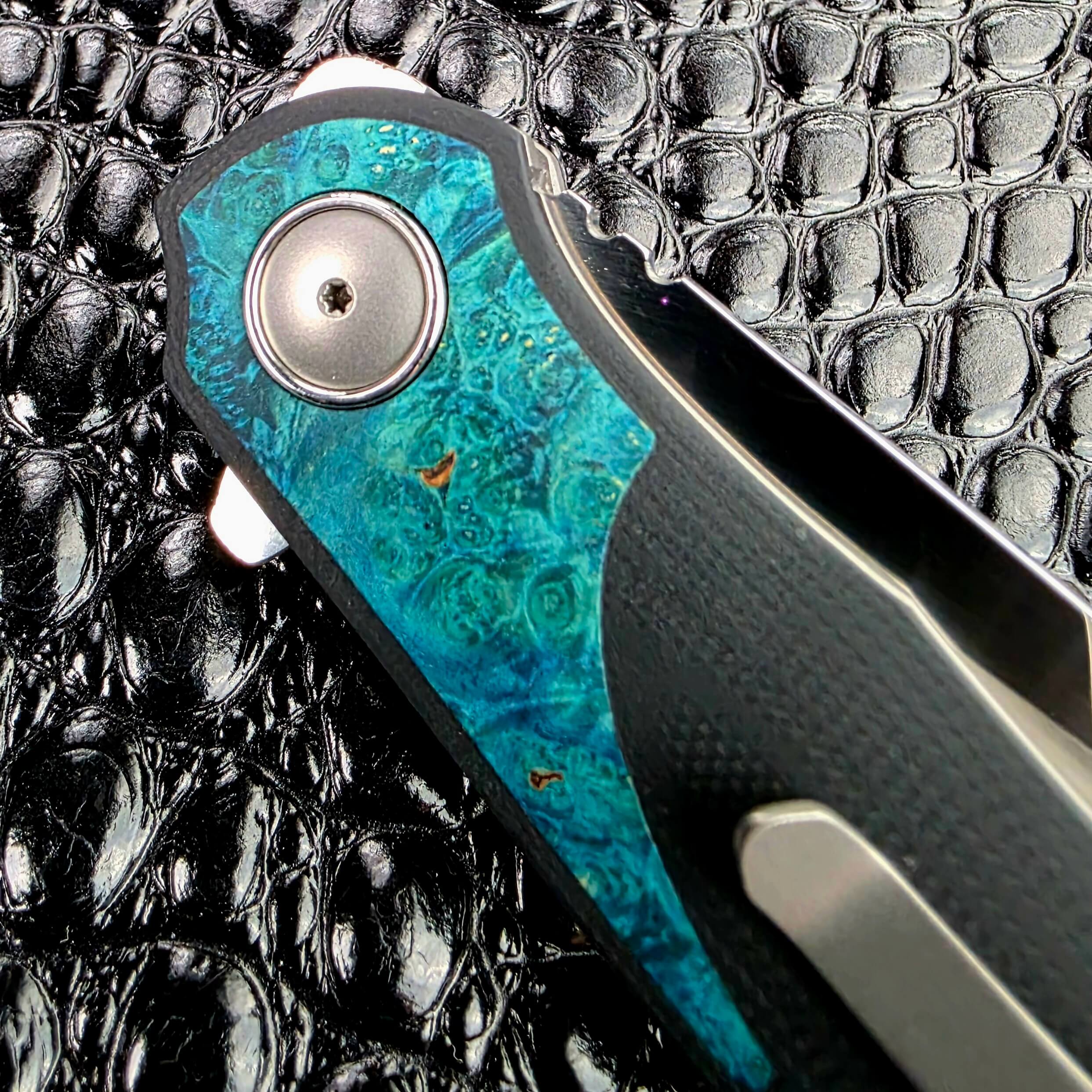
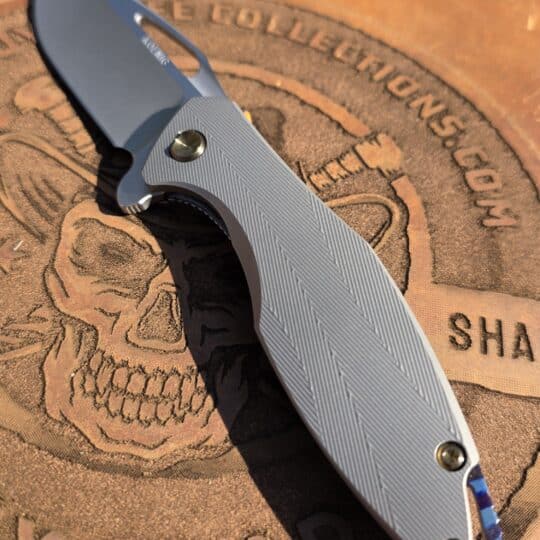
The 3LegDog M10 is a front flipper built by Riaan Manser in Sundra, South Africa. The blade is AEB-L taken to 62 HRC. The frame is titanium lined with black G10, inlaid on both faces with stabilised wood burl dyed a deep teal. It runs 7.5 inches open at 3.9 ounces. Condition is excellent, with no blemishes and no wear.
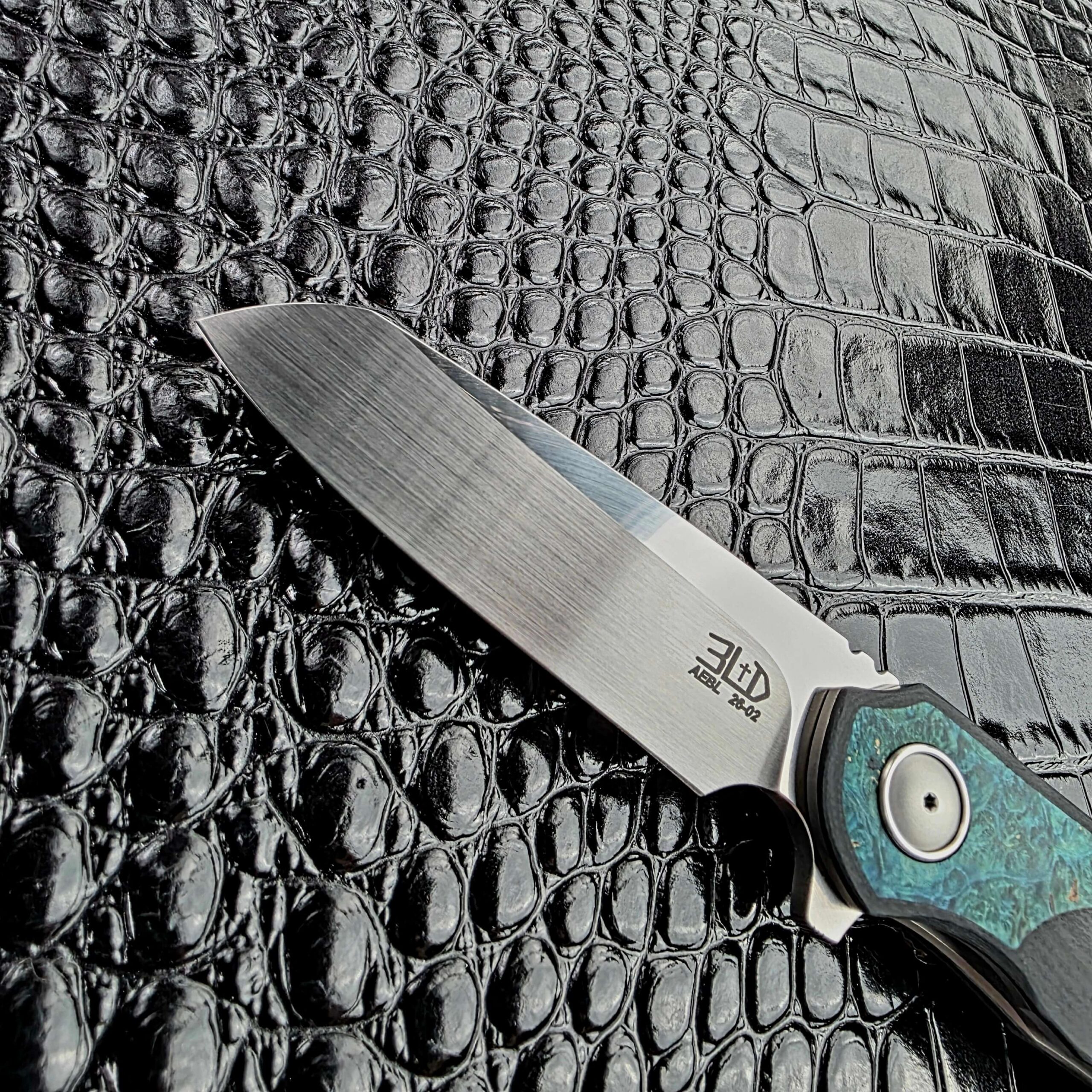
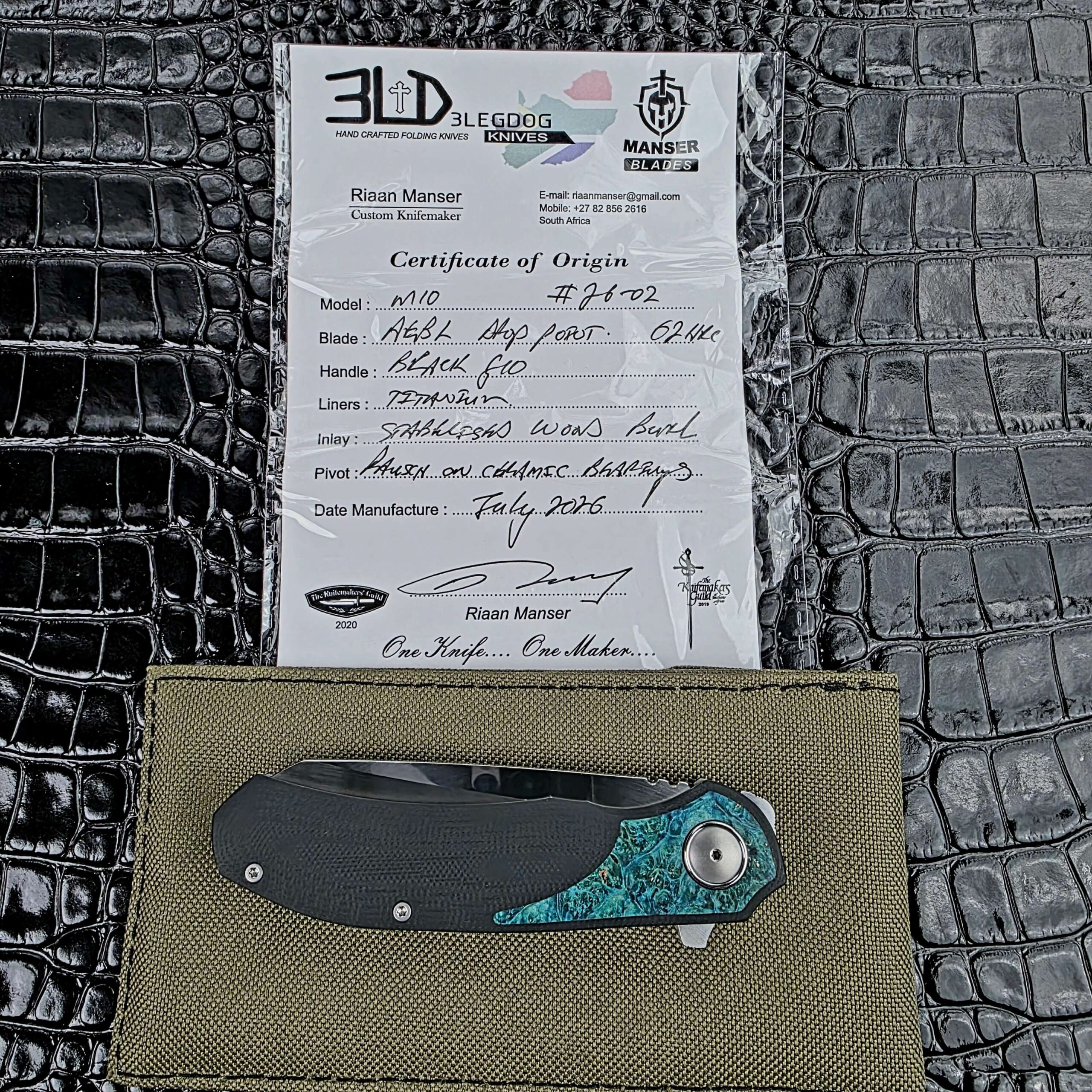
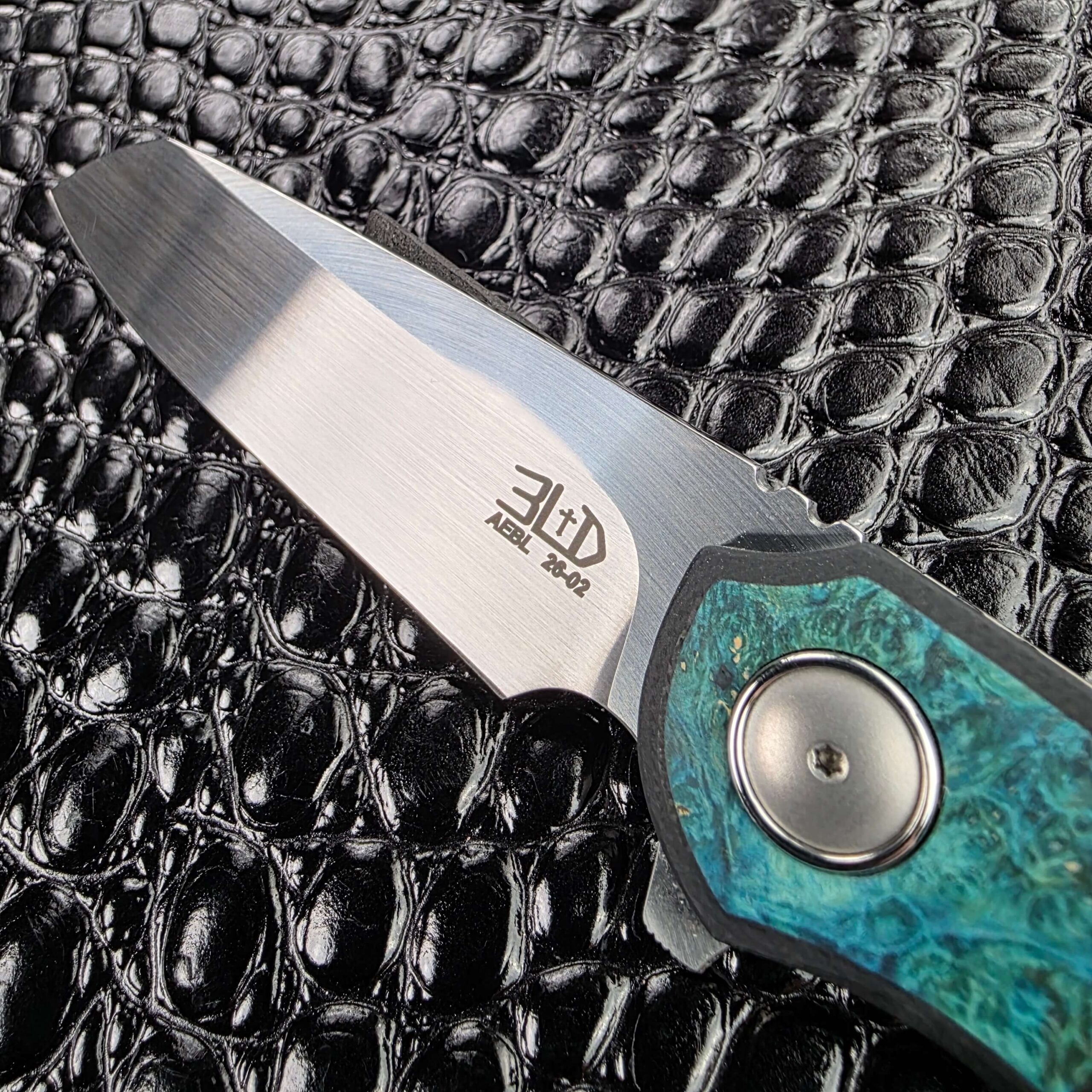
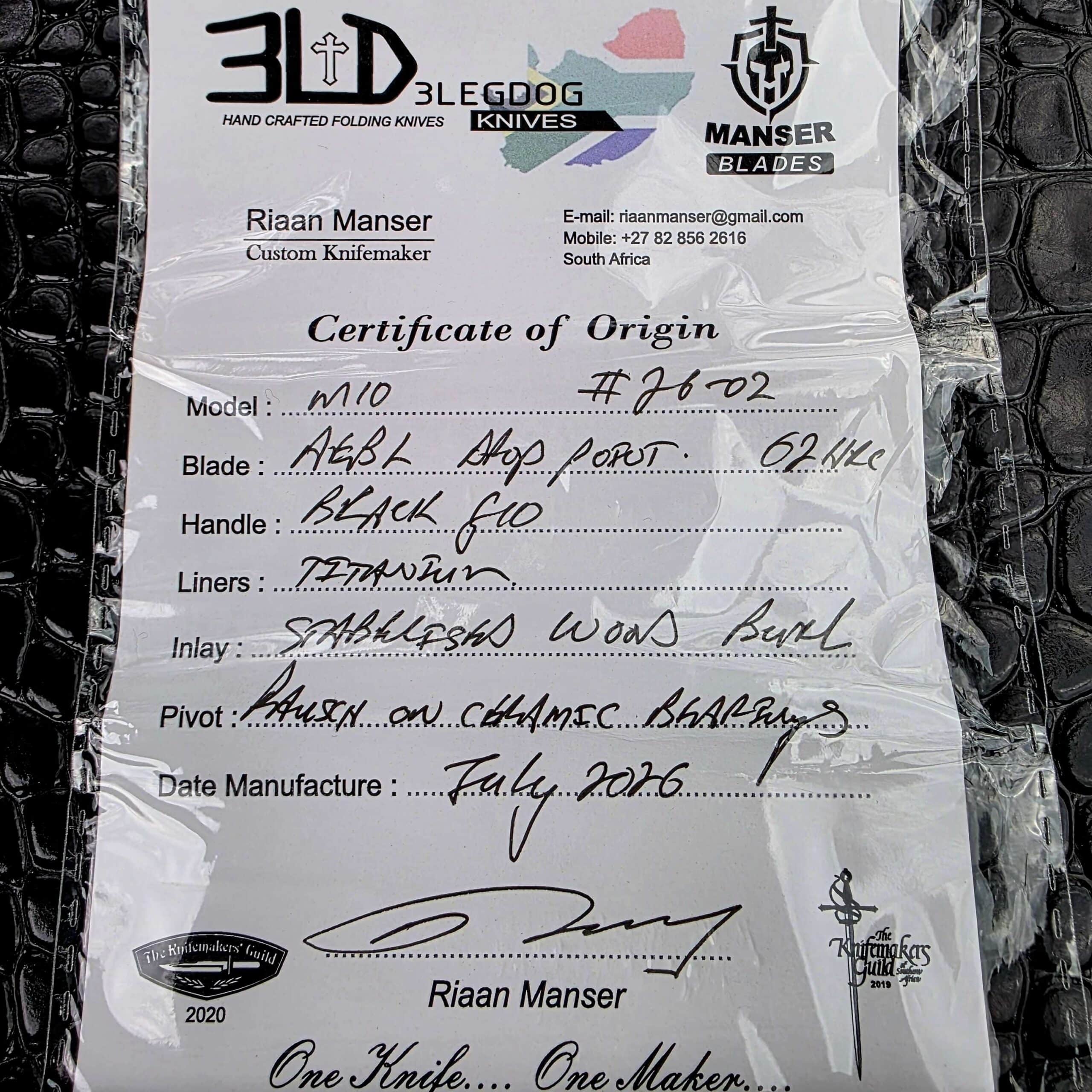
The serial is #26-02. It appears twice, handwritten on the Certificate of Origin and etched into the blade beside the steel designation. There is no gap between the paperwork and the object.
Manser signs his certificates “One Knife…. One Maker….” That is not a slogan on this one. Our guide on how to choose a custom knife covers what sole-author work means at this level.
Riaan Manser and the Dog the Brand Is Named For
Manser was born in November 1968 and lives in Sundra, roughly sixty kilometres east of Johannesburg. He was making knives at school in the early 1980s. Life took him elsewhere for two decades, and he came back to it around 2012.
He made fixed blades until 2014. That year he moved to folders, and in March 2016 he went full time. Everything since has been sole-author work, ground, fitted and finished by one pair of hands.
The brand is named for Patch, a pit bull cross who lost a hind leg as a puppy. Manser had him from 2007 until 2018, and Patch spent those eleven years next to the bench. The mark on every knife is his.
AEB-L at 62 HRC, and Why That Number Was Chosen
AEB-L was developed as a razor steel. Its carbides are very small and very evenly distributed, which is what lets a razor take an edge finer than a knife needs. In a folder that same structure gives an edge that comes up quickly and a blade that resists chipping.
The working range for AEB-L is roughly 59 to 62 HRC. Manser took this one to 62, the top of it.
That is a deliberate trade. Run soft it becomes extremely tough and gives up edge holding. Run at 62 it holds an edge considerably better and stays tough anyway, because the carbides are too fine to act as crack starters. For a 3.25 inch folder rather than a chopper, 62 is the right end of the range.
It is also a departure. Most catalogued 3LegDog folders run Elmax at 61 HRC, a steel with large chromium and vanadium carbides chosen for wear resistance. AEB-L goes the other way, trading abrasion resistance for keenness, toughness and easy sharpening. Compare it against our other folding knives in harder-wearing steels.
Stabilised Burl, Titanium Liners and the Front Flipper
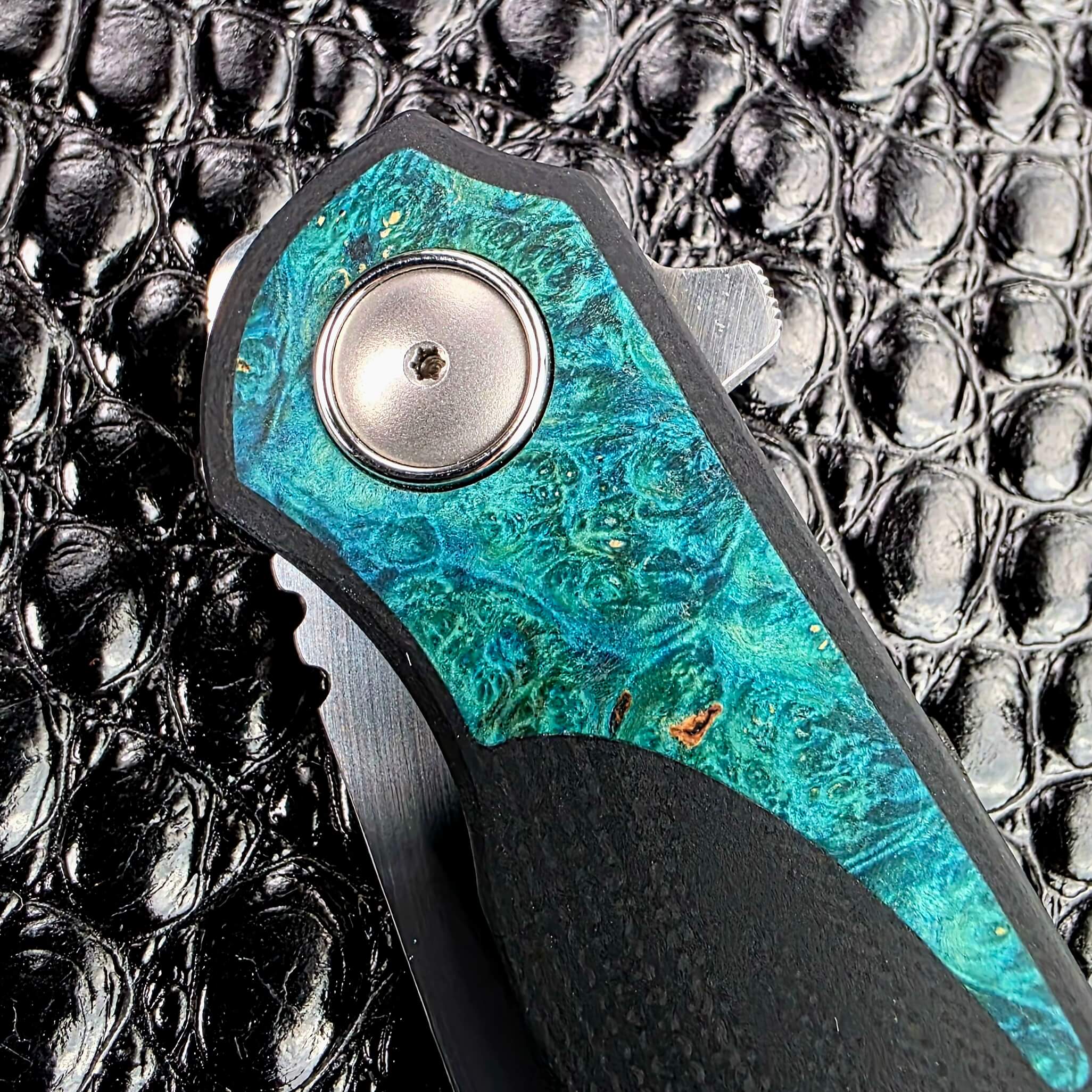
The inlays are wood burl, stabilised and dyed. Stabilising forces polymer resin into the pores under vacuum, so the finished material will not move with humidity the way raw burl does. The dye goes in with the resin, which is why the teal reads through the grain rather than sitting on top of it.
Burl figure cannot be repeated. The eyes and swirls in these two inlays came from one blank, and no second knife will carry them.
Under the G10 the liners are titanium, and the lock is a liner lock cut from one of them. The pivot runs on ceramic bearings, which the certificate records by name.
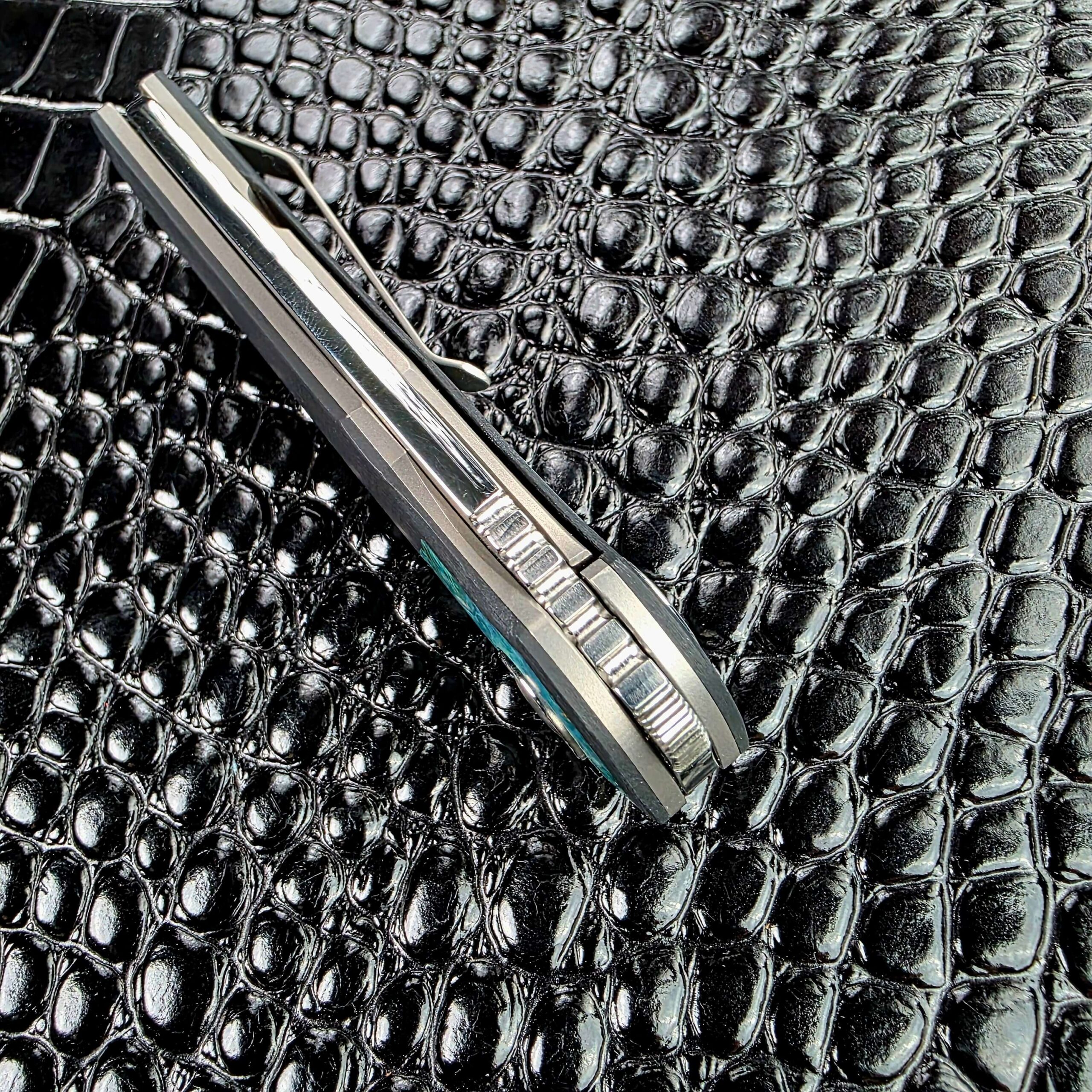
Deployment is a front flipper. The tab sits on the spine at the pivot end and stands proud when the knife is closed, jimped across its face. You push it forward with the thumb rather than pulling a tab at the back of the handle.
Front flippers are harder to tune. Your finger works a much shorter lever, so the detent has to be strong enough to throw the blade and light enough to break under that leverage. Compare it against the Glenn Are Hovin Koda, another front flipper on a liner lock.
Condition and What’s Included with This 3LegDog M10
Condition is excellent. There are no blemishes and no wear. We inspected it in hand before photographing it. Our published grading standards let you check this description against what arrives.
It came out of a collection rather than direct from the maker. Made in July 2026, it has had almost no time to acquire a history, and none of it shows.
The Certificate of Origin is signed by Manser and carries two guild seals: the Knifemakers Guild of Southern Africa and the Knifemakers’ Guild. Read how we handle provenance on pieces that arrive with their paperwork.
- 3LegDog Knives M10 front flipper, serial #26-02
- Signed Certificate of Origin
- 3LegDog pouch
3LegDog M10 Specifications
The model, serial, steel, hardness, handle materials, inlay, pivot and build date all come from the Certificate of Origin signed by the maker.
- Overall length, open: 7.5 in
- Blade length: 3.25 in
- Cutting edge: 3.10 in
- Closed length: 4.25 in
- Blade material: AEB-L stainless
- Hardness: 62 HRC
- Blade style: Drop point
- Blade finish: Hand-rubbed satin
- Lock type: Liner lock
- Action: Manual
- Deployment: Front flipper
- Pivot: Ceramic bearings
- Liners: Titanium
- Handle material: Black G10
- Inlay: Stabilised wood burl, teal dyed, both faces
- Pocket clip: Titanium
- Weight: 3.9 oz
- Serial: #26-02
- Date of manufacture: July 2026
- Country of origin: Sundra, South Africa
- Condition: Excellent, no blemishes or wear
- SKU: 00202-3LD-M10-2602-TEALBURL-20260701
This piece is preowned and came from a private collection. Browse our other preowned knives.
Video Description: Sophisticated South African Beauty
The 3LegDog M10 is a preowned custom folding knife in excellent condition. Riaan Manser built it in Sundra, South Africa and dated the certificate July 2026. The blade is AEB-L at 62 HRC, hand-rubbed satin, 3.25 inches long with 3.10 inches of cutting edge. The profile is a drop point. Serial #26-02 is etched on the blade and written on the certificate.
The liners are titanium and the handle is black G10, inlaid on both faces with teal dyed stabilised wood burl. The lock is a liner lock and deployment is a front flipper. The pivot runs on ceramic bearings. Overall length is 7.5 inches open and 4.25 inches closed, at 3.9 ounces. It ships with the signed Certificate of Origin and a 3LegDog pouch.
Frequently Asked Questions
Why run AEB-L at 62 HRC rather than a wear-resistant supersteel?
Because they solve different problems. M390, S90V and Elmax carry large chromium and vanadium carbides that resist abrasion, so they hold a working edge longer and fight you on a stone. AEB-L has very small, evenly spread carbides. It will not outlast them in an abrasion test.
What it does instead is take a finer edge, resist chipping, and come back sharp in a few passes. Its practical range runs to about 62 HRC and Manser took it to the top. On a 3.25 inch folder that is the correct end of the range, because you are cutting rather than chopping and edge holding matters more than impact toughness.
What does the Certificate of Origin actually document?
Model, serial, blade steel and hardness, handle, liners, inlay, pivot type and month of manufacture, in Manser’s handwriting on his own letterhead, over his signature. It carries two guild seals, the Knifemakers Guild of Southern Africa and the Knifemakers’ Guild.
It matters more than most certificates because the serial is independently verifiable. #26-02 is etched into the blade next to the steel mark, so paper and object corroborate each other rather than the paper standing alone.
What does stabilising do to wood burl, and does the dye wear off?
Stabilising draws polymer resin into the cell structure under vacuum and cures it there. The result is a composite rather than a piece of wood, and it stops the burl moving, cracking or shrinking with changes in humidity. That is what makes an organic inlay viable in a knife handle.
The dye enters with the resin, so the colour runs through the full depth of the blank rather than sitting on the surface. It cannot wear off, because there is no coating to wear through.
How is a front flipper different to tune than a standard flipper?
On a standard flipper the tab protrudes at the rear of the spine when closed and you pull it with the index finger, working a long lever. A front flipper puts the tab at the pivot end and you push it forward with the thumb, working a short one.
That changes the detent maths. It has to be strong enough to throw the blade fully open and light enough to break under far less leverage. The window between a knife that will not fire and one that unlocks in the pocket is narrow, which is why front flippers are a maker’s demonstration piece.
Where does this 3LegDog M10 sit against the rest of Manser’s output?
His catalogued folders run substantially larger and heavier, typically 3.5 to 3.8 inch blades at 4.4 to 5.2 ounces, most of them Elmax at 61 HRC on titanium and G10. This M10 is 3.25 inches and 3.9 ounces on a different steel at a higher hardness.
It is the lighter, faster end of what he builds, and the steel choice follows the size rather than the other way round.
Does We Buy Knife Collections actively support the broader knife enthusiast community?
Yes. Based in Jacksonville, Florida, We Buy Knife Collections is a curator and purveyor of fine custom made folding and fixed-blade knives. We are dedicated to the high-end custom knife community and we support knife rights advocacy.
Following our commitment upgrade in April 2026, we are proud to hold an AKTI Premier Membership, supporting the American Knife & Tool Institute’s vital advocacy and lobbying for knife owners, makers, and the future of the industry.
Buy This 3LegDog M10
We inspect every knife in hand and photograph it ourselves. This is the first Riaan Manser piece we have carried. Talk to us about selling your collection, or browse the rest of our latest arrivals.


Reviews
There are no reviews yet.