
Rockstead NEHAN: Koji Hara’s Nirvana in ZDP-189
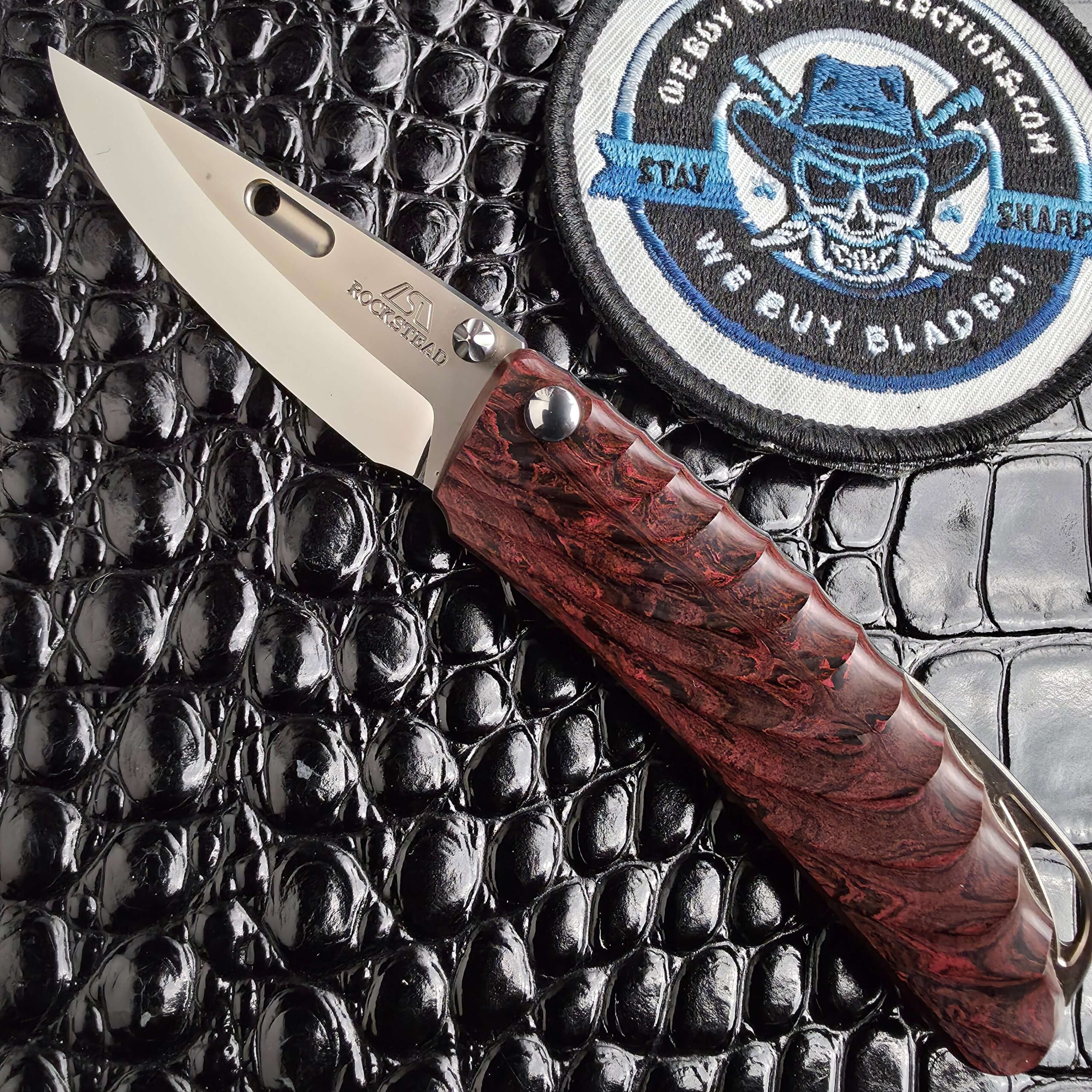
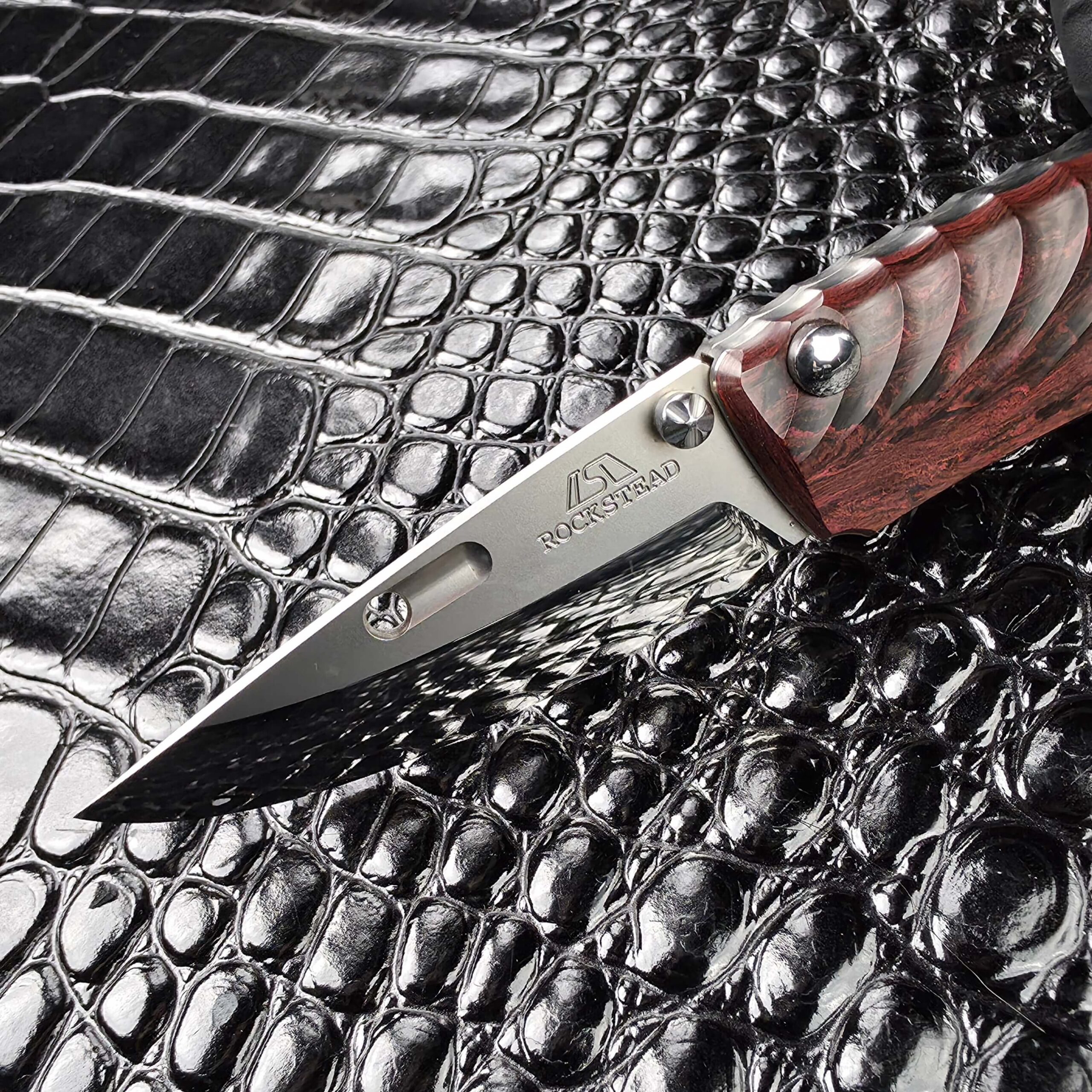
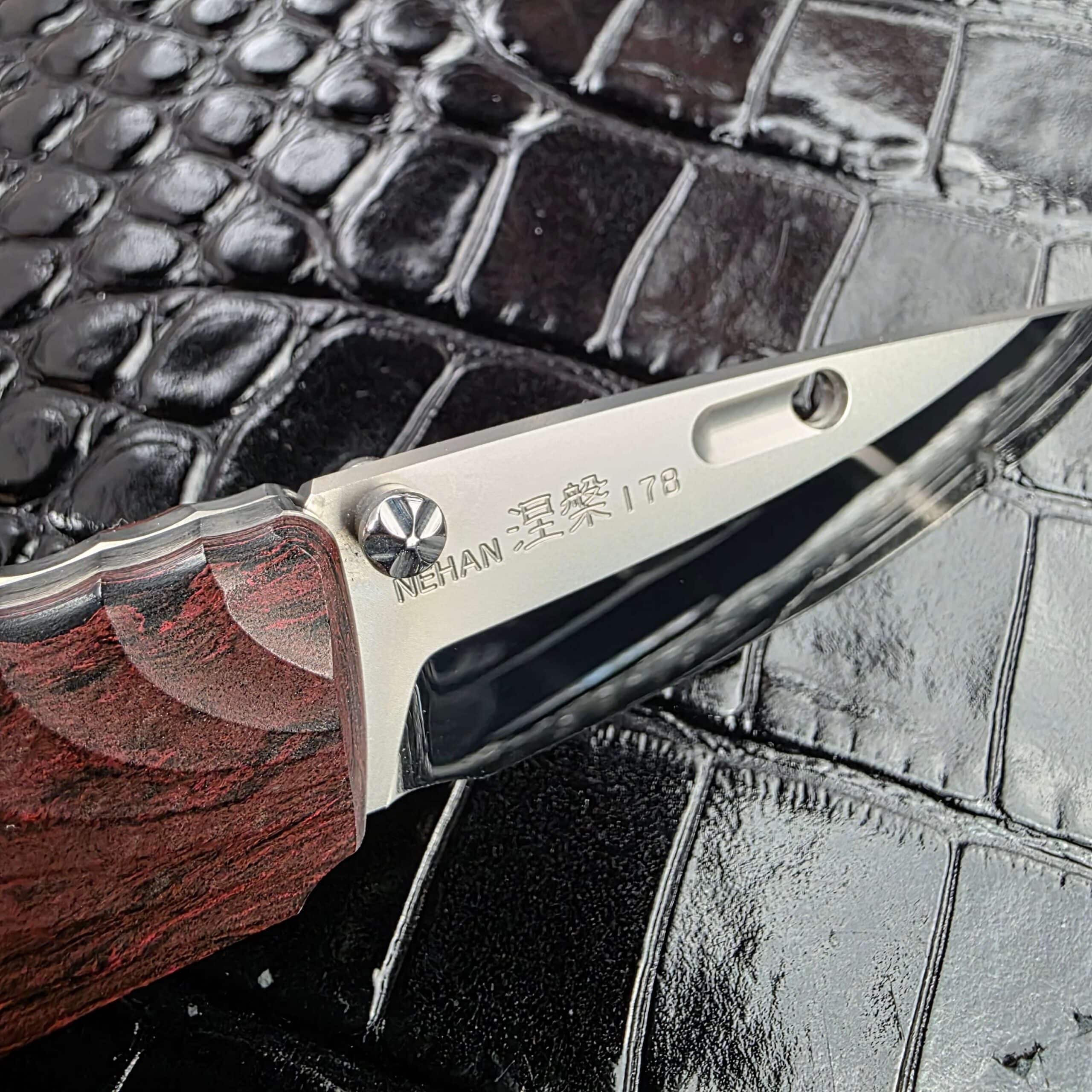
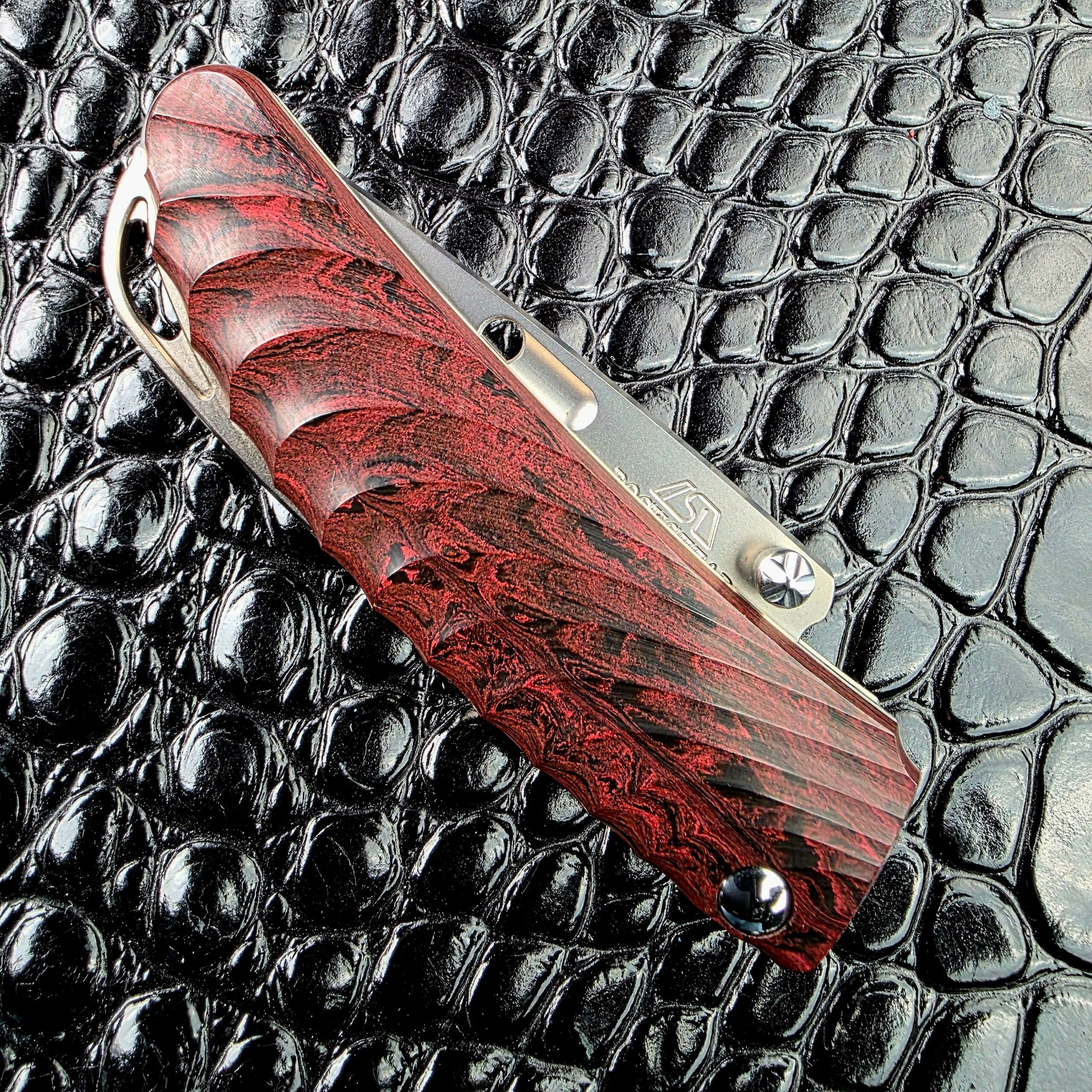
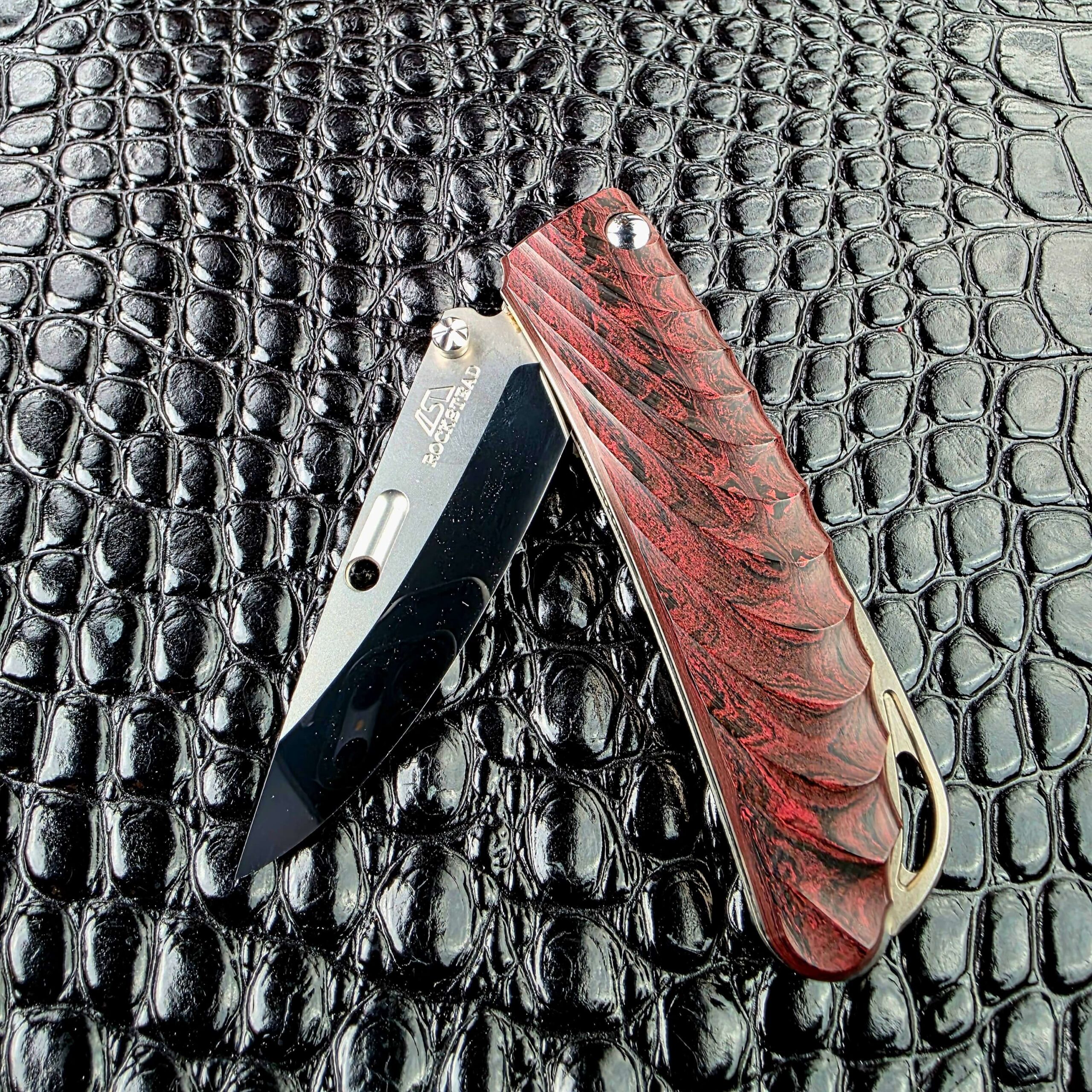
The Rockstead NEHAN is a Koji Hara design built by Rockstead in Japan, serial 178. Nehan is 涅槃, the Japanese for Nirvana. The blade is ZDP-189 at 66.5 HRC, hand-stropped to a mirror polish on a HONZUKURI convex zero grind. The scales are ebonite over titanium liners. It runs 5.79 inches open at 2.05 ounces. Condition is excellent.
Two ounces is the number to sit with. This is a knife you forget is in a pocket, built to a hardness most makers will not attempt and a polish almost nobody can match.
Rockstead call themselves a factory custom maker, and the phrase is accurate. Machining is done on multi-axis equipment; the grinding and the mirror finishing are done by a small number of hands. Our guide on how to choose a custom knife covers where that sits against a one-man shop.
Koji Hara, and What Rockstead Does With a Design
Koji Hara began making knives in 1988, working first in the Loveless idiom before finding his own language. He took full voting membership of the American Knifemakers Guild in 1997. His work is known for flowing lines and for inlay in pearl, abalone and exotic woods.
The NEHAN is his silhouette rendered through Rockstead’s manufacturing. That is a specific kind of collaboration. Hara supplies the shape and the intent; Rockstead supplies tolerances and a finishing process no individual maker could sustain.
The original NEHAN profile ran from 2007 to 2010. This is the re-engineered version reintroduced in 2017, and the reengineering is structural rather than cosmetic.
Rockstead NEHAN Steel: ZDP-189 at 66.5 HRC
ZDP-189 is a Hitachi powder stainless carrying roughly three percent carbon and twenty percent chromium. Those are extraordinary numbers. Most stainless knife steels sit near one percent carbon, and the carbon is what allows this hardness.
Rockstead run it to 66.5 HRC on this blade. For context, a good production stainless lands at 59 to 61. At 66.5 the edge holds for years of ordinary use rather than weeks.
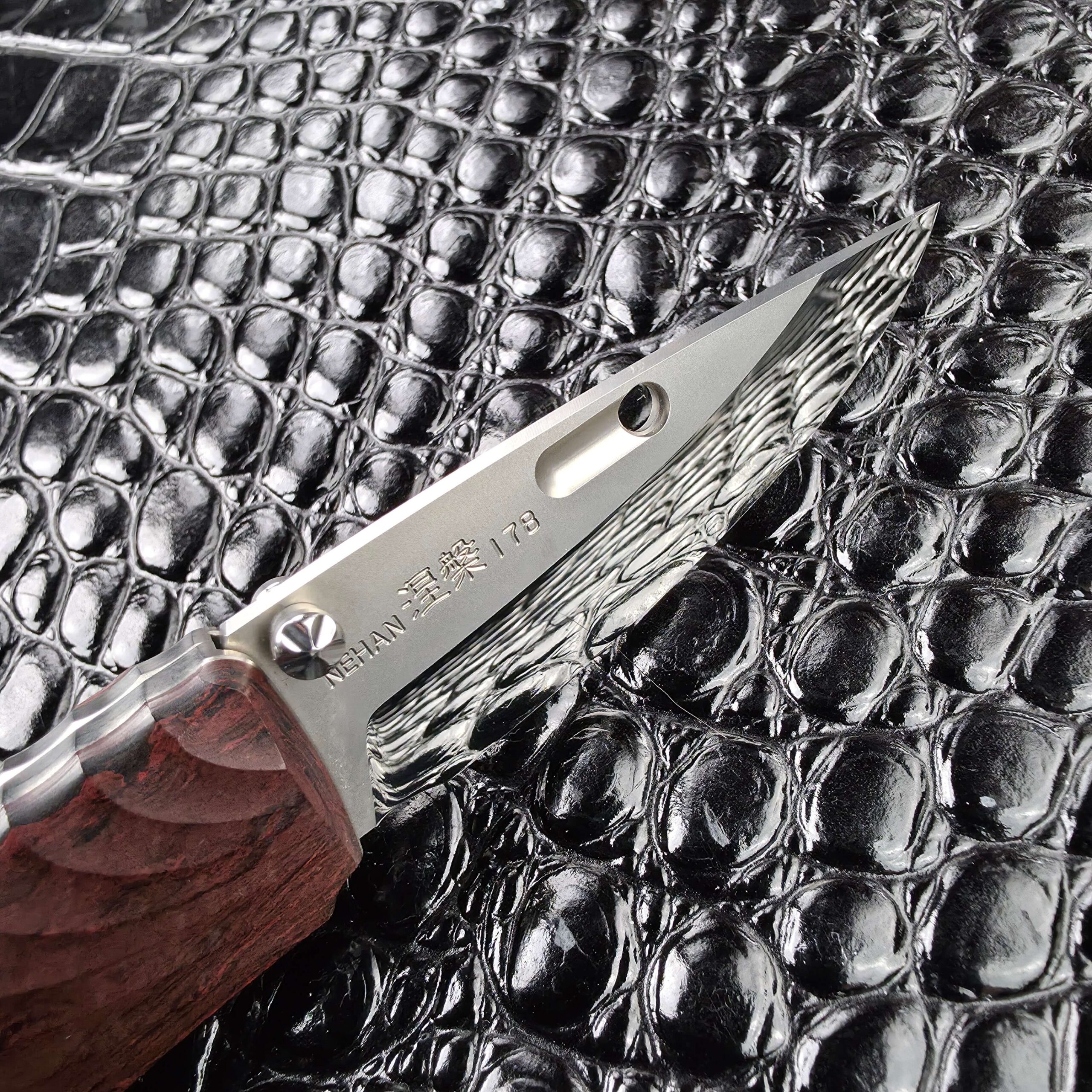
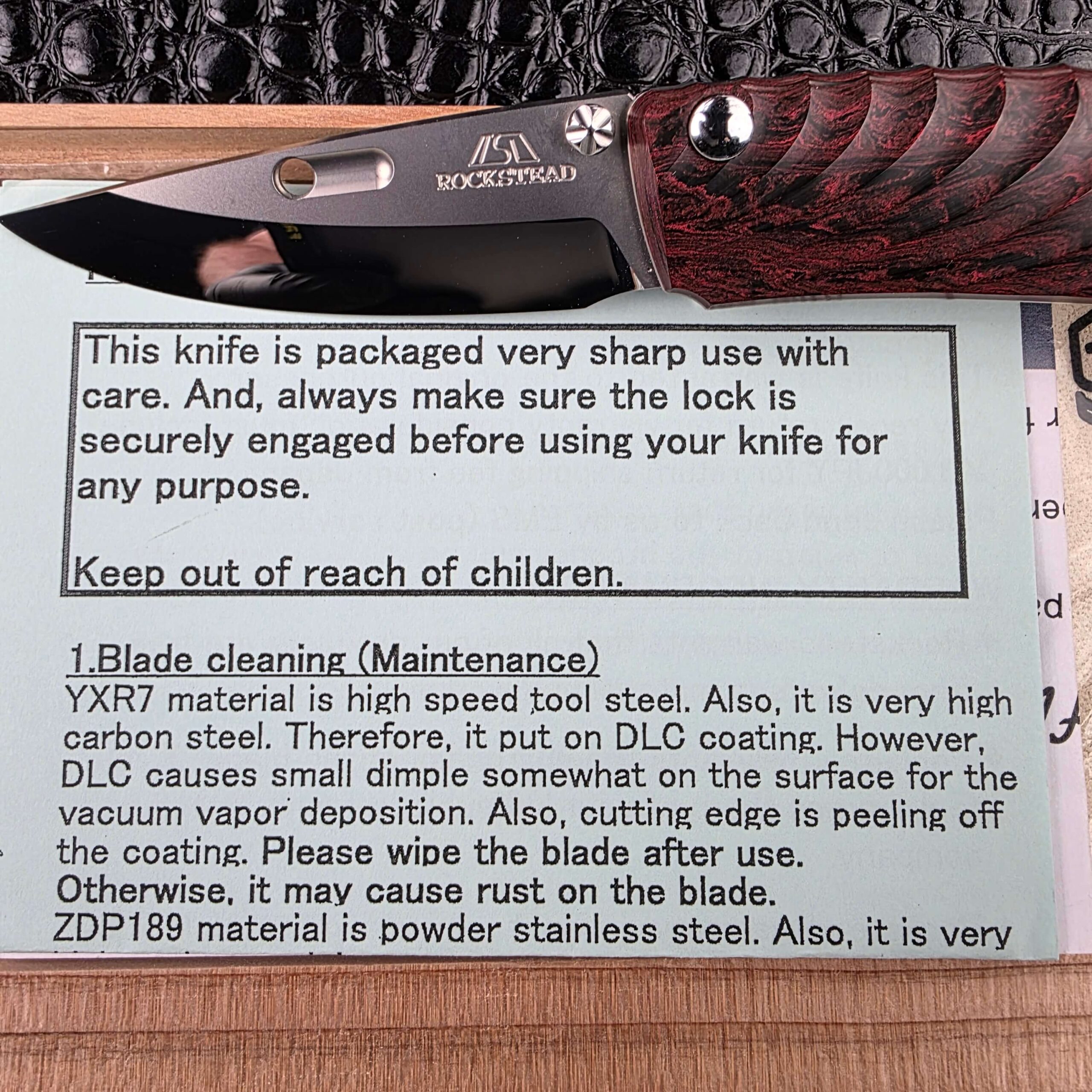
There is a small dimple in the flat of the blade, forward of the thumb slot. It is the Rockwell indenter mark, and it is there on purpose. Rockstead test the hardness of every blade individually and leave the indent visible so the owner can see the measurement was taken on this knife rather than sampled from a batch. The 66.5 on the certificate is the reading from that mark.
Compare it against the Rockstead HIGO II in ZDP-189, the same steel and the same finishing process on a different silhouette.
HONZUKURI: The Grind Taken From the Sword
HONZUKURI is Rockstead’s convex zero grind. The blade rounds outward continuously from spine to edge, and there is no secondary bevel at the apex. The geometry comes from Japanese sword making.
Two things follow. A convex section puts more steel behind the edge than a flat grind does, which is how a blade this hard survives being used at all. And with no micro-bevel, the edge is the grind, so the polish runs unbroken to the apex.
The practical consequence is sharpening. You cannot set a NEHAN on a flat stone and chase a bevel, because there is not one. Rockstead’s own answer is stropping with metal polish on a denim-covered board, which maintains the edge for years. They also offer factory regrinding in Japan. See our other folding knives for more conventional geometry.
Ebonite, Titanium, and a Handle With No Screws
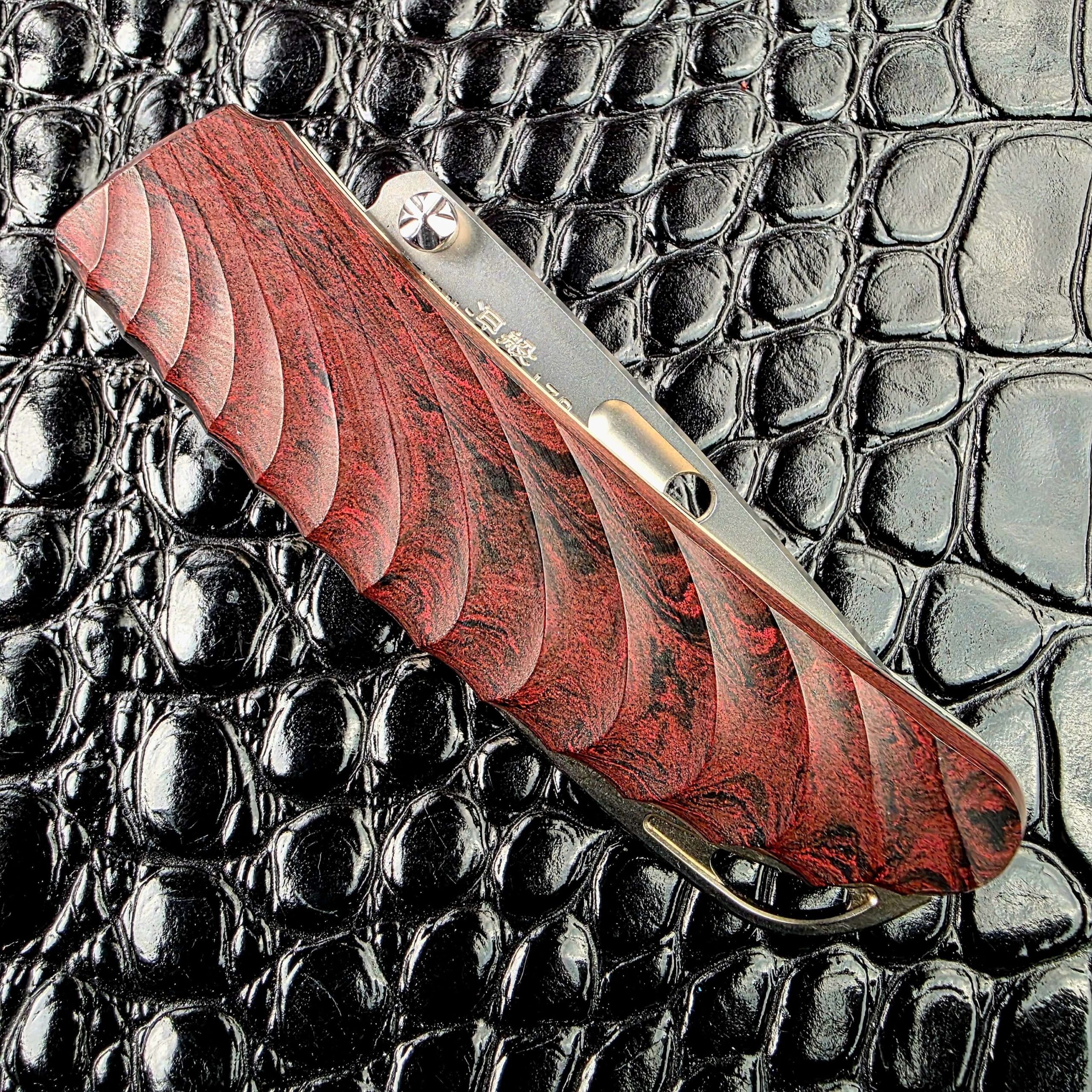
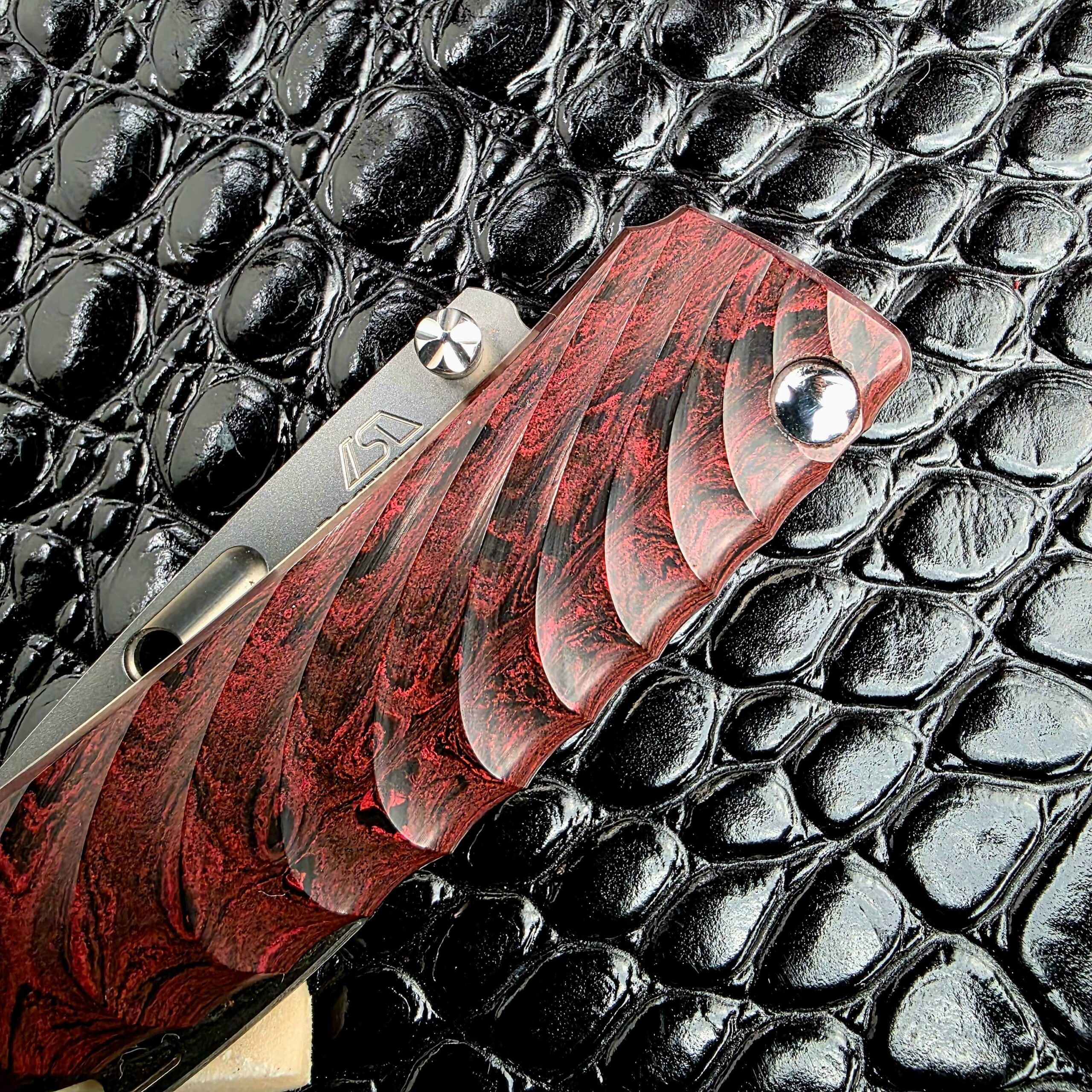
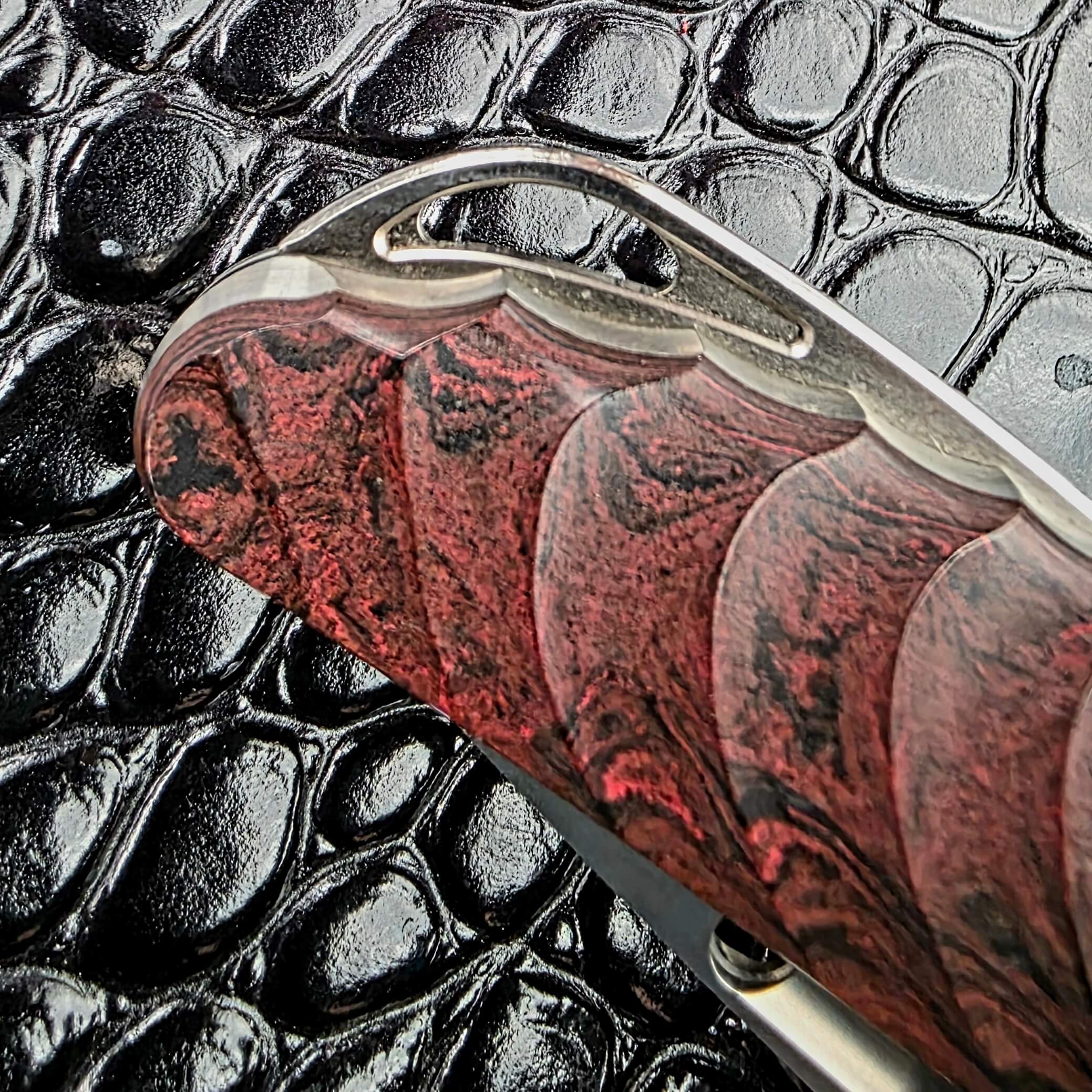
The scales are ebonite, milled in a wave pattern meant to read as a kimono folding. Ebonite is hard vulcanized rubber, and its usual home is the barrel of a high-end fountain pen. It warms in the hand in a way titanium and carbon fiber never do.
Machining it is the problem. Ebonite scorches if the tool runs hot, so the cutting has to be slower and cooler than the same pattern in a harder material would need.
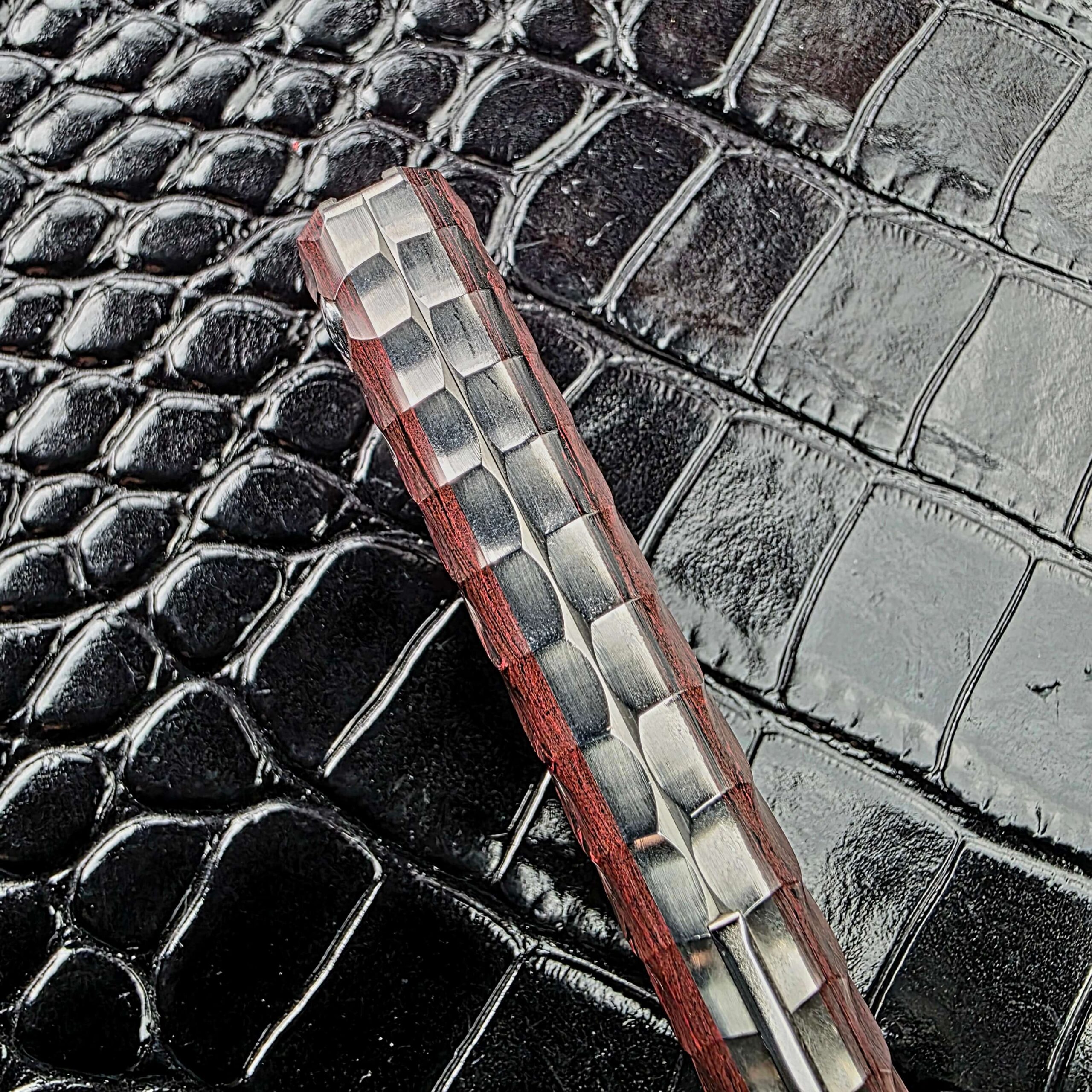
Under the scales are titanium liners and a titanium backspacer. The handle halves are joined from the inside, so the exterior carries no visible screws or pivot hardware anywhere along its length.
The lock is a steel button built into the scale, and the knife opens on thumb studs shaped as flower blossoms, fitted to both sides. There is no pocket clip. It ships with a leather sheath and a steel belt clip instead.
Condition and What’s Included with This Rockstead NEHAN
Condition is excellent. We inspect every knife in hand before we photograph it. On a mirror-polished blade that inspection matters more than usual, because a mirror shows everything. Our published grading standards let you check this description against what arrives.
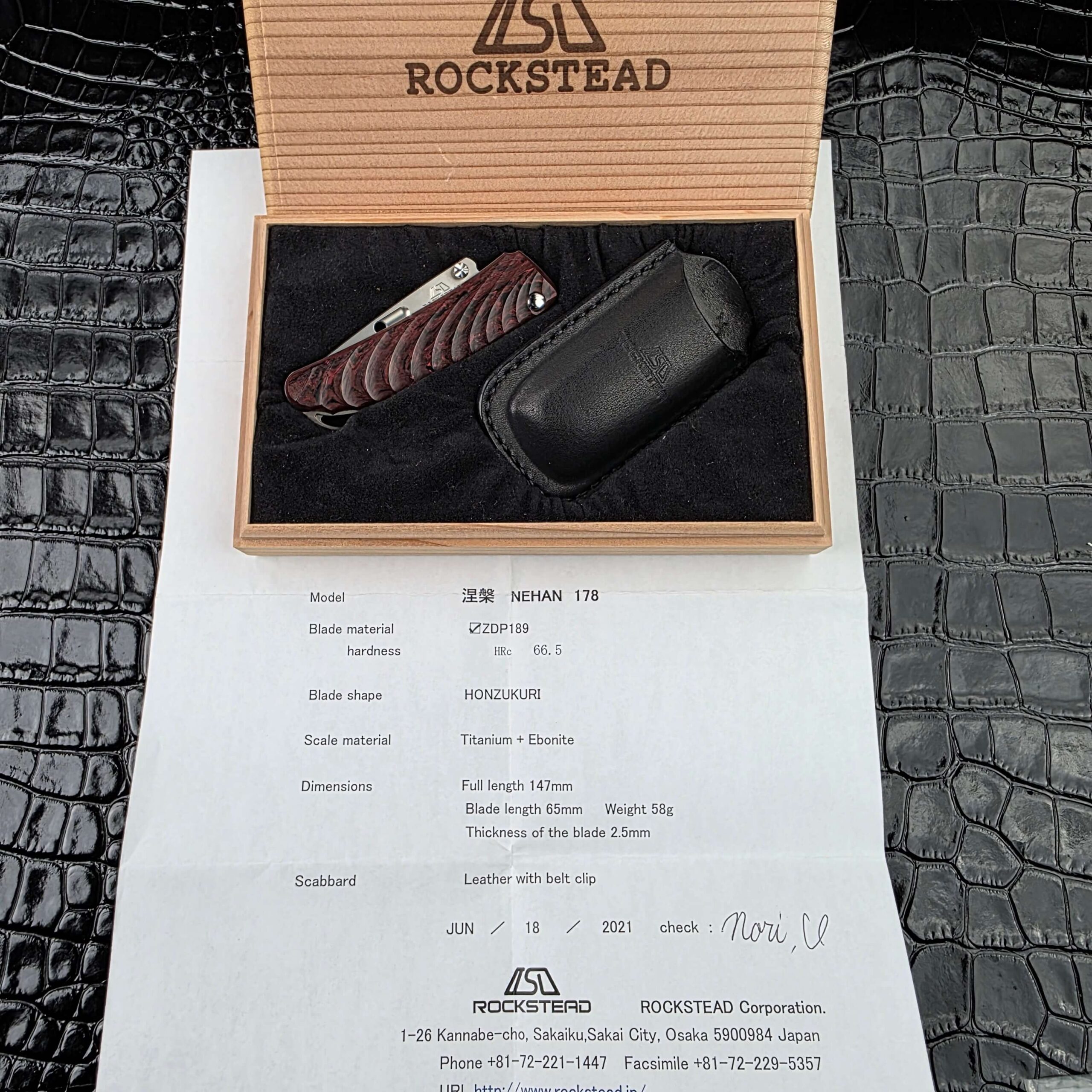
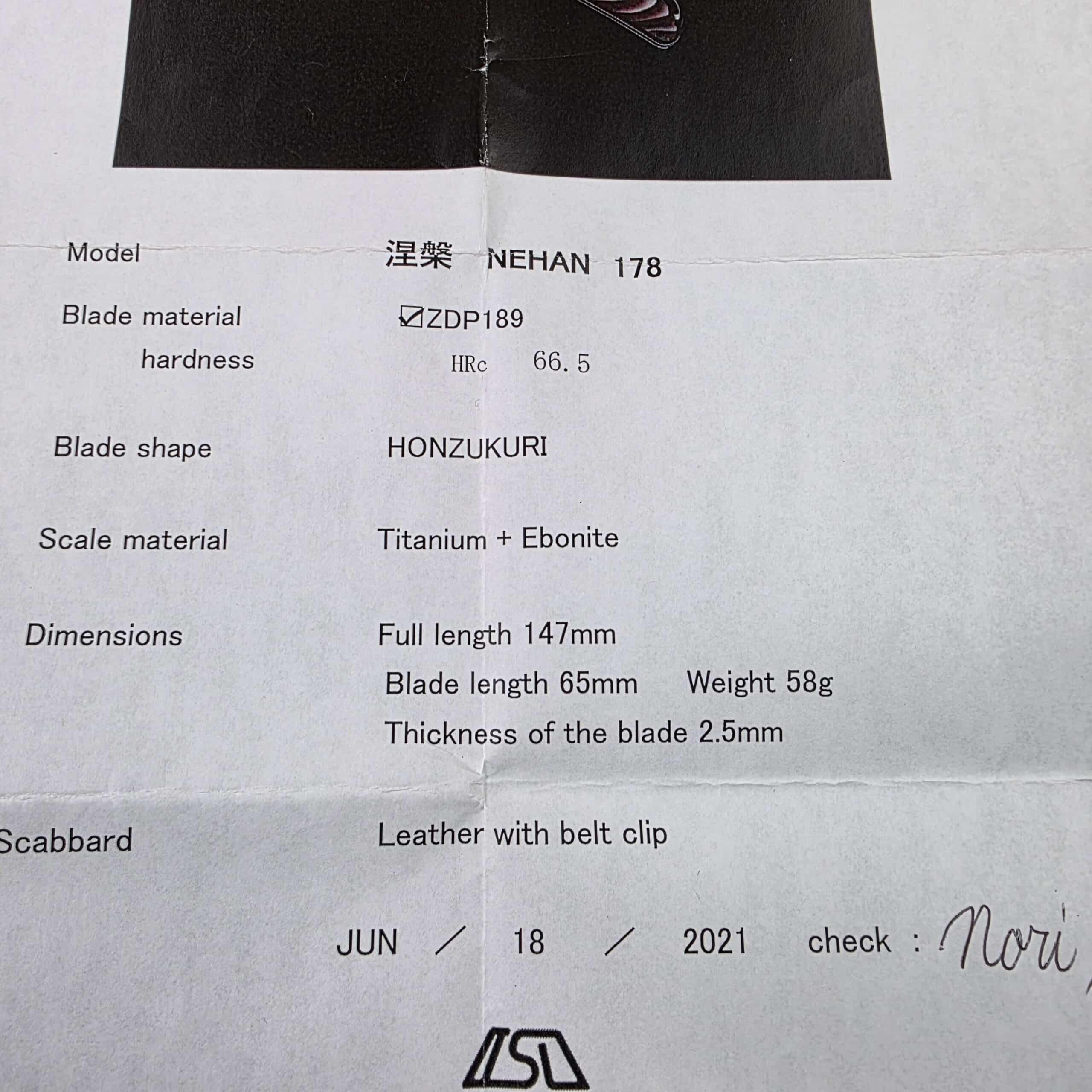
It came out of a collection rather than direct from Japan. The certificate records the model in kanji and romaji, the serial, the steel, the hardness, the grind, the materials and a build date of June 18, 2021.
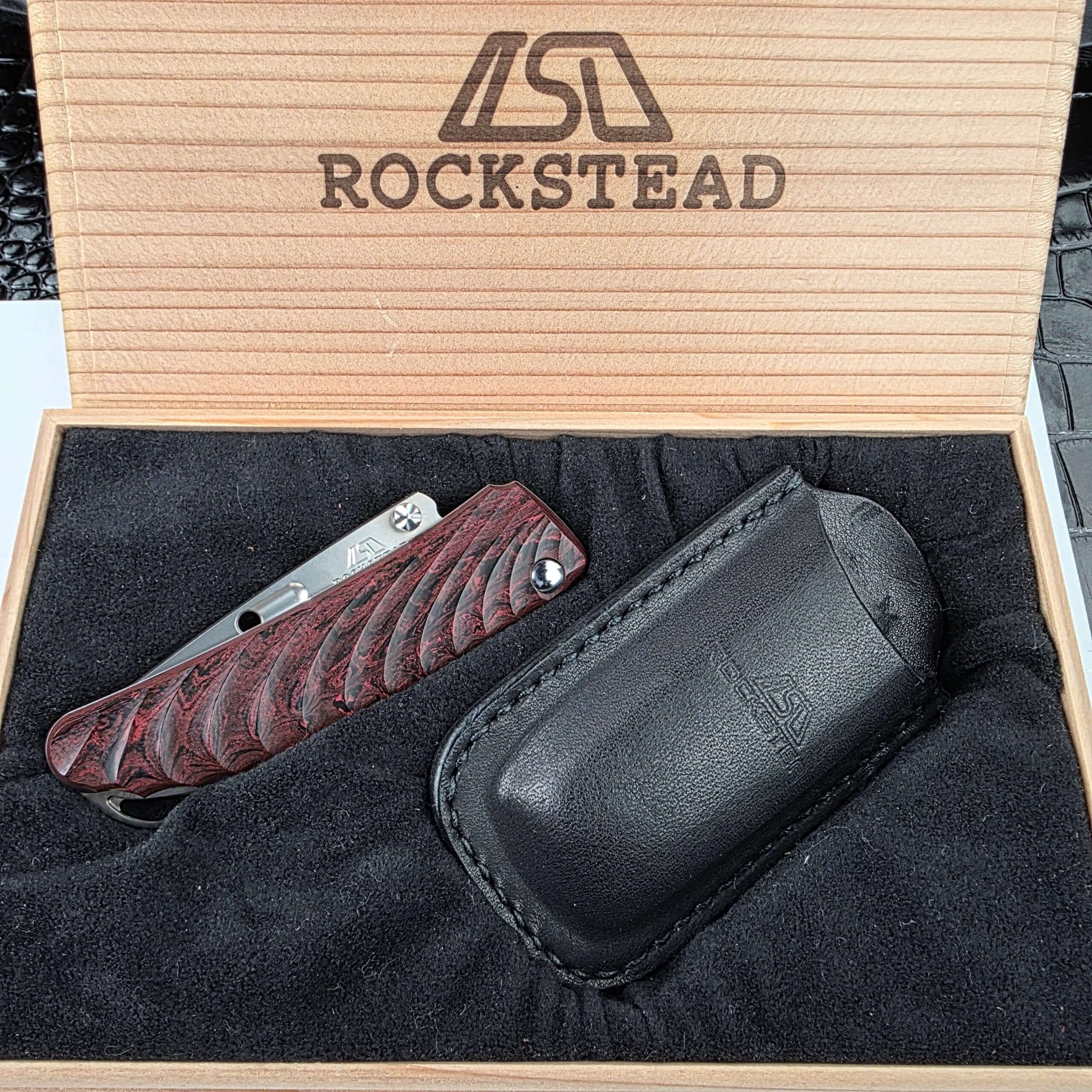
The full presentation is here: the paulownia box, the leather sheath, the certificate and Rockstead’s maintenance card. Read how we handle provenance on pieces that arrive complete.
- Rockstead NEHAN folding knife, serial 178
- Traditional paulownia (kiri) wooden box with velvet interior
- Leather sheath with steel belt clip
- Certificate of Authenticity
- Rockstead maintenance card
Rockstead NEHAN Specifications
The model, serial, steel, hardness, grind, materials and build date are taken from the certificate that ships with the knife.
- Overall length, open: 5.79 in
- Blade length: 2.56 in
- Cutting edge: 2.56 in
- Closed length: 3.35 in
- Blade thickness: 0.10 in
- Blade material: ZDP-189 powder stainless
- Hardness: 66.5 HRC
- Blade grind: HONZUKURI convex zero grind
- Blade finish: Hand-stropped mirror polish
- Lock type: Steel button lock
- Action: Manual
- Deployment: Thumb studs, both sides
- Handle material: Ebonite, milled kimono wave pattern
- Liners and backspacer: Titanium
- Pocket clip: None. Leather sheath with steel belt clip supplied
- Weight: 2.05 oz
- Serial: 178
- Date made: June 18, 2021
- Country of origin: Japan
- Condition: Excellent
- SKU: 00207-RSD-NEHAN-ZDP189-EBONITE-20210618
This piece is preowned and came from a private collection. Browse our other preowned knives.
Video Description: Rockstead/Hara NEHAN
The Rockstead NEHAN is a preowned Japanese folding knife in excellent condition, designed by Koji Hara and built by Rockstead. The blade is ZDP-189 at 66.5 HRC, 2.56 inches long with a full 2.56 inches of cutting edge at 0.10 inches thick. The grind is HONZUKURI, a convex zero grind with no secondary bevel, finished in a hand-stropped mirror polish. Serial 178.
The scales are ebonite milled in a kimono wave pattern, over titanium liners and a titanium backspacer. The handle halves join internally, so no screws are visible outside. The lock is a steel button and the knife opens on blossom-shaped thumb studs on both sides. Overall length is 5.79 inches open and 3.35 inches closed, at 2.05 ounces. It ships in a paulownia box with a leather sheath and its certificate.
Frequently Asked Questions
Why does the Rockstead NEHAN have a small dimple in the blade?
It is the Rockwell hardness indenter mark, and it is deliberate. Rockstead test every blade individually rather than sampling a batch, and they leave the indent visible on the flat so the owner can verify the test happened on that specific knife.
The 66.5 HRC recorded on this knife’s certificate is the reading taken from that mark. Almost every Rockstead carries one. Treat it as the receipt for the hardness claim rather than as a blemish.
How do you sharpen a HONZUKURI zero grind?
Not on a flat stone. A zero grind has no secondary bevel, so there is no facet to lay against a stone and no angle to chase. Working it on a benchstone puts a micro-bevel on it and destroys the geometry you paid for.
Rockstead’s own method is stropping: metal polish on a denim-covered board, drawing the blade gently after heavy use. Done that way the edge holds for years without resharpening. They also offer factory regrinding in Japan for owners who want the original geometry restored.
Is 66.5 HRC too hard to be practical?
It is hard enough that the failure mode changes. A blade at 59 to 61 HRC rolls when it meets something it cannot cut. At 66.5 it chips instead, and a chip in a mirror-polished zero grind is not a home repair.
What you buy for that is edge retention measured in years rather than weeks, and the convex geometry is the counterweight. A convex section puts significantly more steel behind the apex than a flat grind, which is what makes hardness at this level survivable in a knife meant to be used.
What is ebonite, and how does it behave over time?
Ebonite is hard vulcanized rubber, and its usual application is the barrel of a high-end fountain pen rather than a knife handle. It is warm to the touch in a way titanium and carbon fiber are not, and it develops a tactile character with handling.
It is also awkward to machine, because it scorches if the cutter runs hot. Milling a wave pattern into it means slower, cooler cutting than the same pattern would need in a harder material, which is part of why ebonite variants are less common than the carbon fiber ones.
How does a handle assemble with no visible screws?
The halves are joined from the inside. Titanium liners and a titanium backspacer form the structure, and the fasteners work against those internal components rather than passing through the outer scales.
The result is an exterior with no screw heads, no pivot collar and no clip hardware anywhere along it. It is an engineering choice made for the look, and it is one of the reasons this generation of the Nehan was worth reintroducing.
Does We Buy Knife Collections actively support the broader knife enthusiast community?
Yes. Based in Jacksonville, Florida, We Buy Knife Collections is a curator and purveyor of fine custom made folding and fixed-blade knives. We are dedicated to the high-end custom knife community and we support knife rights advocacy.
Following our commitment upgrade in April 2026, we are proud to hold an AKTI Premier Membership, supporting the American Knife & Tool Institute’s vital advocacy and lobbying for knife owners, makers, and the future of the industry.
Buy This Rockstead NEHAN
We inspect every knife in hand and photograph it ourselves. See what else is available on the Rockstead Knives brand page. You can also talk to us about selling your collection.


Reviews
There are no reviews yet.