


William Henry Lancet Hieroglyph, Number 044 of 250
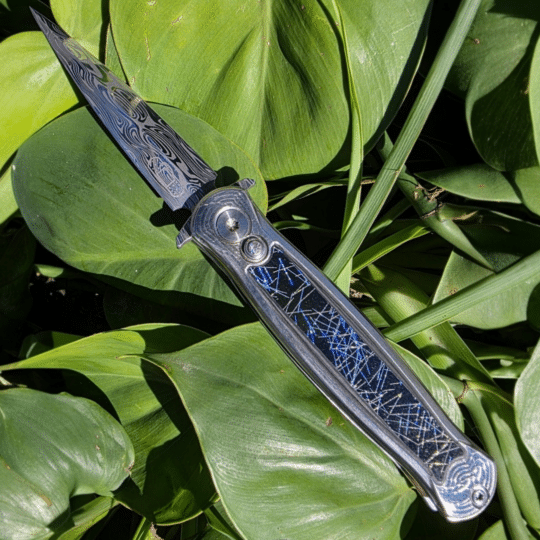
This William Henry Lancet Hieroglyph is number 044 of an edition of 250. The Certificate of Authenticity dates the build to 27 September 2013. Its frame is etched ‘Rolling Rock’ damascus by Chad Nichols, inlaid with fossil woolly mammoth tooth roughly 10,000 years old. The blade is black-coated ‘Wave’ damascus over a ZDP-189 core, etched HRC 67.
Open, the knife measures 6.375 inches and weighs 1.7 ounces. White topaz sets the one-hand button lock and the thumb stud. A hand-braided leather lanyard hangs from the butt. The piece is preowned and mint, out of an established private collection, and every original component came with it. It joins the rest of our preowned collector knives.
About William Henry Knives
Matt Conable founded William Henry in 1997. The name comes from the middle names of the two founding partners. Conable wanted something between a one-off custom knife and a production folder. He fused hand craft with CNC precision and built in small numbered editions. The Lancet frame you are looking at was his first design.
The studio works from McMinnville, Oregon. It sources damascus from named smiths, sets gemstones by hand, and cuts fossil material to fit each frame individually. Every knife carries a serial number and an edition number on the blade and on its certificate. We track the brand alongside the master custom knifemakers whose work holds value.
Rolling Rock Damascus and Fossil Woolly Mammoth Tooth
Chad Nichols forged the frame billet. His ‘Rolling Rock’ pattern reads as tight interlocking loops, and the etch drops them dark against bright steel. Nichols supplies damascus across the William Henry catalogue, and no two of his billets repeat.
The inlay is fossil woolly mammoth tooth, dated by the maker at roughly 10,000 years old. Mammoth tooth is neither tusk nor bone. It forms as alternating plates of enamel and dentine, which is why this inlay reads as parallel cream and grey bands rather than a solid field.
Those bands gave the edition its name. They run the full length of both inlay panels instead of pooling at one end. Fossil material of this grade is a large part of why certain makers hold their value, as our collector’s investment guide sets out.
ZDP-189 Core and the Wave Damascus Blade
The blade is where this William Henry Lancet Hieroglyph separates from the rest of the Lancet line. Most Lancet editions run a VG-10 core. This one runs ZDP-189, a Hitachi powder steel carrying roughly three percent carbon and twenty percent chromium. The blade etch reads HRC 67.
William Henry laminates that core between layers of its signature ‘Wave’ damascus, then coats the flats black. Blade length is 2.75 inches, with 2.625 inches of cutting edge. A topaz-set thumb stud opens it. The topaz-set button lock holds it open. Steel choice matters more than most buyers expect, which is why we wrote how to choose a custom knife.
Condition and What’s Included with This William Henry Lancet Hieroglyph
This William Henry Lancet Hieroglyph is preowned and in mint condition. It shows no carry wear, no sharpening, and no damage to the mammoth tooth inlay. It came out of an established private collection with every original component intact. Read how we grade before you buy.
Included with the knife:
- Original Certificate of Authenticity naming the model, serial number 1310-0634, edition number 044/250, and the production date
- Original red lacquered wood presentation box with the William Henry mark on the inner lid
- William Henry black leather slip case cut for this frame
- Original outer cardboard box carrying the factory serial label
- Hand-braided black leather lanyard with two polished metal beads, attached at the butt
William Henry Lancet Hieroglyph Specifications
Every figure below comes from the Certificate of Authenticity, the blade etch, or the maker’s published specification sheet. Compare it against the rest of our folding knives.
- Maker: William Henry Knives, McMinnville, Oregon
- Model: Lancet ‘Hieroglyph’ (B10 Hieroglyph)
- Serial Number: 1310-0634
- Edition: 044 of 250
- Production Date: 27 September 2013
- Type: Manual folding knife, one-hand button lock
- Overall Length (open): 6.375 in / 161.9 mm
- Blade Length: 2.75 in / 69.9 mm
- Cutting Edge: 2.625 in / 66.7 mm
- Handle Length: 3.75 in / 95.3 mm
- Blade Steel: Black DLC-coated ‘Wave’ damascus with ZDP-189 core
- Hardness: HRC 67, etched on the blade
- Frame: Etched ‘Rolling Rock’ damascus by Chad Nichols
- Inlay: Fossil woolly mammoth tooth, approximately 10,000 years old
- Gemstones: White topaz set in the button lock and the thumb stud
- Lock: Button lock
- Deployment: Thumb stud, one-hand opening
- Pocket Clip: None
- Lanyard: Hand-braided leather with metal beads, attached
- Weight: 1.7 oz / 48.2 g
- Country of Origin: United States
- Condition: Preowned, mint
- SKU: 00183-WH-LANCET-B10HIEROGLYPH-MAMTOOTH-20130927
- Included: Certificate of Authenticity, wood presentation box, leather slip case, original outer box, attached leather lanyard
Video Description of an Amazing Piece of William Henry History
The William Henry Lancet Hieroglyph, number 044 of 250, shown here preowned and mint. It is a manual button lock folder finished in September 2013. The blade runs 2.75 inches of black-coated ‘Wave’ damascus over a ZDP-189 core. The frame is etched ‘Rolling Rock’ damascus by Chad Nichols. Fossil woolly mammoth tooth fills both inlay panels.
White topaz sets the one-hand button lock and the thumb stud. The blade carries the William Henry mark, ZDP-189, HRC 67, and serial 1310-0634. There is no pocket clip. A hand-braided leather lanyard hangs from the butt. Open length is 6.375 inches at 1.7 ounces. The knife ships with its Certificate of Authenticity, wood presentation box, leather slip, and original outer box.
Frequently Asked Questions
Is the Lancet Hieroglyph an automatic knife?
No. It is a manual folder. You open it with the topaz-set thumb stud, and the button lock secures the blade. Pressing the button releases it to close.
What is fossil woolly mammoth tooth?
It is the molar of a woolly mammoth, preserved in permafrost or sediment. Enamel and dentine alternate in plates, which produces the striped figure you see across the inlay. The maker dates this material at roughly 10,000 years old. It is not tusk, not bone, and no living animal is involved.
How rare is number 044 of 250?
William Henry built 250 knives in this exact configuration and never repeated it. The frame damascus and the fossil inlay are natural materials, so no two of the 250 look the same. This is number 044.
Does it come with documentation?
Yes. The original Certificate of Authenticity lists the model, serial number, edition number, and production date. Serial 1310-0634 appears on the blade, on the certificate, and on the outer box label. See how we document provenance.
How does it ship?
It ships insured in its original boxes. Full terms sit in our shipping and return policy.
Buy This William Henry Lancet Hieroglyph
We inspected this William Henry Lancet Hieroglyph in hand and described exactly what we found. Nothing here is guesswork. See the rest of the line on the William Henry Knives brand page. If pieces of this calibre are sitting idle in your safe, we will make you an offer when you sell your knife collection.

Reviews
There are no reviews yet.