
Andriy Mozil Model 23-26: A Custom Folder from Lviv, Ukraine
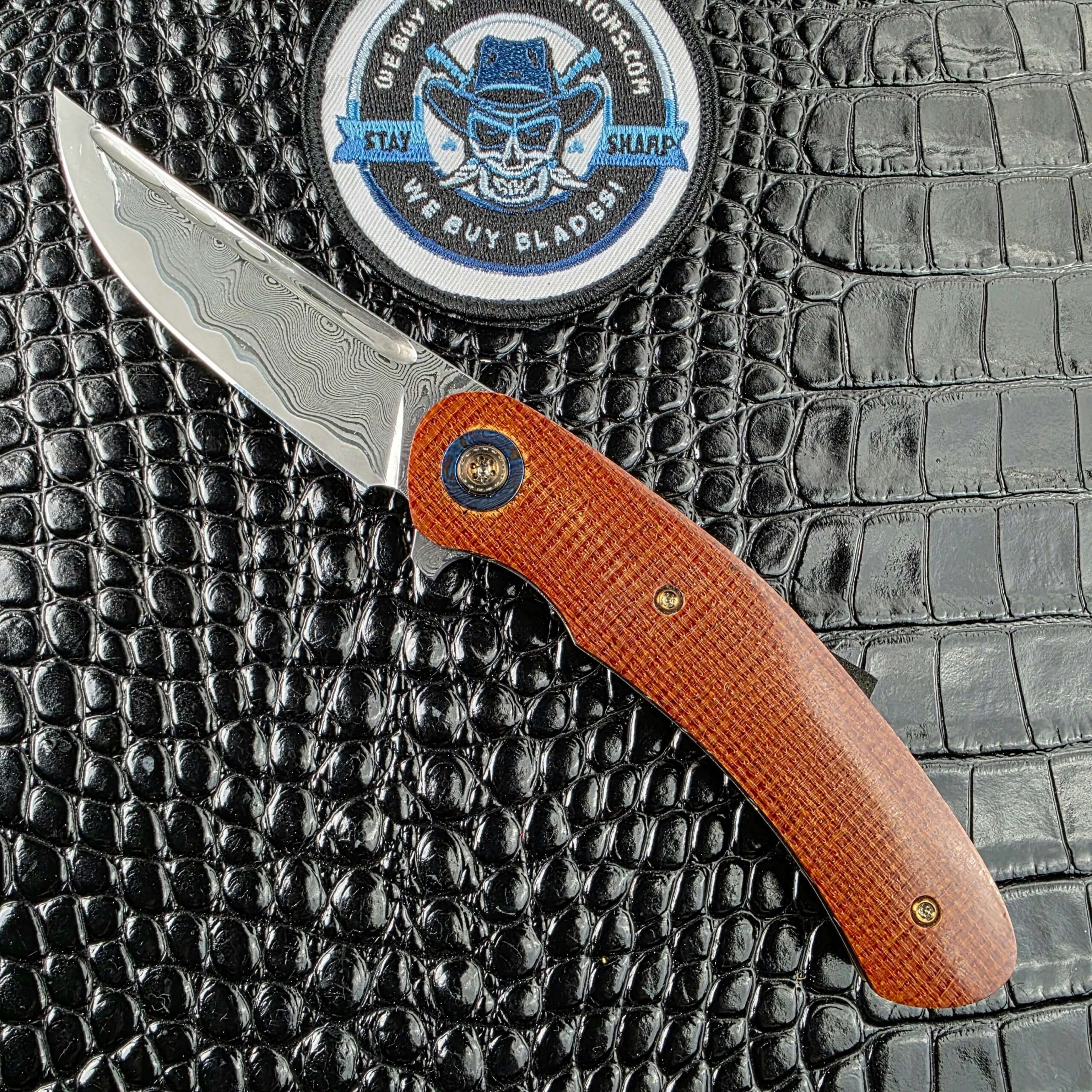
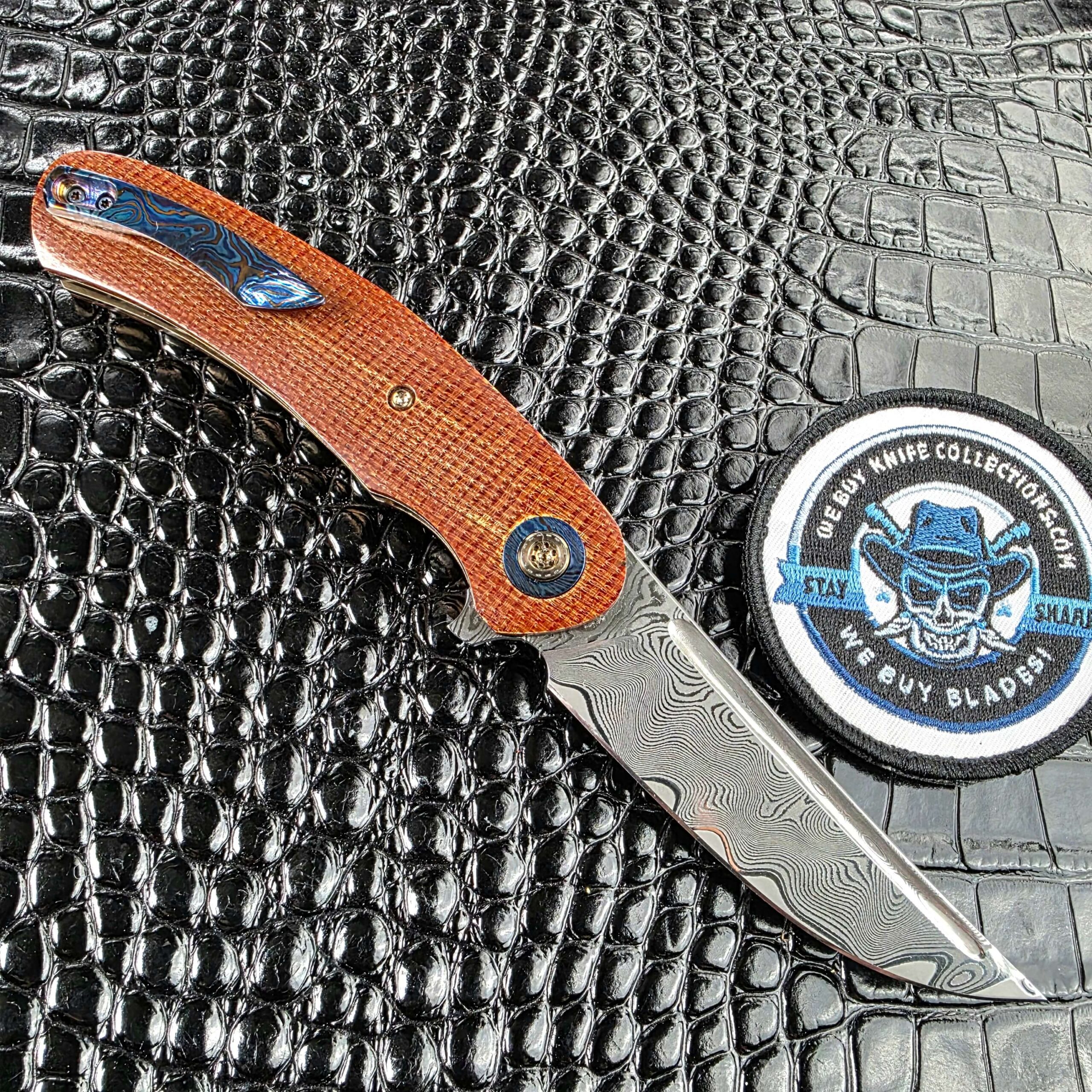
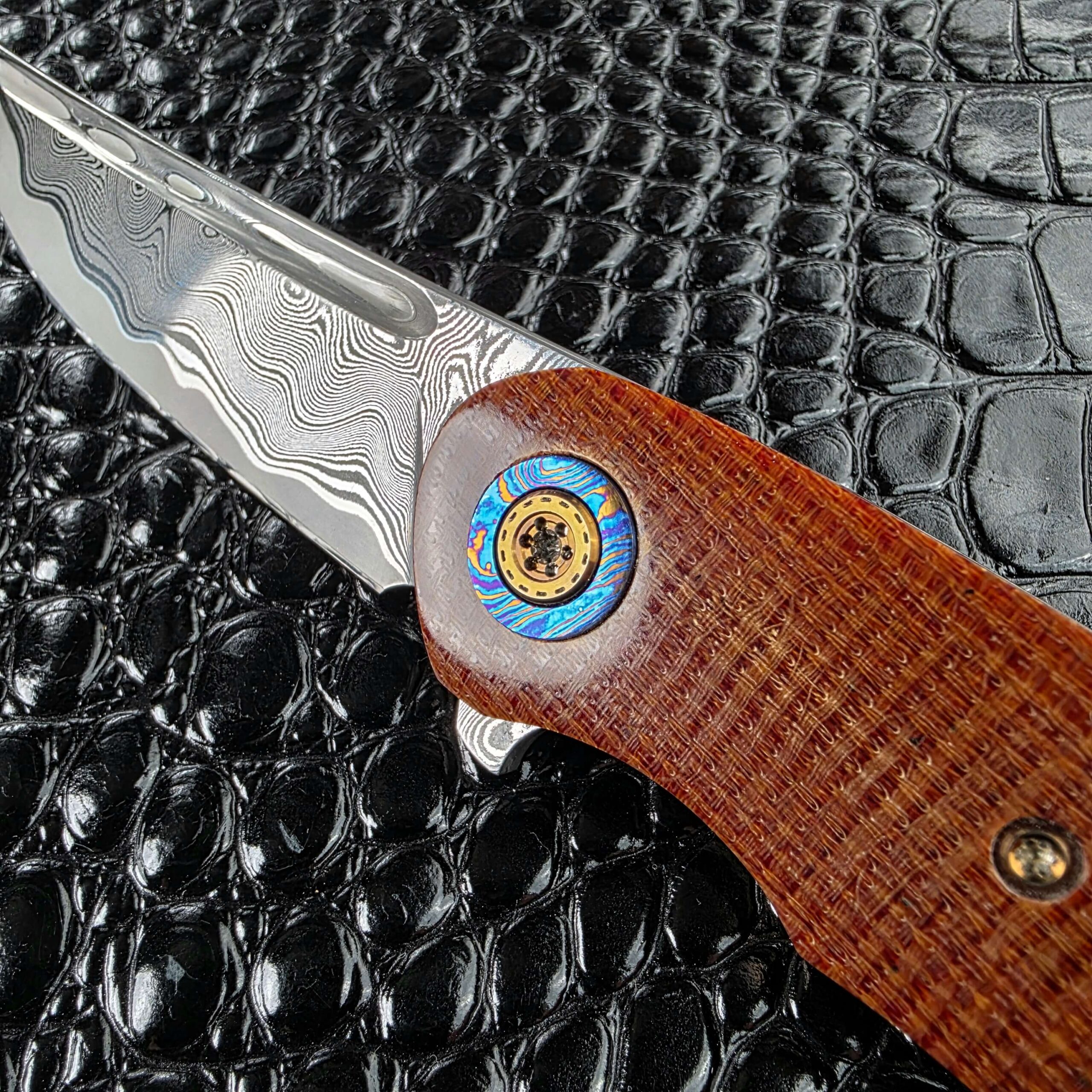
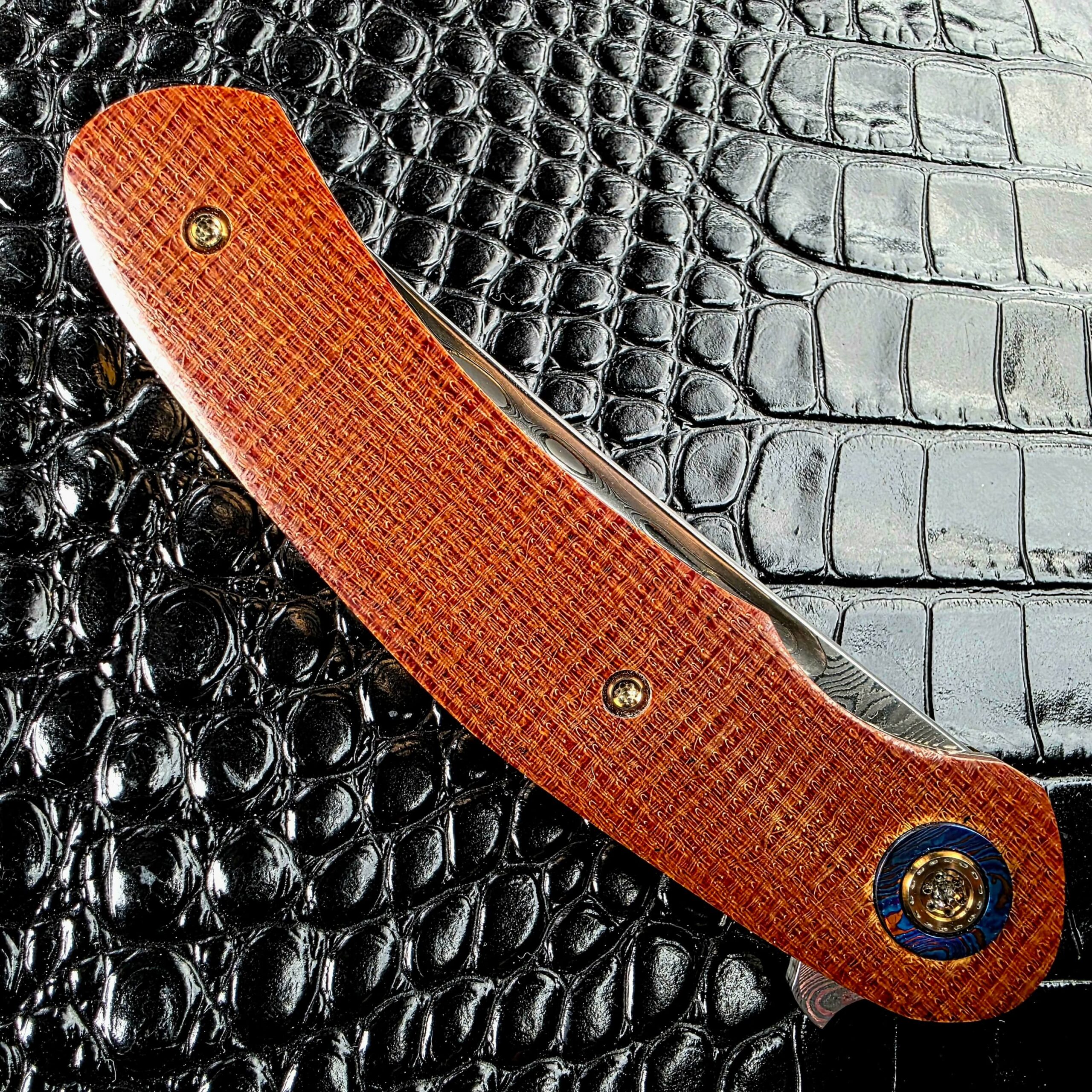
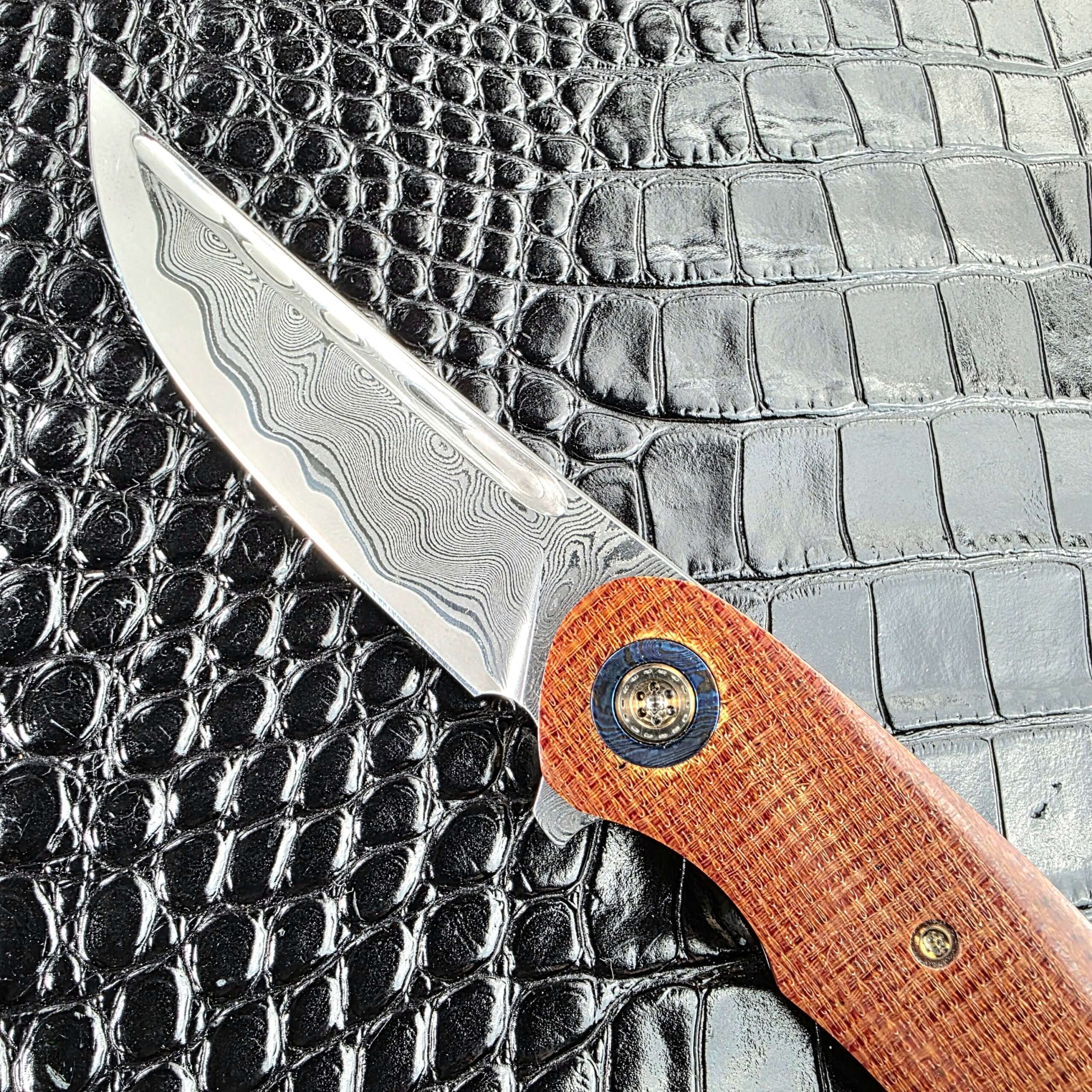
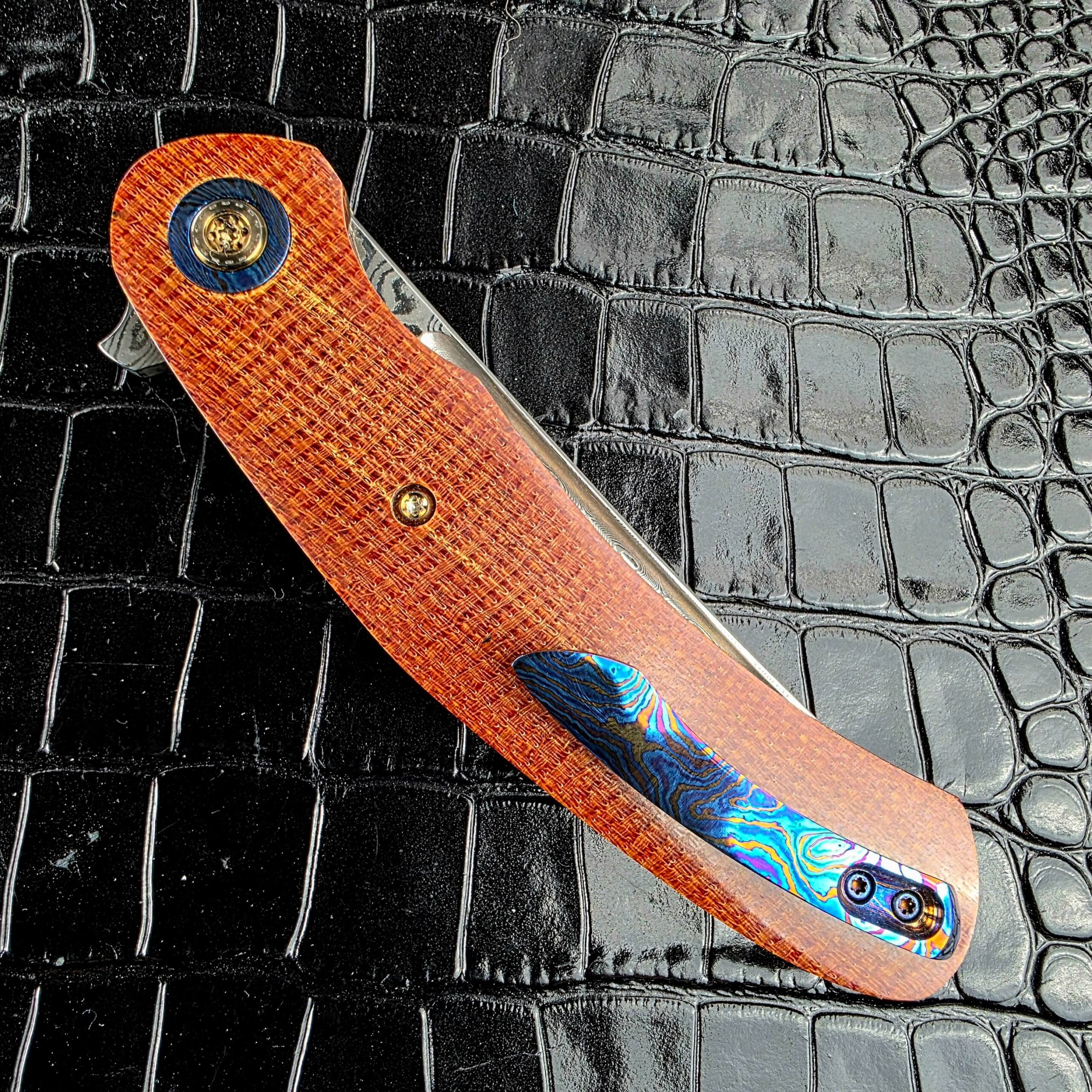
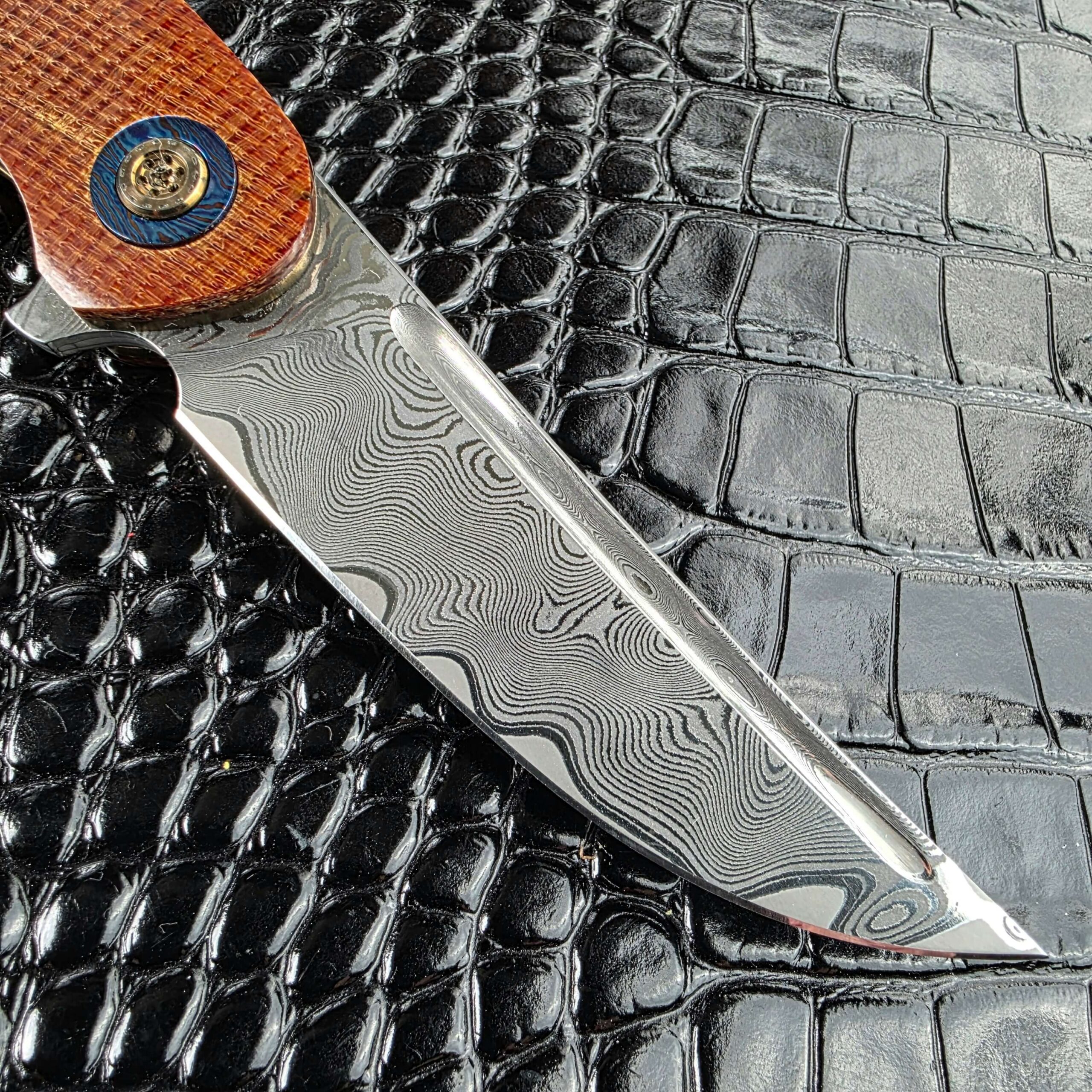
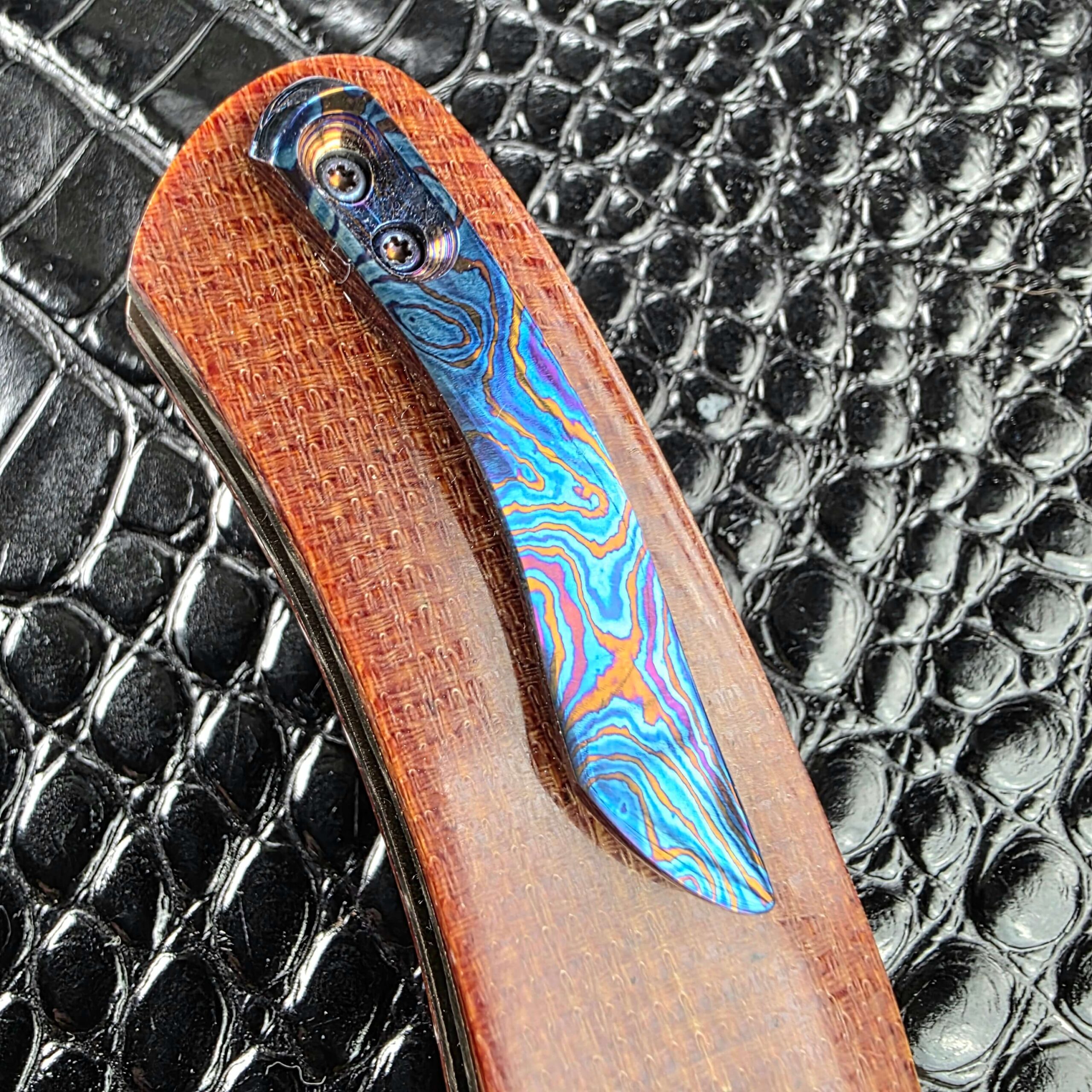
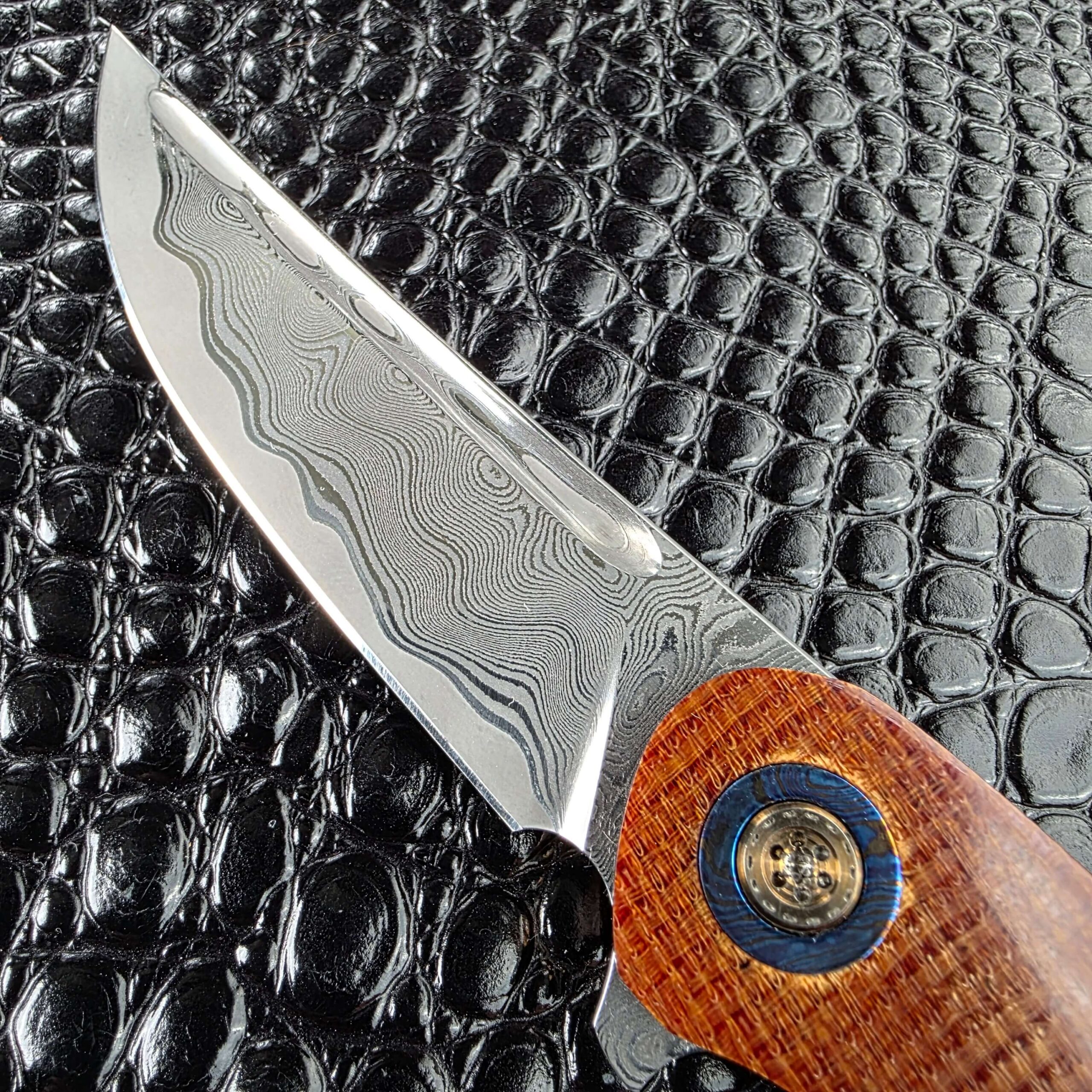
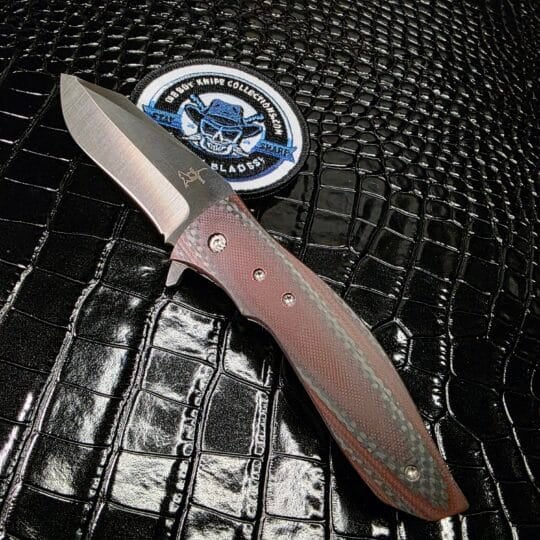
The Andriy Mozil Model 23-26 is a custom liner lock folder built in Lviv, Ukraine. Mozil finished it on September 15, 2026 and shipped it to us directly. The blade is Elmax clad in stainless Damascus. The bolsters carry Timascus inserts, the scales are canvas Micarta, and the pocket clip is Timascus. It runs 9.06 inches open at 5.1 ounces. Condition is new.
It came out of a country at war. Mozil is still at his bench in Lviv, and this knife was made there this September. We mention it once because it is a fact about the object, not because it needs to be sold on.
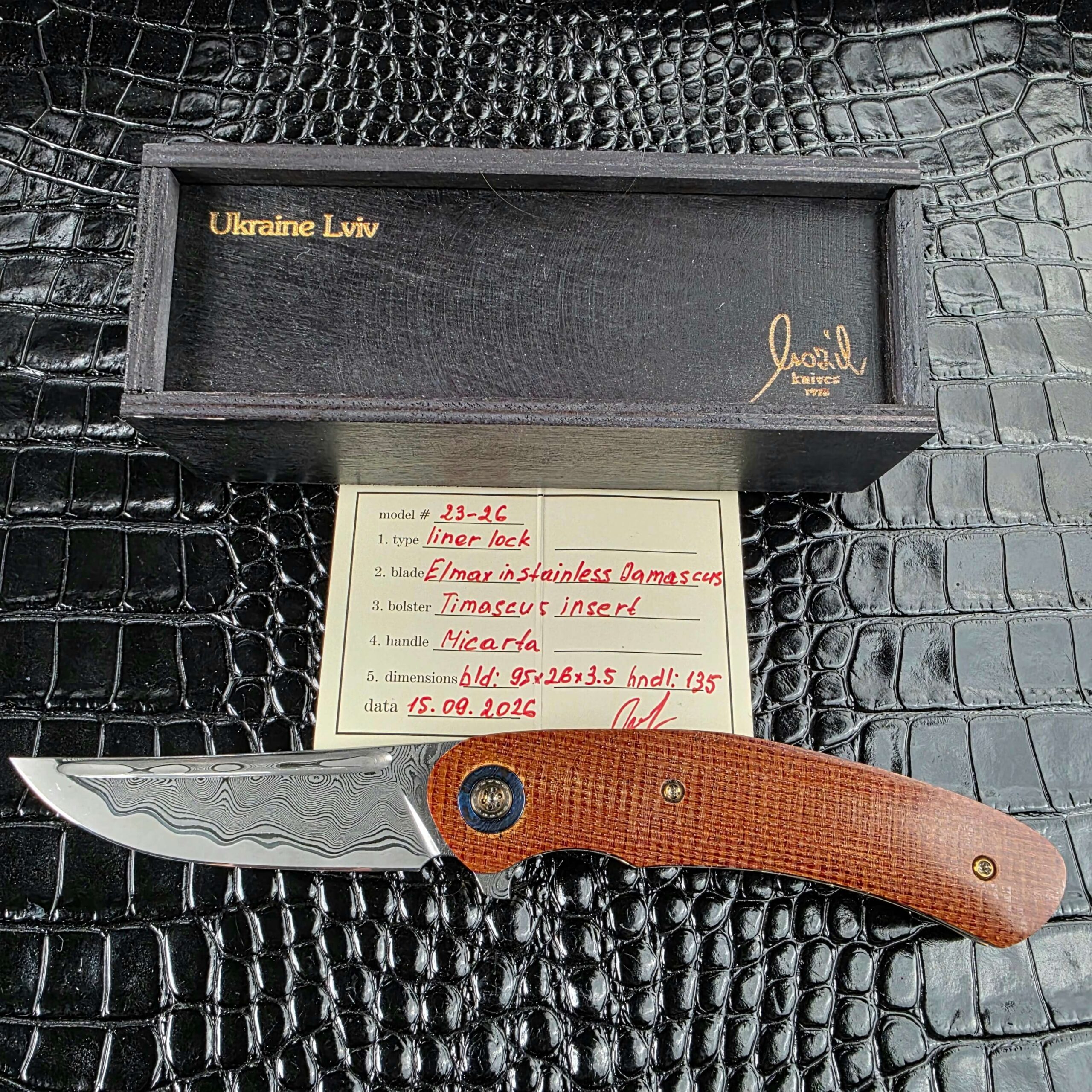
What arrived is a sole-author piece with a handwritten card, a signed wooden box, and no middleman between the custom maker and us.
San Mai: An Elmax Core in a Damascus Jacket
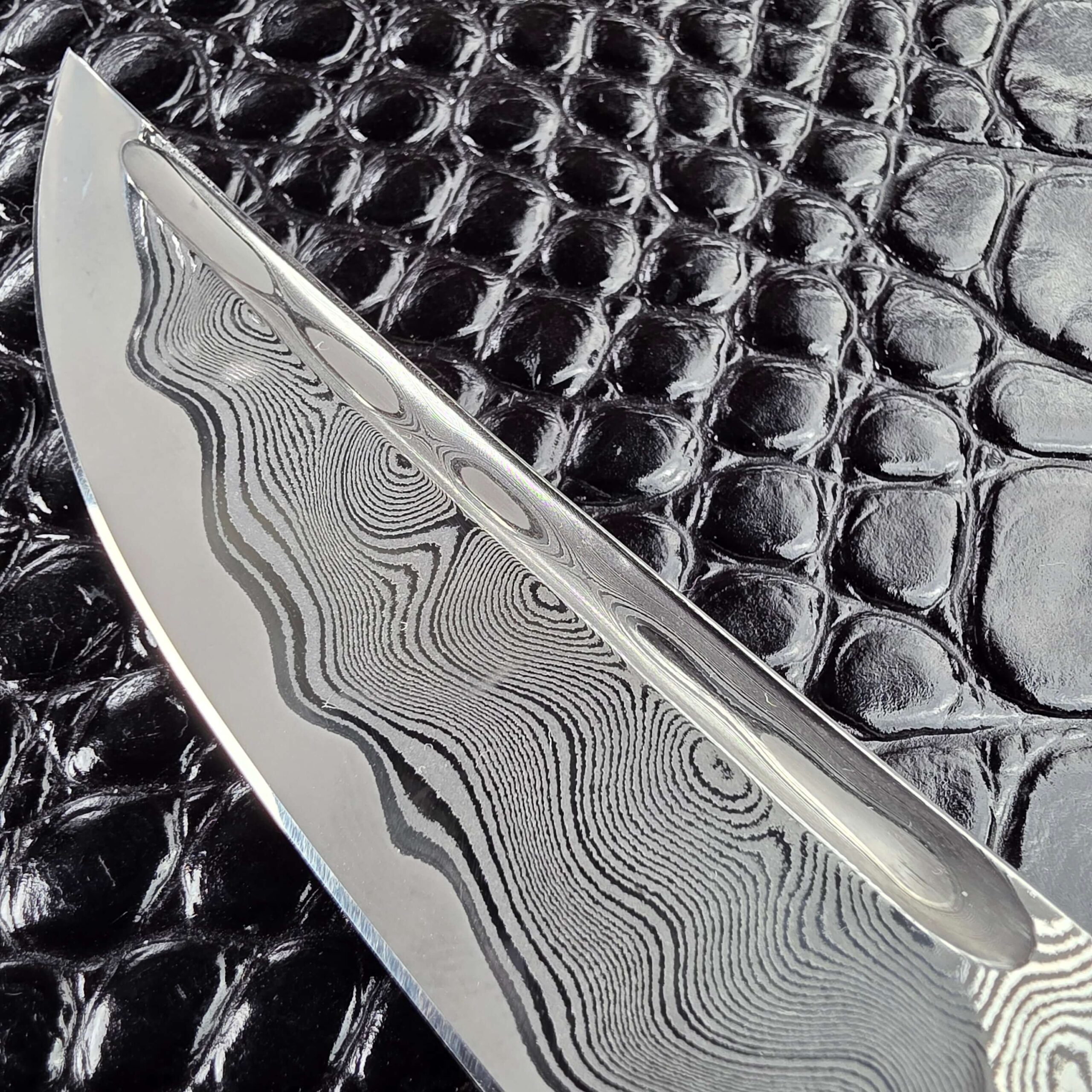
The blade is not Damascus all the way through, and that matters. It is san mai construction, which means a hard cutting core laminated between two outer layers.
The core is Böhler Elmax, a powder metallurgy stainless with high chromium and vanadium. That is the steel doing the cutting, and it is the same core used in the Marfione Custom Sigil we carry. Around it is a stainless Damascus jacket.
The logic is old and it is sound. Pattern-welded steel is beautiful and difficult to optimize for edge performance. Laminating it around a core gives the pattern where you can see it and the performance where you need it.
Because the two steels etch differently, the boundary between core and jacket draws a visible line down the blade. Mozil cut the fuller to follow it, so the milled groove and the etch line track each other rather than fighting.
Timascus at the Bolsters and the Clip
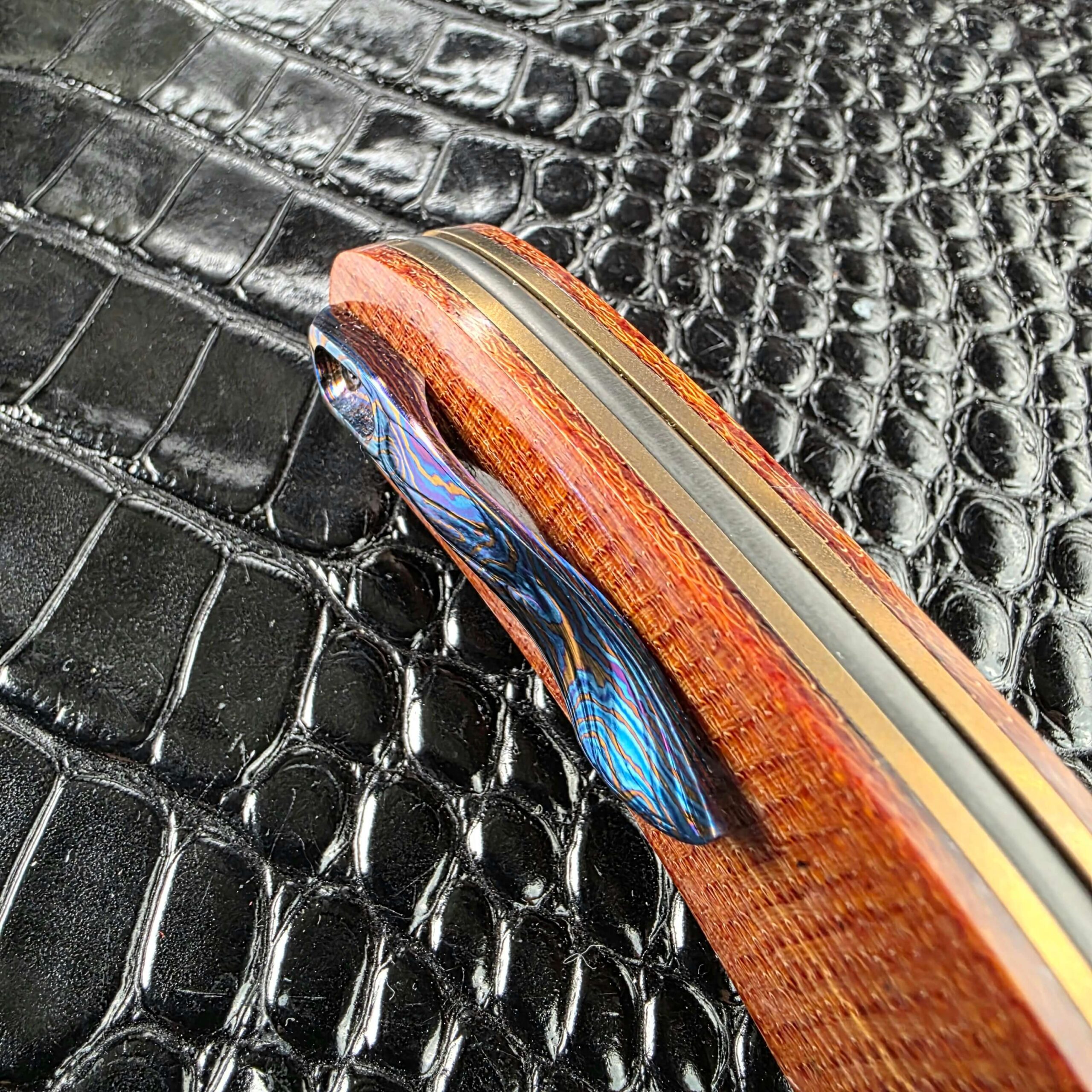
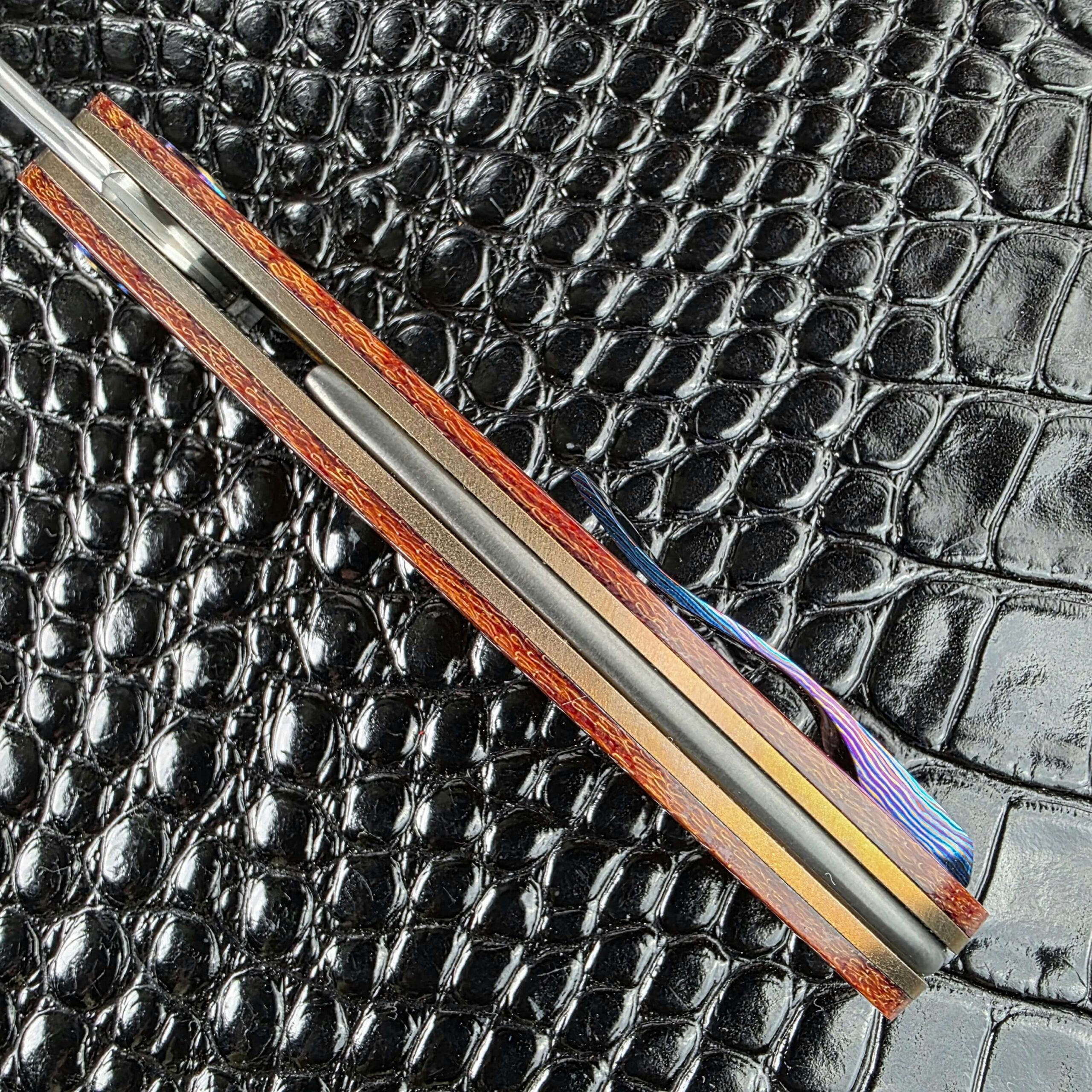
Timascus is titanium Damascus: two or more titanium alloys forge-welded into one billet, then colored by heat rather than by any coating. The blues, golds and violets on this knife are an oxide layer, and they shift as the piece turns.
It is expensive before a maker touches it, because as much as 80 percent of the starting material ends up as chips, and it is hard on tooling because the billet mixes alloys of different hardness. That is why it usually appears as small parts, which is exactly how Mozil has used it here: bolster inserts and a 3D-milled clip. The same material forms the entire frame on our Reese Weiland Timascus hawkbill, which is a far rarer application.
Against the Timascus, the scales are canvas Micarta in a warm brown. Micarta is layered fabric in resin, and canvas weave gives it the tactile, slightly coarse grip that makes a dress knife usable.
Andriy Mozil Model 23-26 Construction
The frame is titanium and the lock is a liner lock cut from it. Deployment is a flipper tab. The card records the type as liner lock in Mozil’s own hand.
Blade geometry is a drop point with a sweeping belly, 3.75 inches long at 0.138 inches thick and 1.02 inches wide. The handle measures 135 millimetres, which is 5.31 inches closed.
Everything here was done by one person. There is no shop floor behind this knife and no division of labour between a designer and a manufacturer. That is what sole-author means, and it is the reason the card is handwritten rather than printed.
Condition and What’s Included with This Andriy Mozil Model 23-26
This knife is new. It came to us direct from Andriy Mozil in Ukraine, has never been carried, and there is nothing on it to grade down. You can check that against our published standards.
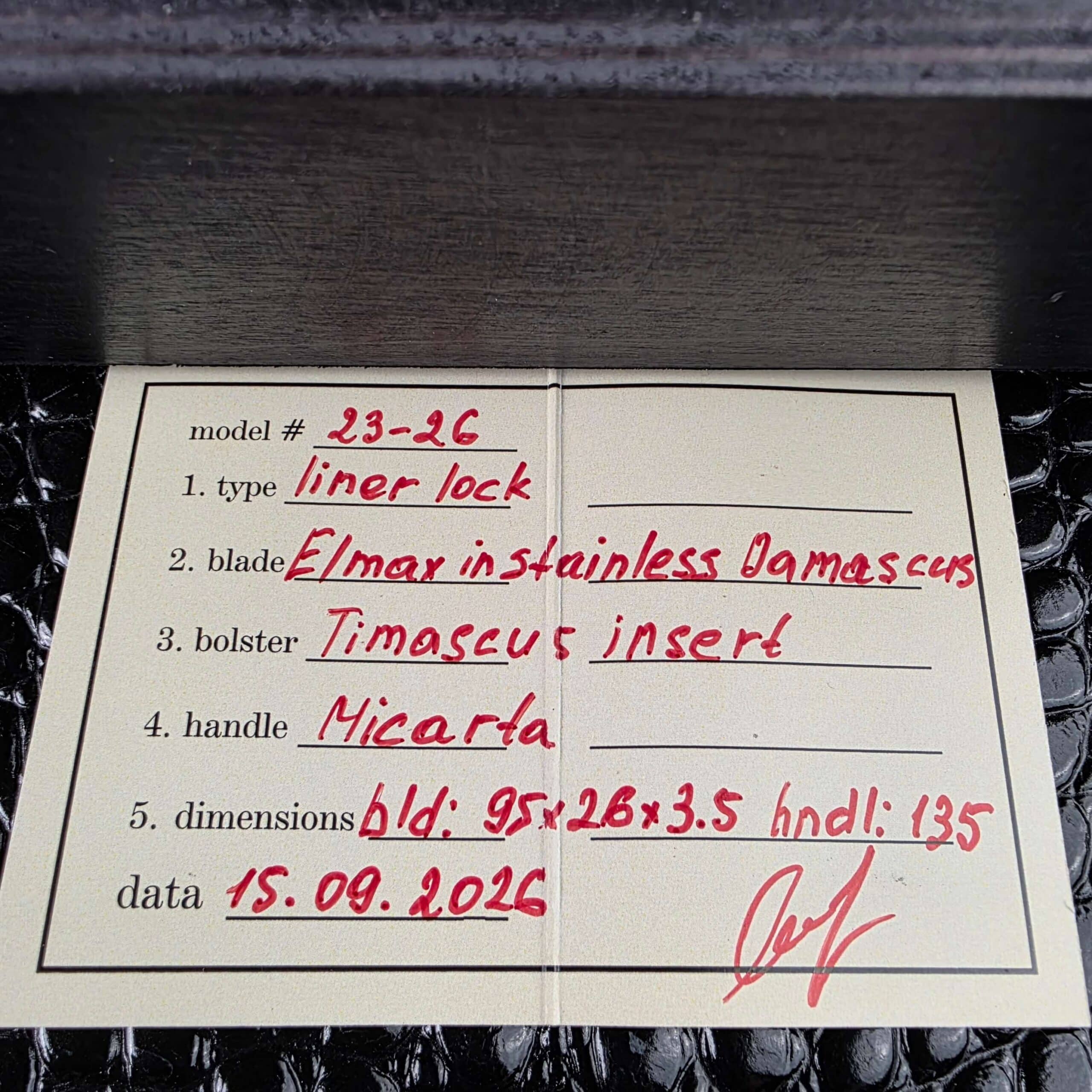
The presentation is complete. The wooden box is branded Ukraine Lviv and signed. The specification card is filled in by hand in red ink and signed, recording the model number, the lock type, the blade construction, the bolster, the handle material, the dimensions in millimetres and the date of completion.
A handwritten card from the man who made the knife is better documentation than a printed certificate, and it is what we mean when we talk about provenance.
- Andriy Mozil Model 23-26 folding knife
- Signed wooden presentation box, branded Ukraine Lviv
- Handwritten and signed specification card
Andriy Mozil Model 23-26 Specifications
The model number, lock type, materials, dimensions and completion date are taken from the card handwritten and signed by the maker.
- Overall length, open: 9.06 in
- Blade length: 3.75 in, 95 mm
- Blade width: 1.02 in, 26 mm
- Blade thickness: 0.138 in, 3.5 mm
- Closed length: 5.31 in, 135 mm
- Blade construction: San mai, Elmax core clad in stainless Damascus
- Blade style: Drop point with stylized fuller
- Lock type: Liner lock
- Action: Manual
- Deployment: Flipper tab
- Frame: Titanium
- Scales: Canvas Micarta
- Bolster inserts: Timascus
- Pocket clip: Timascus, 3D milled, tip-up carry
- Weight: 5.1 oz
- Model number: 23-26
- Date made: September 15, 2026
- Country of origin: Lviv, Ukraine
- Condition: New, direct from the maker
- SKU: 00215-MOZ-MODEL2326-ELMAX-DAMASCUS-20260915
New and available now, alongside the rest of our knives acquired direct from makers.
Video Description: Ukraine-Made Masterpiece
The Andriy Mozil Model 23-26 is a new custom folding knife in unused condition. Mozil built it in Lviv, Ukraine and completed it on September 15, 2026. The blade is san mai, an Elmax core clad in stainless Damascus, 3.75 inches long at 0.138 inches thick with a stylized fuller cut to follow the etch line between core and jacket.
The frame is titanium with a liner lock, deployed by a flipper tab. The scales are canvas Micarta, and the bolster inserts and 3D-milled pocket clip are Timascus. Overall length is 9.06 inches open and 5.31 inches closed, at 5.1 ounces. It ships in a signed wooden box branded Ukraine Lviv, with a specification card handwritten and signed by the maker.
Frequently Asked Questions
What makes the Andriy Mozil Model 23-26 a custom knife?
A custom is a unique, handcrafted tool designed and built by an individual artisan rather than stamped out in a factory. The steel, the blade shape, the handle material and every decorative choice are tailored by that person, by hand and with the help of specialized machinery.
Here that is literal. Mozil is a sole-author maker, which means one set of hands from the billet to the final assembly, with nothing subcontracted. The card that came with the knife is filled in by hand in red ink and signed, and it records the model number, the construction and the date he finished it.
What is San Mai, and why not make the whole blade Damascus?
San Mai is a laminate. A hard cutting core is welded between two outer layers, so the blade is one steel where it cuts and another where you see it. The core here is Böhler Elmax, a powder stainless chosen for edge retention and corrosion resistance.
A blade made entirely of pattern-welded steel is a compromise, because the qualities that make a pattern striking are not the qualities that make an edge hold. Laminating solves that. You get the Damascus jacket on the flats and a homogeneous high-performance steel at the apex, which is the arrangement Japanese smiths arrived at centuries ago for the same reason.
Why does the fuller follow the pattern on the blade?
Because san mai draws a line whether the maker wants it or not. The core steel and the jacket etch at different rates, so the boundary between them shows as a visible seam running the length of the blade.
A fuller milled without reference to that seam fights it, and the eye sees two competing lines. Mozil cut this one to track the etch instead, so the groove and the lamination boundary read as a single sweep. It is a small decision that takes planning before the steel is ground, and it is the sort of thing that separates considered work from competent work.
What is Timascus, and why is it only on the bolsters and clip?
Timascus is titanium Damascus. Two or more titanium alloys are forge-welded under heat, pressure and inert gas into one billet, and the color comes from heat rather than from any pigment or coating.
It appears as small parts for a practical reason. As much as 80 percent of the starting material is lost as chips, and because the billet mixes alloys of different hardness, a cutter passes through soft and hard zones in the same pass and wears quickly. Bolster inserts and a clip are what the material economics support. A full Timascus frame, like the Reese Weiland hawkbill we carry, is a much larger commitment.
Does canvas Micarta wear differently from other handle materials?
Yes, and in a way most owners come to like. Micarta is layered fabric set in resin, and the canvas weave leaves a surface with slight tooth to it, which is why it grips in the hand without the aggressive texture that shreds a pocket.
With handling it burnishes. The high points polish, the color deepens slightly, and the piece ends up looking used in a way titanium or carbon fiber never will. That is a feature on a working knife, and worth knowing about before you carry a new one.
Does We Buy Knife Collections actively support the broader knife enthusiast community?
Yes. Based in Jacksonville, Florida, We Buy Knife Collections is a curator and purveyor of fine custom made folding and fixed-blade knives. We are dedicated to the high-end custom knife community and we support knife rights advocacy.
Following our commitment upgrade in April 2026, we are proud to hold an AKTI Premier Membership, supporting the American Knife & Tool Institute’s vital advocacy and lobbying for knife owners, makers, and the future of the industry.
Buy This Andriy Mozil Model 23-26
We inspect every knife in hand and photograph it ourselves. If you have knives to move, talk to us about selling your collection, or find another maker in our directory of makers.

Reviews
There are no reviews yet.