
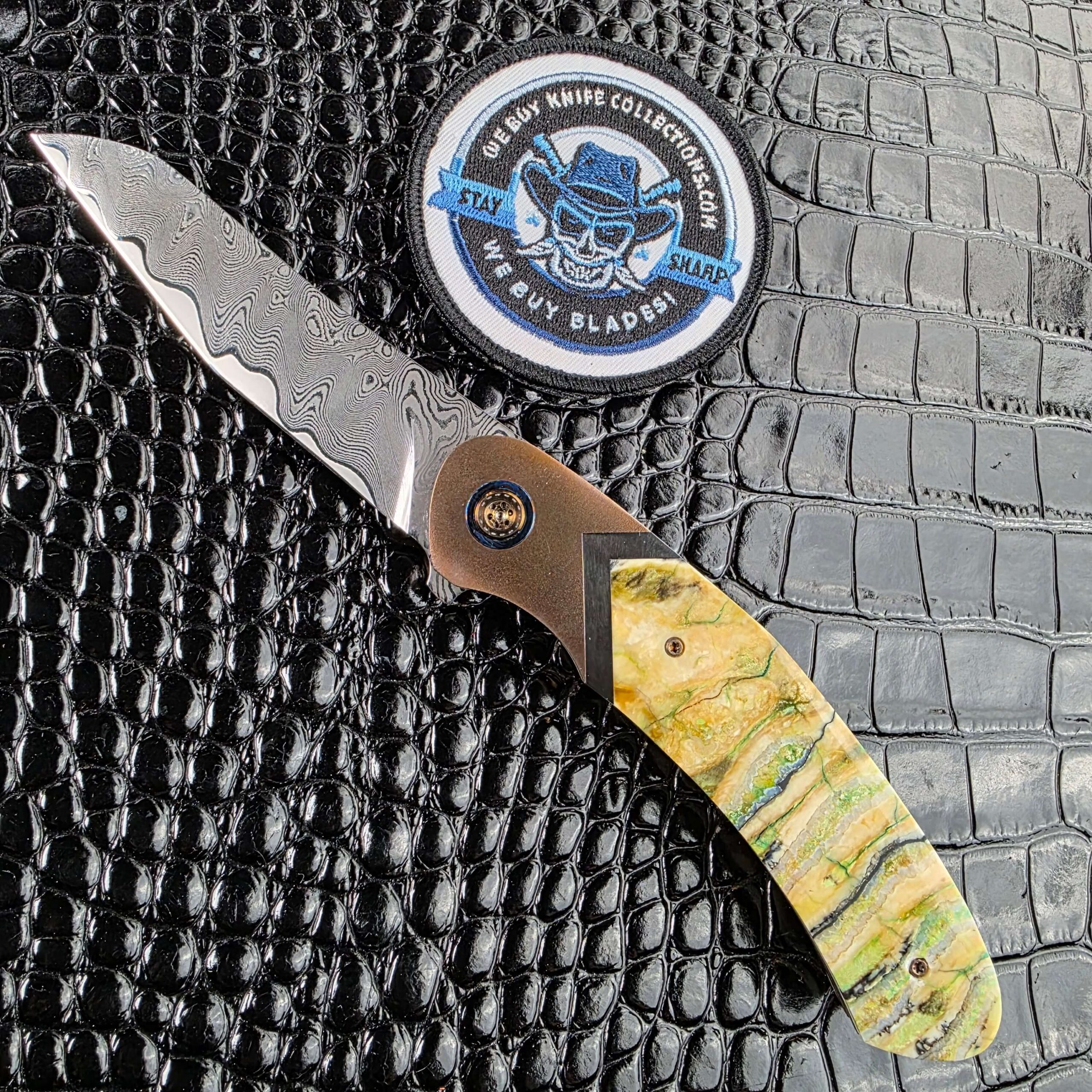
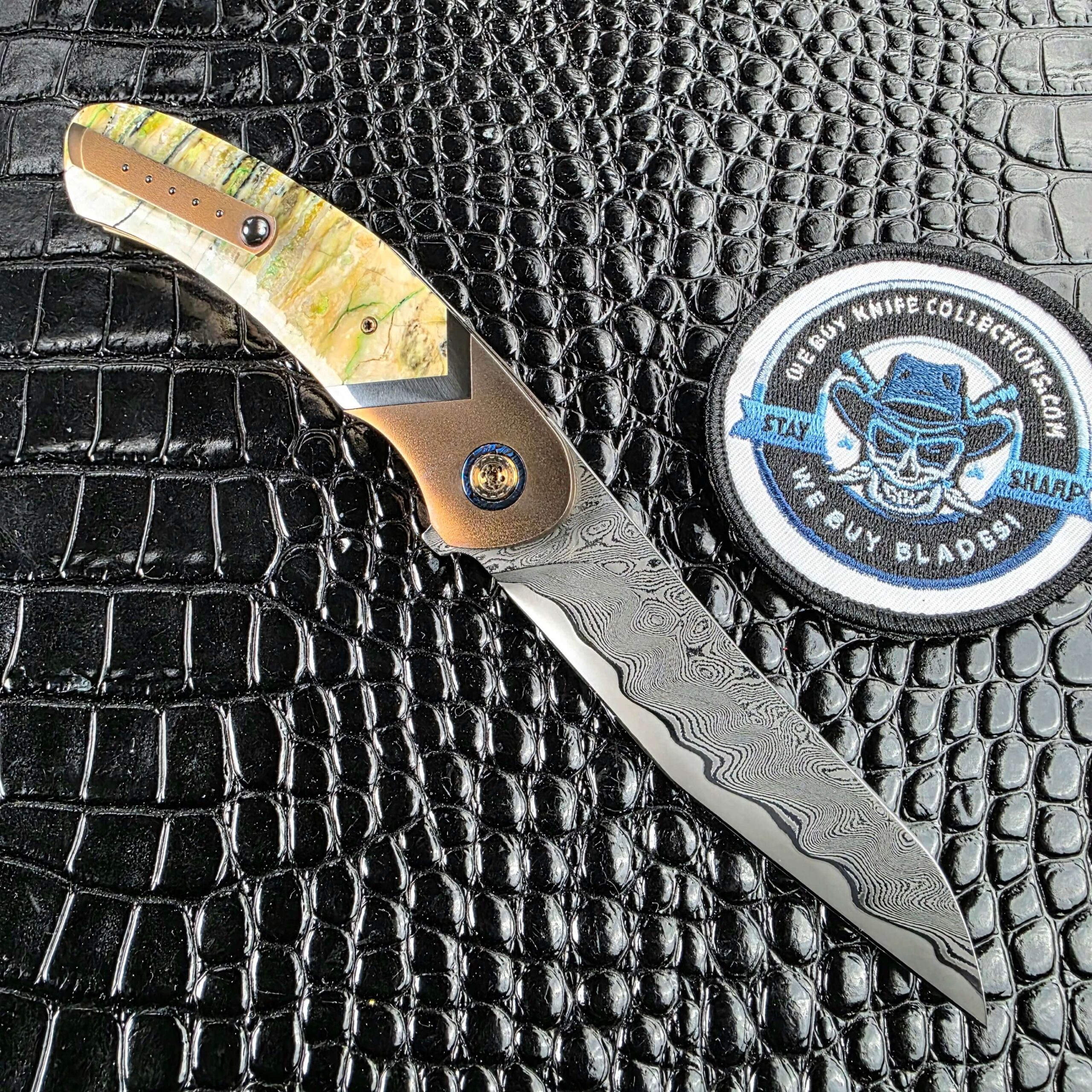
Andriy Mozil Model 22-26 Custom in MagnaMax and Mammoth Tooth
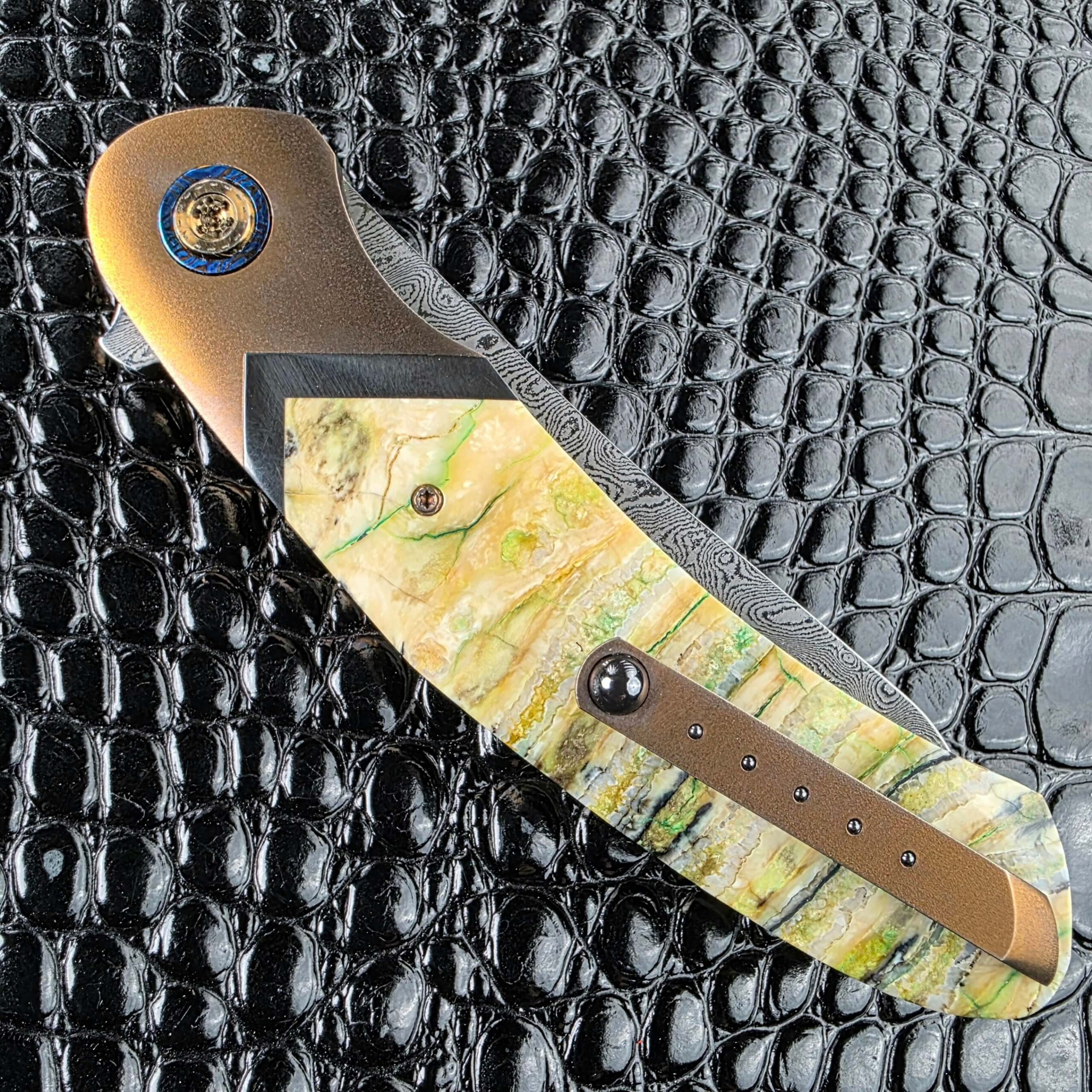
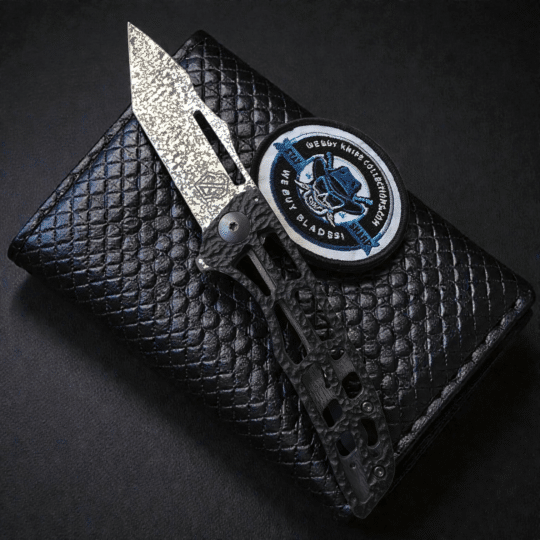
Andriy Mozil built this custom folder in Lviv, Ukraine, and he finished it on September 15, 2026. The blade pairs a MagnaMax core with a stainless Damascus jacket. Mammoth tooth forms the scales. Titanium, zirconium and a Timascus insert make up the bolster. It runs 9.06 inches open at 5.1 ounces, and the condition is new.
So the materials list reads like three different knives. Yet Mozil made all of it work on one handle.
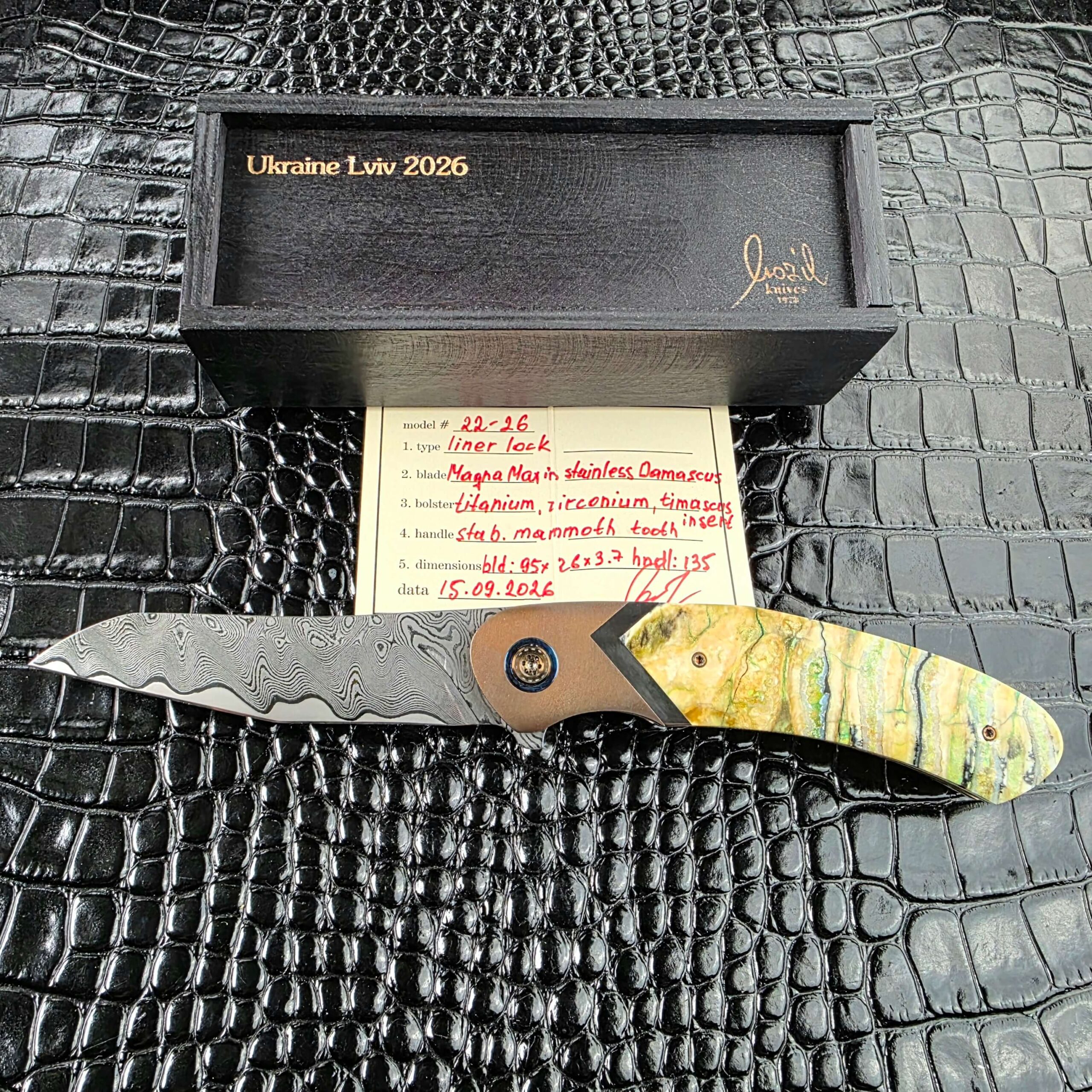
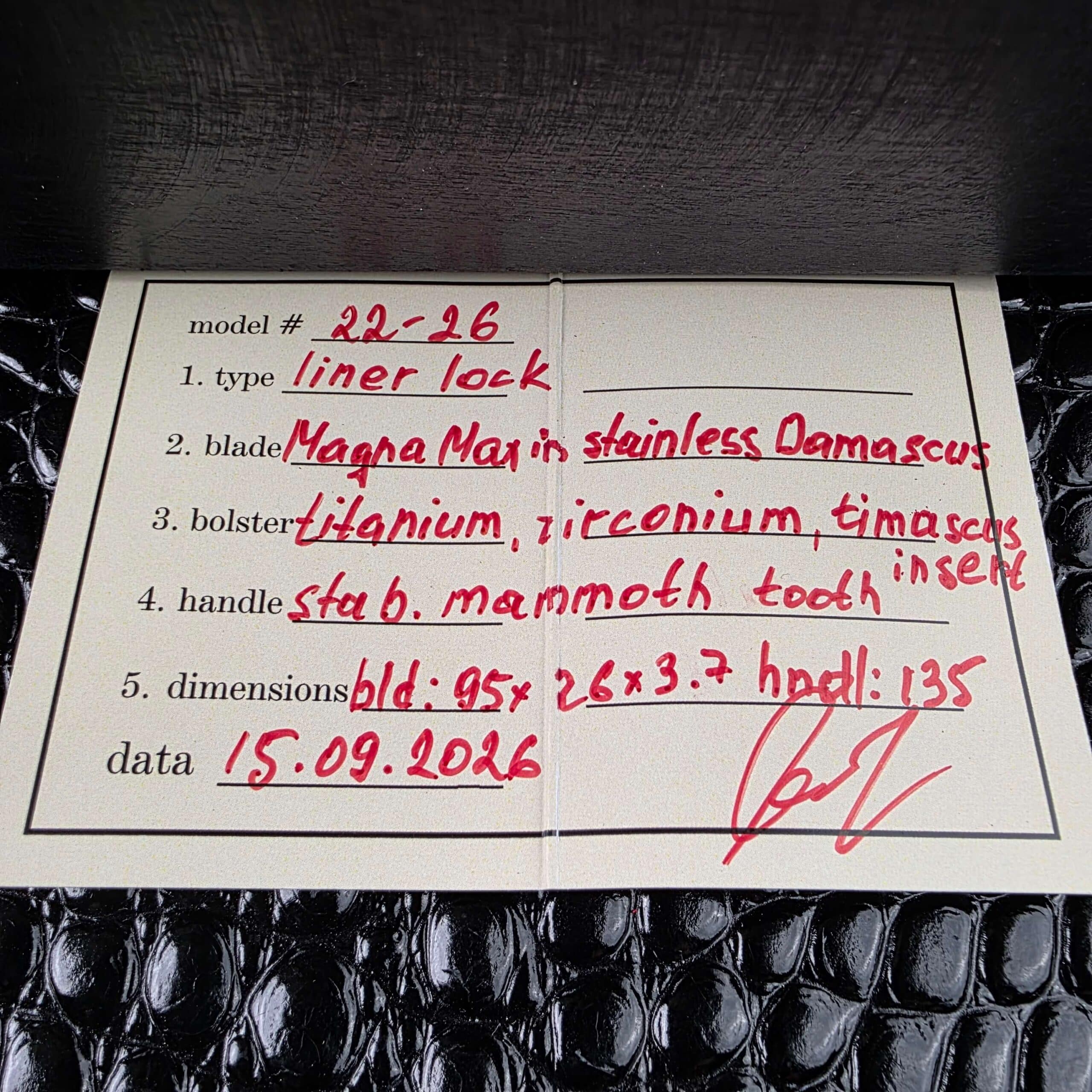
He also wrote the specification card himself, by hand, in red ink. Then he signed it. That card names every material on this knife, and that, and our many conversations with Andriy, are the reasons we can describe the build this precisely.
Andriy Mozil, Sole-Author Maker in Lviv
Mozil works alone. Because he is a sole-author maker, one set of hands takes each knife from stock to final assembly. No shop floor sits behind him, and nothing gets subcontracted out.
He shipped this one to us directly from Ukraine. So there is no distributor between his bench and our photographs.
We carry its sibling as well. He finished the Model 23-26 on the same day, in the same shop, with an Elmax core instead. Together they show how one maker varies a platform.
MagnaMax: Stainless 10V, Eight Months Old
Dr. Larrin Thomas designed MagnaMax, and Crucible Industries released it in January 2026. Mozil built this knife in September. So the steel in your hand is barely eight months past announcement.
Thomas first proposed it back in June 2019, alongside MagnaCut. He called it stainless 10V then, and the name explains the goal.
CPM 10V and Böhler K390 hold an edge longer than almost anything. But neither is stainless, so both rust if you neglect them. MagnaMax matches their edge retention while staying stainless.
Thomas achieved that by raising carbon, niobium and vanadium above MagnaCut’s levels. As a result the carbides stay small and few, which is why toughness survives. In short, it outperforms M390 on edge retention and on toughness at once.
San Mai: Why the Core Shows
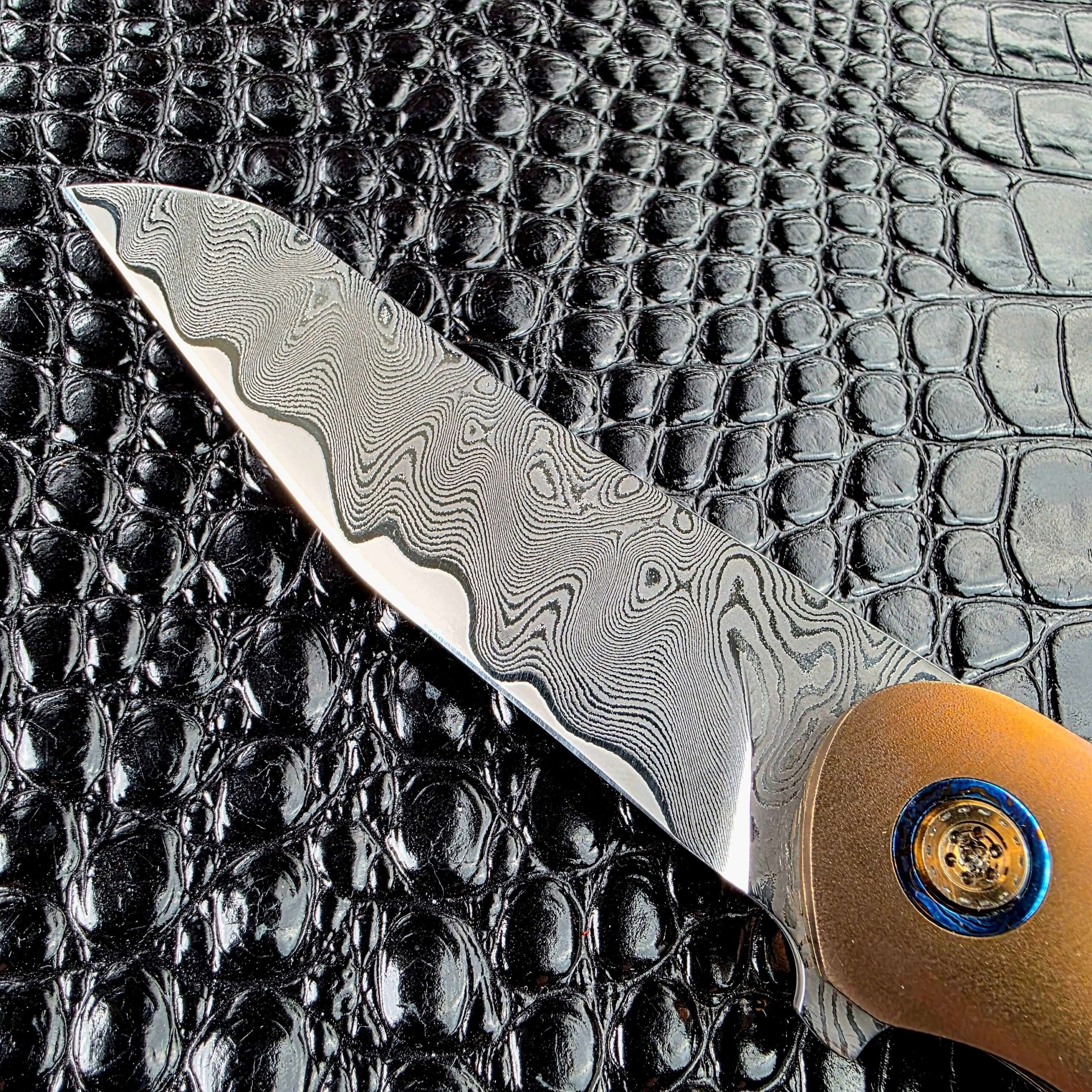
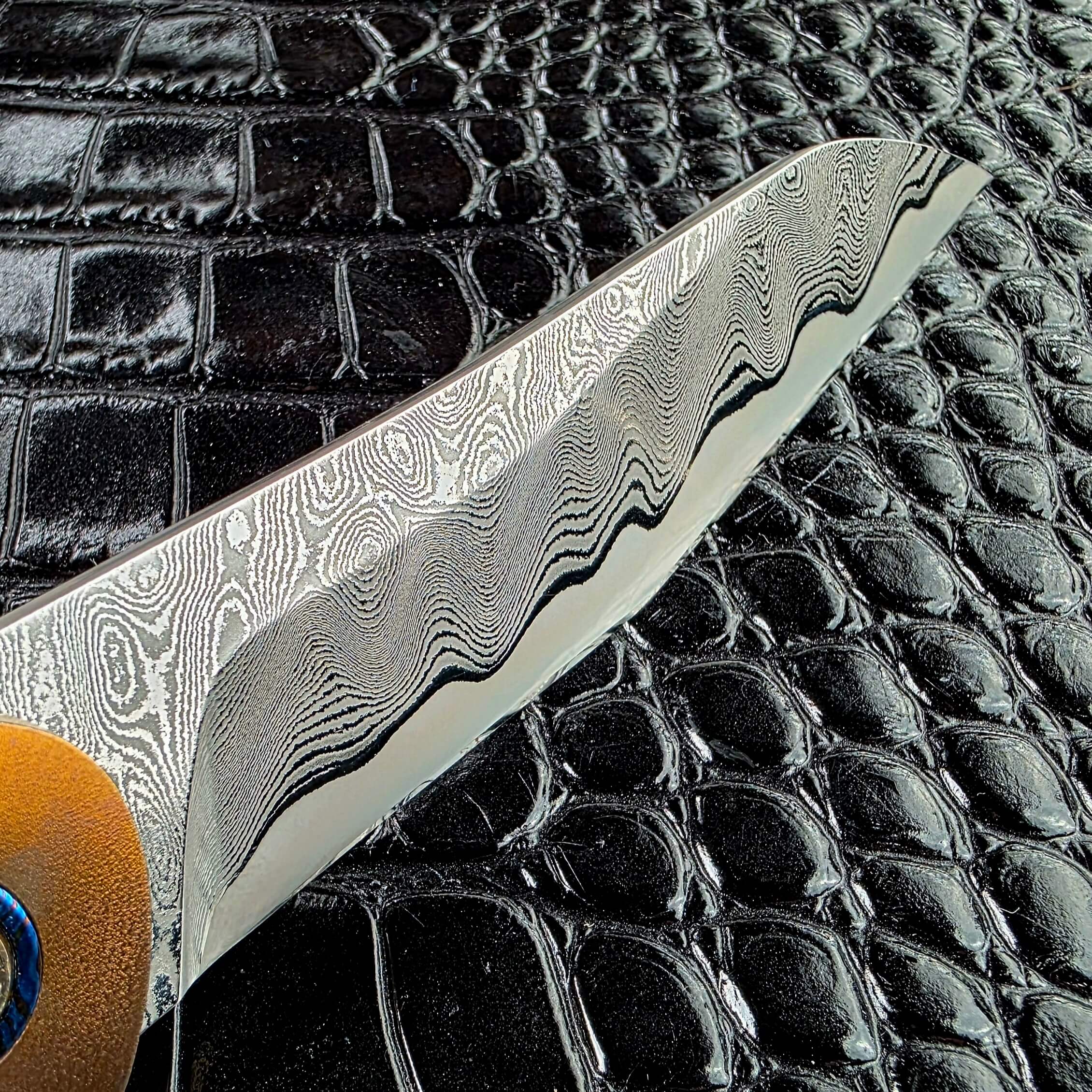
Look along the edge and you will see a wavy bright line. That line marks where the Damascus jacket stops and the MagnaMax core begins.
San mai means three layers. A hard core does the cutting, while two outer layers handle the looking. Smiths in Japan settled on this arrangement centuries ago, and for a practical reason.
Pattern-welded steel photographs beautifully. Still, it rarely optimizes well for edge performance. So laminating solves both problems at once.
Mozil’s Damascus runs in tight contour lines, almost like a fingerprint. Because the two steels etch at different rates, the boundary between them draws itself. He then ground the blade so that boundary follows the edge in a clean scallop.
Mammoth Tooth and Timascus on the Andriy Mozil Model 22-26
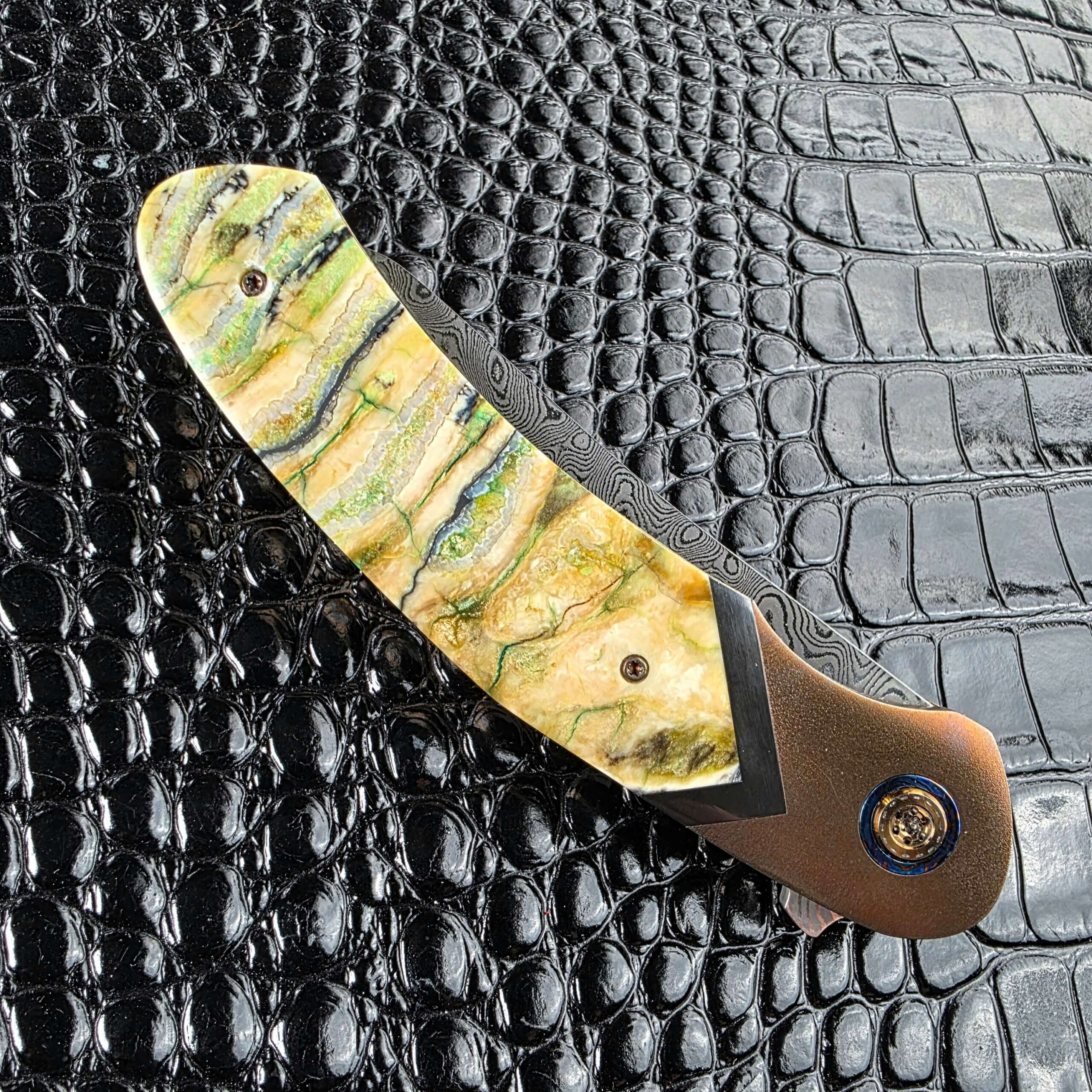
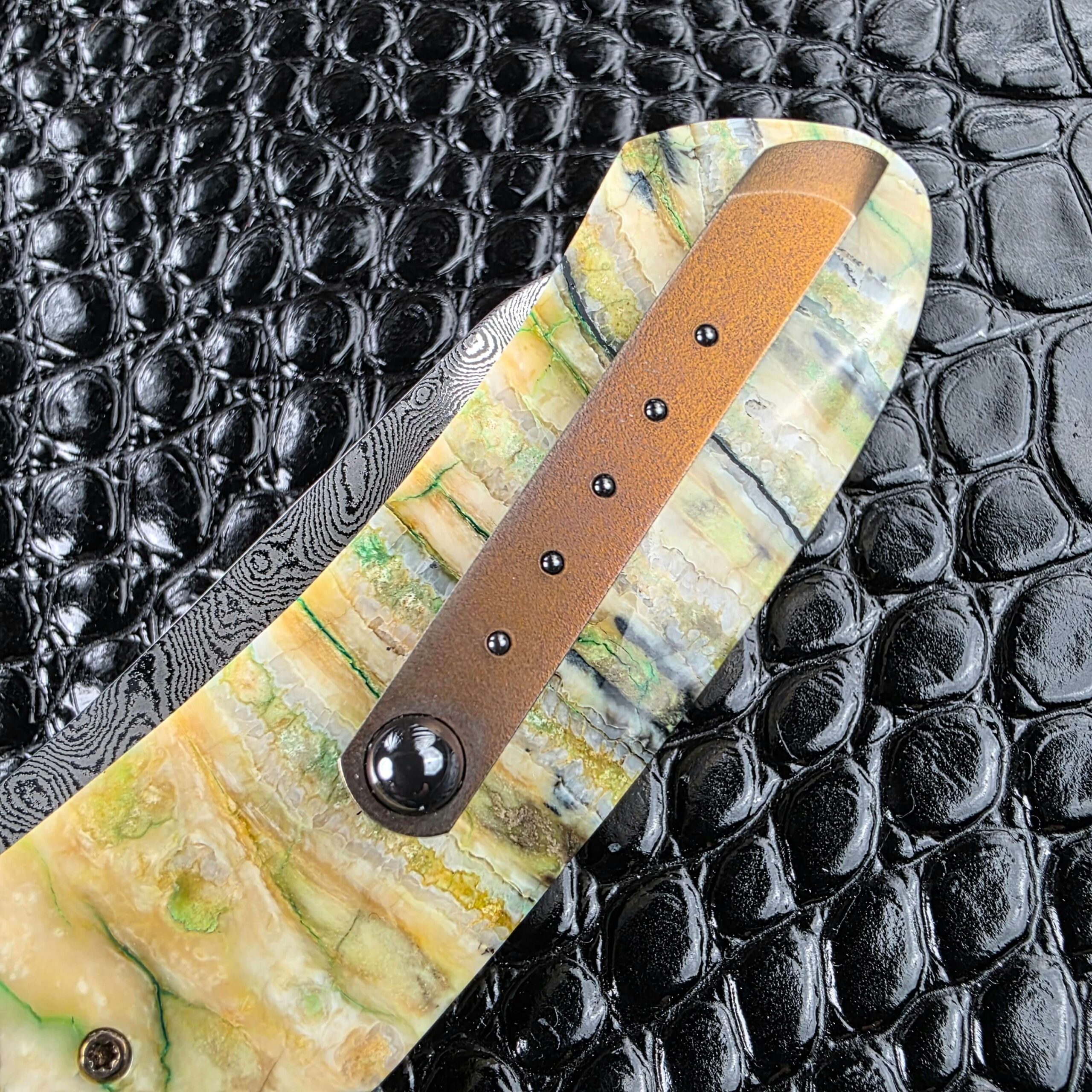
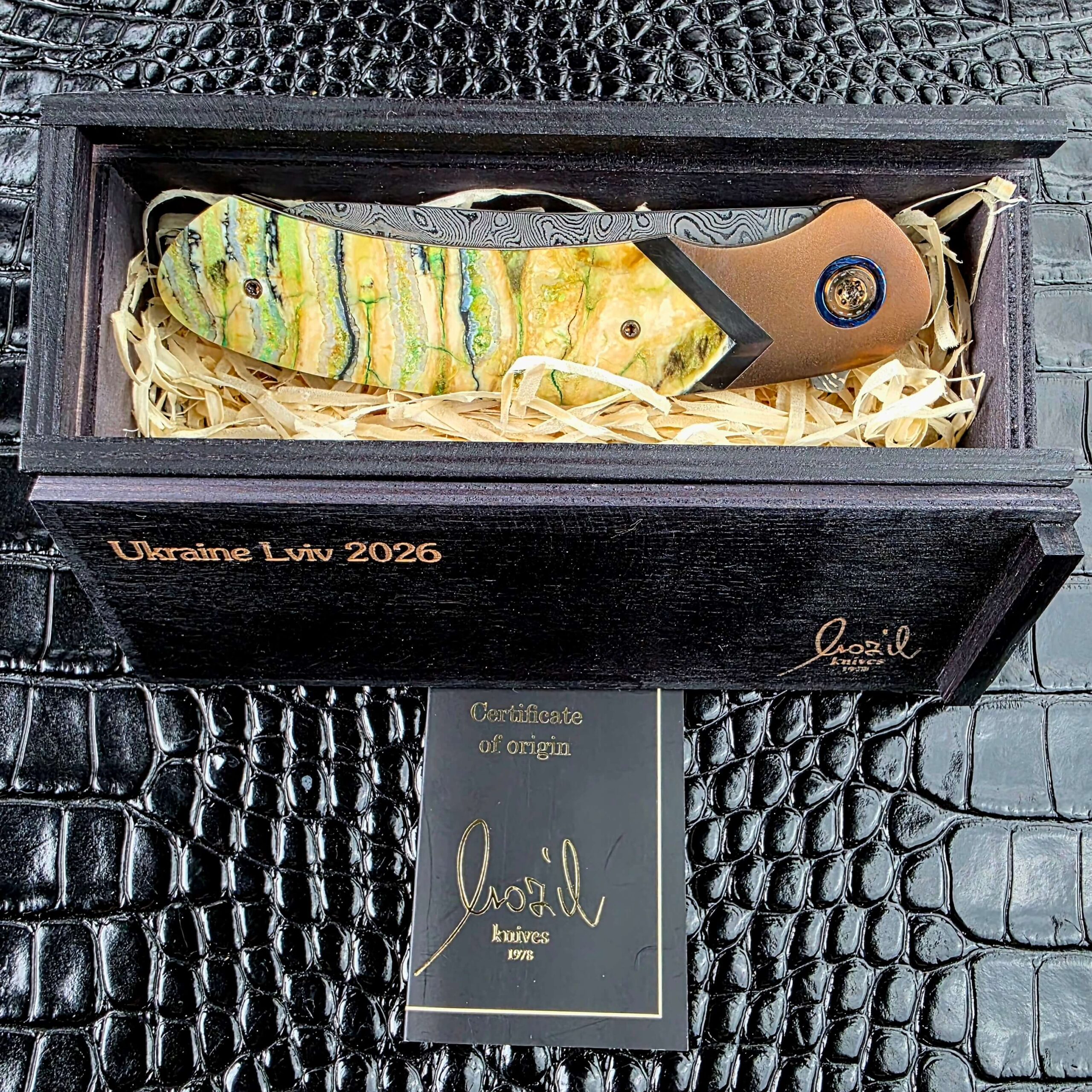
The scales are stabilized mammoth tooth, and the card says so explicitly. Tooth is not tusk. Instead of solid dentine, you get enamel and dentine in alternating bands, which is why this material stripes rather than swirls.
Cream, olive, grey and near-black run across these scales in parallel layers. Each band records part of the animal’s life. No two pieces ever repeat.
Stabilizing matters here. Raw fossil tooth is porous and fragile, so resin under vacuum turns it into something a maker can mill and pin.
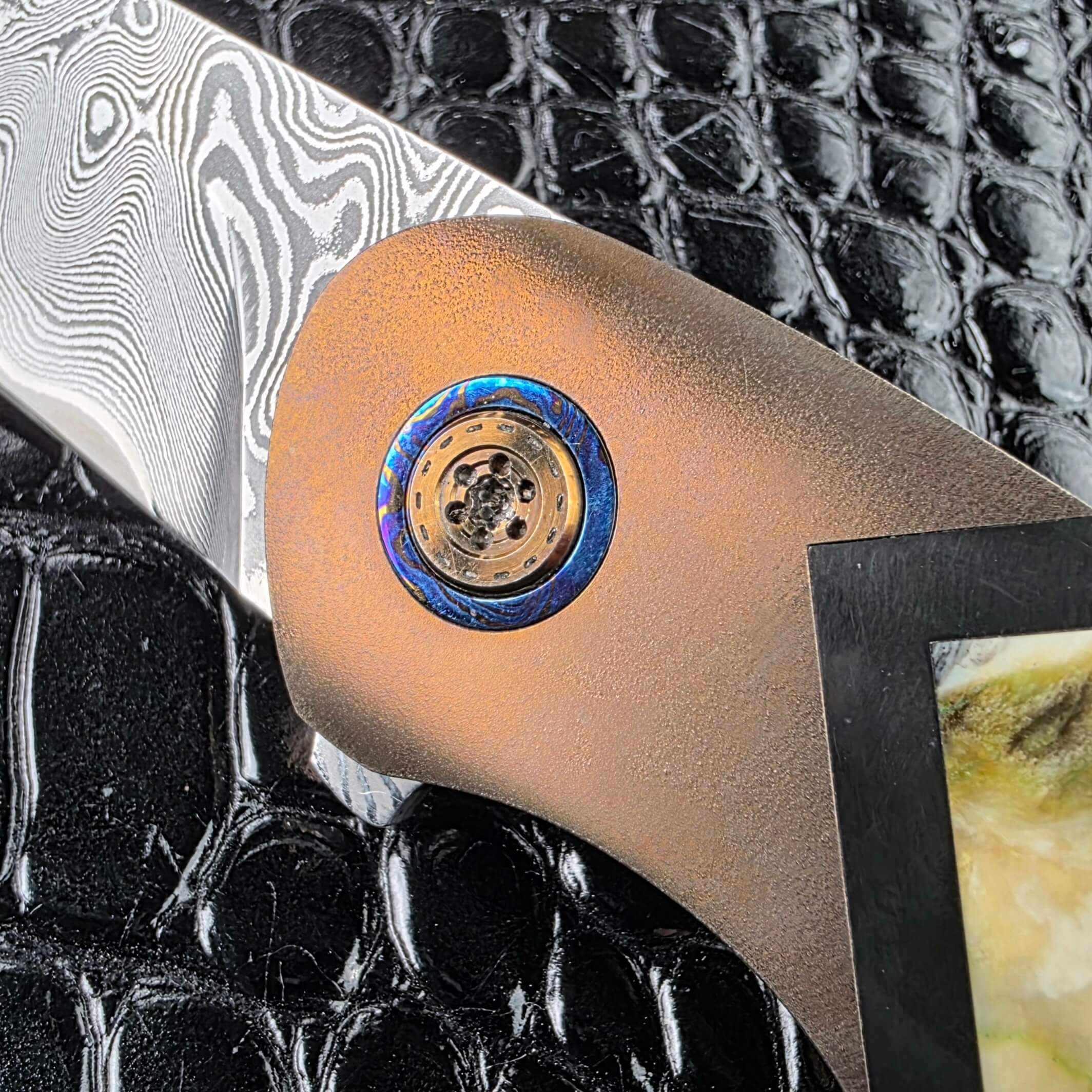
Then there is the bolster. Mozil used titanium and zirconium together, and he set a Timascus collar around the pivot. Zirconium takes a bronze tone when heat-treated, and that warm brown sits against the cream tooth rather than fighting it. Compare it with the Weiland hawkbill, where Timascus forms the whole frame.
The pocket clip matches the bolster. Five small black dots run along its length, and a black ball screw anchors it at the butt.
Condition and What’s Included with This Andriy Mozil Model 22-26
This knife is new. Mozil shipped it to us directly, nobody has carried it, and nothing on it grades down. You can check that against our published grading standards.
The presentation arrived complete. The wooden box carries Ukraine Lviv 2026 in gold, along with the Mozil knives mark. Inside sits a Certificate of Origin folder and the handwritten card.
That card beats a printed certificate. Mozil filled it in for this knife alone, so it records the actual materials rather than a template.
- Andriy Mozil Model 22-26 Custom folding knife
- Wooden presentation box branded Ukraine Lviv 2026
- Certificate of Origin
- Handwritten and signed specification card
Andriy Mozil Model 22-26 Specifications
Mozil recorded the model, lock, materials and dimensions on the card in millimetres. We converted them below.
- Overall length, open: 9.06 in
- Blade length: 3.74 in, 95 mm
- Blade width: 1.02 in, 26 mm
- Blade thickness: 0.146 in, 3.7 mm
- Closed length: 5.31 in, 135 mm
- Blade construction: San Mai, MagnaMax core in stainless Damascus
- Lock type: Liner lock
- Action: Manual
- Deployment: Flipper tab
- Bolster: Titanium and Zirconium with a Timascus insert
- Scales: Stabilized mammoth tooth
- Pocket clip: Fitted, matching the bolster
- Weight: 5.1 oz
- Model number: 22-26
- Date made: September 15, 2026
- Country of origin: Lviv, Ukraine
- Condition: New, direct from the maker
- SKU: 00216-MOZ-MODEL2226-MAGNAMAX-MAMMOTH-20260915
Browse the rest of our custom folding knives while this one is still here.
Video Description: Perfect Mix of Modern & Ancient
The Andriy Mozil Model 22-26 Custom is a new folding knife in unused condition. Mozil built it in Lviv, Ukraine and finished it on September 15, 2026. The blade is san mai, a MagnaMax core in a stainless Damascus jacket, 3.74 inches long and 0.146 inches thick. Larrin Thomas designed MagnaMax, and Crucible released it in January 2026.
The scales are stabilized mammoth tooth, which bands in cream, olive and grey. Titanium and zirconium form the bolster, and a Timascus collar surrounds the pivot. It locks on a liner and opens on a flipper tab. Overall length is 9.06 inches open and 5.31 inches closed, at 5.1 ounces. It ships in a wooden box with a Certificate of Origin and a handwritten card.
Frequently Asked Questions
What makes the Andriy Mozil Model 22-26 a custom knife?
A custom is a unique, handcrafted tool that an individual artisan designs and builds, rather than a factory stamping it out. That artisan tailors every detail by hand and with the help of specialized machinery.
Mozil fits that exactly. He works as a sole-author maker, so he takes each knife from stock to final assembly himself. Then he writes the card by hand and signs it. Because he numbers each build, this one carries 22-26 and no other knife shares it.
How does MagnaMax differ from MagnaCut?
Larrin Thomas designed both, but he aimed them at different targets. MagnaCut balances toughness and edge retention, and it leans toward toughness. MagnaMax leans the other way.
Thomas raised carbon, niobium and vanadium to get there. So MagnaMax now holds an edge about as long as CPM 10V or K390, which are non-stainless steels. Toughness drops slightly below MagnaCut, though it still sits above S35VN and CPM-154. Against M390 it wins on both counts.
Is mammoth tooth the same as mammoth ivory?
No, and the difference is physical. Tusk is ivory, which is dentine throughout. Tooth is a molar, so it alternates enamel and dentine in layers.
That structure explains the look. Tusk tends to swirl, while tooth stripes in parallel bands of cream, olive, grey and black. Both are fossil material from an extinct animal, though, so the compliance notice at the foot of this page applies either way.
Why laminate the blade instead of forging it all from one steel?
Because the two jobs conflict. Pattern-welded Damascus looks extraordinary, but optimizing it for edge performance is difficult. A homogeneous powder steel cuts better and shows nothing.
San mai gets both. The MagnaMax core does the cutting, while the Damascus jacket does the looking. You also get a visible bonus: the two steels etch differently, so the lamination line draws a scallop along the edge.
What is the Timascus collar around the pivot?
Timascus is titanium Damascus. Makers forge-weld two or more titanium alloys into one billet, then color it with heat rather than paint. The blues and violets you see are an oxide layer, so they shift as the knife turns.
Mozil used it sparingly, and that is normal. Up to 80 percent of a Timascus billet ends up as chips, and the mixed-hardness billet wears cutting tools fast. So the material usually appears as small parts like this collar.
Does We Buy Knife Collections actively support the broader knife enthusiast community?
Yes. Based in Jacksonville, Florida, We Buy Knife Collections is a curator and purveyor of fine custom made folding and fixed-blade knives. We are dedicated to the high-end custom knife community and we support knife rights advocacy.
Following our commitment upgrade in April 2026, we are proud to hold an AKTI Premier Membership, supporting the American Knife & Tool Institute’s vital advocacy and lobbying for knife owners, makers, and the future of the industry.
Buy This Andriy Mozil Model 22-26
We inspect every knife in hand, and we shoot the photographs here. See what else has arrived on the Andriy Mozil Custom Knives brand page. You can also talk to us about selling your collection.
Woolly Mammoth Tooth Compliance Notice
The mammoth material on this knife is fossil woolly mammoth tooth. Tooth is enamel and dentine rather than tusk, and it is not ivory. No living or endangered animal is involved.
Several states restrict the sale and possession of ivory materials. Some of those statutes are written broadly enough that a buyer should confirm how their own state treats fossil mammoth material of any kind. Ensure you know the laws in your State when purchasing.


Reviews
There are no reviews yet.